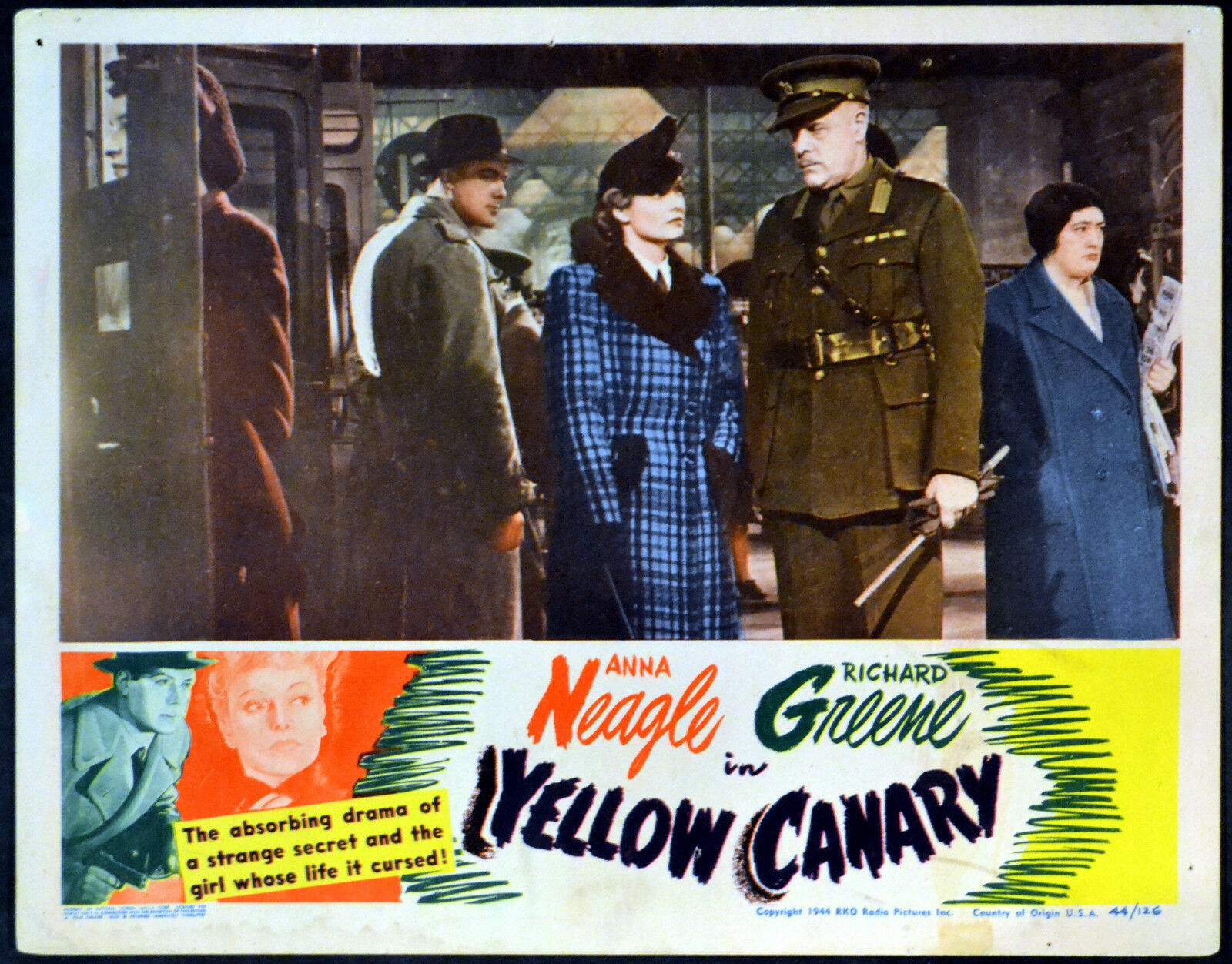
Honestly, if you go looking for a masterpiece of 1940s cinema, you’ll probably land on Casablanca or Double Indemnity. Most people do. But there’s this weird, tension-filled little gem called Yellow Canary 1943 that deserves way more credit than it gets in the history books. It’s a movie that basically tricked its entire original audience.
It stars Anna Neagle.
Back then, Neagle was the "sweetheart" of British cinema. She played queens. She played nurses. She was the personification of "proper." So, when audiences walked into theaters in late 1943 and saw her playing a pro-Nazi socialite who gets kicked out of England for being a "Yellow Canary" (a coward or a traitor), it was a genuine shock to the system.
The film is a fascinating time capsule. It wasn't just entertainment; it was a psychological tool.
The Plot Twist That Defined Yellow Canary 1943
The story starts in London during the Blitz. Neagle plays Sally Maitland. She’s cold. She’s arrogant. She’s hanging out with German aristocrats while bombs are literally dropping on her neighbors. Because of her public "sympathies," the British government basically forces her to leave for Halifax, Nova Scotia.
You spend the first half of the movie kind of hating her.
On the ship across the Atlantic, she’s surrounded by people who despise her, including a Polish officer and a British naval commander played by Richard Greene. There’s a lot of whispering in dark corridors. It feels like a standard "shunned woman" drama until the movie flips the script.
Spoilers for an eighty-year-old movie: she’s an undercover agent.
The British Intelligence services used her "traitor" reputation as a cover so she could infiltrate a Nazi spy ring operating in Canada. It’s a classic trope now, but in 1943, with the war still raging and the outcome not yet certain, this kind of narrative was high-stakes propaganda. It told the audience that things aren't always what they seem and that even the most "objectionable" people might be doing their bit for King and Country.
Herbert Wilcox and the Art of the War-Time Thriller
Herbert Wilcox directed this. He was Neagle’s husband and frequent collaborator. They were basically the power couple of the British film industry.
Wilcox knew exactly what he was doing with the pacing. He didn't have the budget of a Hollywood blockbuster, so he leaned into the atmosphere. The scenes on the ship are claustrophobic. You can almost smell the sea salt and the stale cigarette smoke in the cabins.
It’s actually quite impressive how they handled the "whodunnit" element. While the movie is a spy thriller, it plays out like a locked-room mystery on the water. Everyone is a suspect. Everyone is watching everyone else.
The cinematography by Jack Cardiff—who is a legend in the industry—makes the shadows feel heavy. Cardiff later became famous for his incredible use of Technicolor in movies like Black Narcissus, but here, in black and white, he shows off how to use light to create a sense of dread.
Real Context: Why Halifax?
A lot of people wonder why the movie moves from London to Halifax, Nova Scotia. It seems like an odd choice for a British spy flick, right?
Actually, it was a brilliant move for realism.
During World War II, Halifax was the "Gateway to Europe." It was the primary jumping-off point for the massive convoys that kept Britain alive. If the Nazis could disrupt the shipping lanes or plant saboteurs in Halifax, the UK would starve. By setting Yellow Canary 1943 in Canada, the filmmakers were reminding the audience that the war was global. It wasn't just happening in the trenches of Europe or the skies over London.
The threat was everywhere.
The Canadian setting also allowed the film to appeal to North American audiences. RKO Radio Pictures handled the distribution in the US, and they wanted something that felt relevant to people on both sides of the pond.
Key Cast Members and Their Impact:
- Anna Neagle (Sally Maitland): This role allowed her to break out of her "saintly" typecasting. She proves she can play "unlikeable" with a sharp edge.
- Richard Greene (Jan Garrick): Most people remember him as Robin Hood from the 50s TV show, but here he’s the romantic lead/suspicious naval officer. He brings a rugged, slightly cynical energy that balances Neagle’s performance.
- Albert Lieven: He plays a Polish officer. His presence adds to the international tension of the boat trip.
The "Yellow Canary" Meaning
The title itself is a bit of a double entendre.
In the 40s, "yellow" was slang for being a coward. A "canary" was someone who sings—a stool pigeon or an informer. By labeling the protagonist this way, the film plays with her identity. Is she a coward running away from the Blitz? Or is she the "canary" who is going to sing to the Nazis?
Or, as we eventually find out, is she the one making the Nazis sing?
It’s a clever bit of wordplay that gets lost on modern audiences who don't use that lingo anymore. Honestly, it’s much more sophisticated than the titles of most modern action movies that just name the protagonist or a generic "Operation [Noun]."
Technical Limitations and Creative Solutions
Let’s be real for a second: the special effects in Yellow Canary 1943 are... dated.
When you see the ship at sea, it’s clearly a model in a tank. The "explosions" look like firecrackers. But does that ruin the movie? Not really. You have to watch it through the lens of its time.
The tension doesn't come from the CGI (obviously, there wasn't any). It comes from the dialogue and the way the camera lingers on faces. It’s a movie about secrets. You’re looking for a flinch, a misplaced word, or a look of recognition in a character's eyes.
The script was written by Miles Malleson and DeWitt Bodeen. Bodeen, in particular, was a master of the "shiver." He worked on Cat People (1942) and The Seventh Victim (1943). You can feel that horror-adjacent sensibility in the way the spy ring is portrayed. They aren't just villains; they are shadows in the night.
The Reception: Then vs. Now
When it was released, it was a massive hit in the UK. People loved seeing Neagle do something different. Critics were a bit more divided. Some thought the "twist" was obvious, while others praised the suspense.
Today, the movie has a bit of a cult following among fans of British "Quota Quickies" and wartime propaganda. It’s often compared to Hitchcock’s Lifeboat or Foreign Correspondent. While it doesn't quite reach the heights of Hitchcock’s visual storytelling, it shares that same DNA of "ordinary people in extraordinary peril."
What’s interesting is how it portrays the Nazis.
They aren't caricatures. They are organized, intelligent, and deeply embedded in society. This was a common theme in 1943 films—the idea of the "Fifth Column." The fear that your neighbor, your doctor, or your friend could be working for the enemy. It’s a paranoid way to live, and the movie captures that paranoia perfectly.
Why You Should Watch It
If you’re a fan of the "cozy mystery" genre or classic noir, you’ll find a lot to like here. It’s short—only about 84 minutes—so it doesn't overstay its welcome.
The fashion is also incredible. Neagle’s wardrobe, despite her being a "traitor," is peak 1940s glamor. Even in the middle of a spy operation, she looks like she stepped out of a magazine. It’s a weird juxtaposition that actually works for her character’s cover as a spoiled socialite.
Beyond the aesthetics, it’s a masterclass in how to build a story around a single reveal.
Identifying Real History in the Fiction
Is any of it real? Sort of.
While Sally Maitland is a fictional character, the British did use "double cross" systems extensively. The XX Committee (Double-Cross System) was a real operation where German spies were captured and turned into double agents. They sent back false information to Germany to mislead the High Command.
So, while the movie is a dramatization, the concept of using perceived traitors to funnel information was a very real, very successful British tactic. The movie basically takes that high-level intelligence strategy and turns it into a personal drama.
Actionable Steps for Film Buffs
If you're looking to dive into the world of Yellow Canary 1943 and the era of British wartime cinema, don't just stop at the credits.
- Check the Public Domain: Because of its age, you can often find high-quality versions of this film on Archive.org or YouTube legally. It's a great way to see it without hunting for a rare DVD.
- Compare with 'Next of Kin' (1942): If you want to see the darker, grittier side of British propaganda from the same era, watch Next of Kin. It’s much more violent and was originally intended only for military viewing. It makes a great "double feature" with the more polished Yellow Canary.
- Research the Halifax Convoys: Understanding the actual risk level in Nova Scotia during 1943 makes the final act of the film much more intense. Look up "The Battle of the Atlantic" to see the real-life stakes the movie was trying to portray.
- Look for the RKO Cut: There are slightly different edits of the film floating around. The US version sometimes has minor pacing changes compared to the original British theatrical release.
It’s a movie that reminds us that in the middle of a world-ending conflict, people still wanted—and needed—to be told stories about bravery, even if that bravery was hidden behind a mask of betrayal. Sally Maitland wasn't just a character; she was a symbol of the invisible sacrifices made during the war.
The next time you’re scrolling through a classic movie channel and see a grainy black-and-white film about a girl on a boat, give it a chance. It might just be the most interesting eighty minutes of your week.



