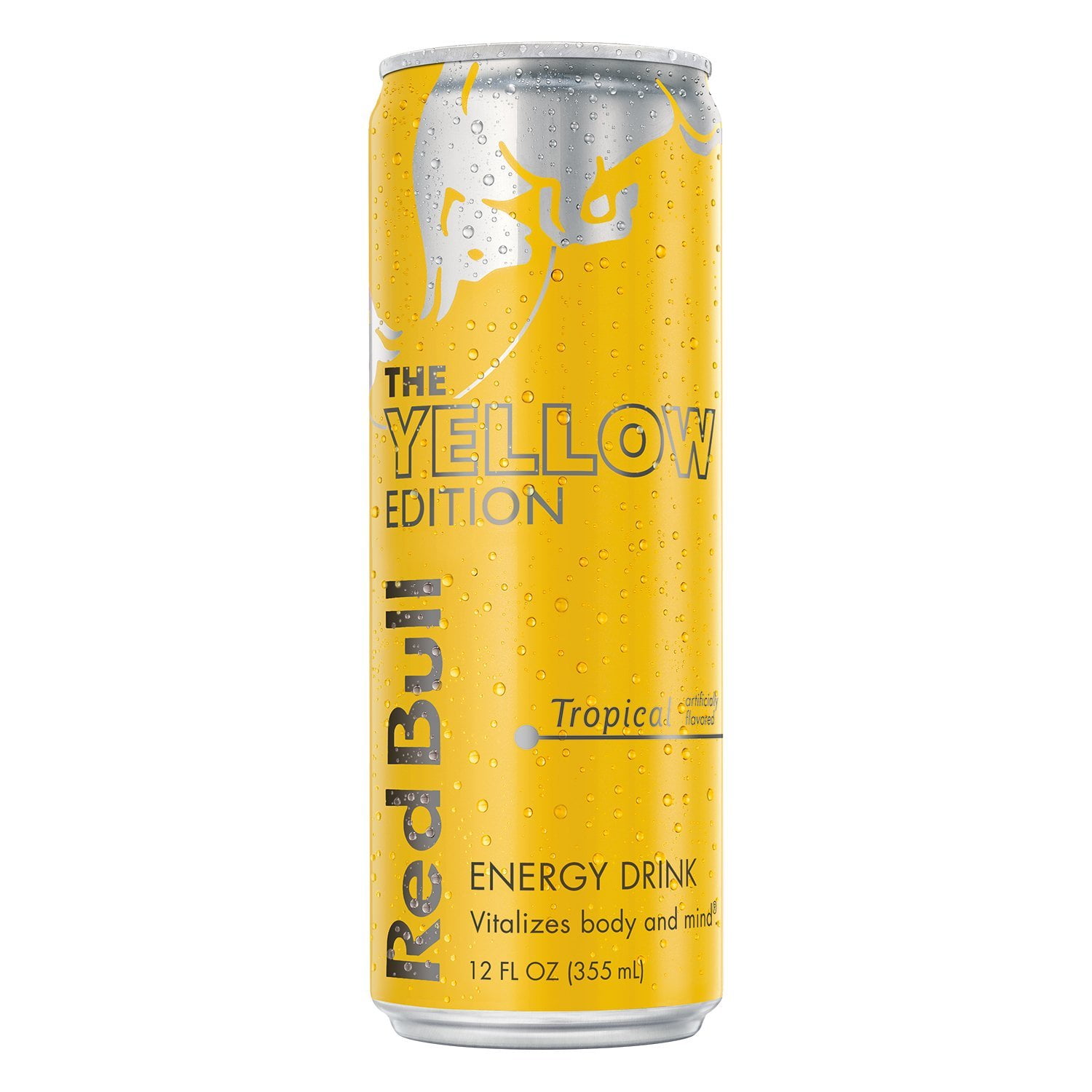
You’ve seen it. That neon, borderline-aggressive bright yellow can sitting in the gas station cooler right next to the boring silver ones. It's the Rockstar Recovery Lemonade. Or maybe you're thinking of the Monster The Doctor. Or maybe that weirdly specific yellow Red Bull that smells like a tropical vacation gone slightly wrong. People call it the yellow can energy drink for a reason—it’s a visual shorthand for "I need to wake up, but I also want to pretend I’m drinking juice."
Honestly? It's a cult classic.
The yellow can isn't just a color choice; it’s a psychological trigger. When you grab a yellow can energy drink, your brain expects citrus, acidity, and a lack of that medicinal "battery acid" aftertaste that plagued the early 2000s energy market. Most of the time, we’re talking about the non-carbonated stuff. Rockstar Recovery revolutionized this. They realized that sometimes, when you’re hungover or just plain exhausted, the last thing your stomach wants is a million tiny carbonation bubbles exploding in your gut. You want flat lemonade with enough caffeine to jumpstart a dead tractor.
The Rockstar Recovery Factor: More Than Just Lemonade
If we’re being real, Rockstar Recovery Lemonade is the heavyweight champion of the yellow can energy drink category. It’s got 160mg of caffeine. That’s about two shots of espresso. But unlike espresso, it’s packed with electrolytes and B-vitamins. It’s basically Gatorade’s angry older brother.
The formula has changed over the years. PepsiCo bought Rockstar in 2020 for about $3.85 billion, and fans immediately panicked. Why? Because when big corporations buy "vibey" brands, they usually mess with the recipe to save a nickel. There were reports that the flavor profile shifted—becoming slightly more artificial or "chemical-leaning." Yet, the yellow can persisted. It’s still a top seller because it fills a specific niche: the "functional" beverage that doesn't feel like a chore to drink.
Is it actually healthy?
Let's not kid ourselves. It’s an energy drink. But compared to the "Full Throttle" days of 60 grams of sugar, the yellow can is a saint. Most versions of the Rockstar Recovery are "low calorie," usually hovering around 10 to 20 calories per can. They use sucralose and acesulfame potassium. If you're sensitive to artificial sweeteners, your stomach might do a little gymnastics routine, but for most people, it’s the lesser of two evils.
It’s the "recovery" aspect that’s interesting. They add milk thistle. Does milk thistle actually cure a hangover? Science says... maybe? Some studies, like those indexed in the National Library of Medicine, suggest silymarin (the active stuff in milk thistle) has antioxidant properties that might protect the liver. But let’s be honest: you’re drinking it for the caffeine and the nostalgia of a cold lemonade on a Tuesday morning when you’ve only had four hours of sleep.
What About the Other Yellow Cans?
Rockstar doesn't own the color yellow.
- Red Bull Yellow Edition: This is tropical. It’s supposed to be passion fruit/apricot. It is very carbonated. If you want a yellow can energy drink that feels like a soda, this is your go-to. It’s crisp. It’s fancy. It’s also more expensive per ounce than almost anything else on the shelf.
- Monster Energy "The Doctor" (VR46): Named after MotoGP legend Valentino Rossi. It’s a citrus blend. It’s huge in Europe, slightly harder to find in some US regions, but it’s got that signature Monster "punch" that hits you in the back of the throat.
- Ghost Energy (Strawbana/Citrus): Ghost is the new kid on the block. Their yellow cans are usually collaborations. They use "Alpha-GPC," which is a nootropic. It’s supposed to help you focus, not just vibrate.
The industry is shifting. We're moving away from just "energy" and toward "brain power." The yellow can is the flagship for this transition because yellow implies clarity.
The Science of Why You Crave It
There’s a reason you reach for the yellow can when you’re tired. Yellow is the most visible color on the spectrum. It’s the first thing your eye catches in a cluttered fridge. Marketing experts call this "salience." But there’s also the flavor-color association.
Humans associate yellow with sourness and freshness. When you’re sluggish, your palate craves acidity to "reset." This is why a squeeze of lemon in water feels refreshing. The yellow can energy drink exploits this biological shortcut. It promises a sensory "zip" that a dark purple or heavy blue can simply doesn't.
The Controversy: Caffeine Content and Your Heart
We have to talk about the 160mg to 200mg range. For a healthy adult, the FDA says 400mg a day is usually fine. That’s two yellow cans. But if you’re pounding these things like water? You’re asking for jitters, heart palpitations, and a spectacular crash.
The "non-carbonated" nature of the yellow Rockstar is a double-edged sword. Because it isn't fizzy, you can drink it incredibly fast. You can finish a 16oz can in under a minute. When you dump that much caffeine into your system that quickly, your blood pressure is going to spike. It's not a slow burn; it's a flash flood.
Why the Yellow Can Won the "Blue Collar" Vote
If you go to any construction site or warehouse at 6:00 AM, you will see the yellow can. It’s the unofficial mascot of the 12-hour shift.
Why? Because it’s hydrate-adjacent.
Workers who are sweating and moving don't want a heavy, syrupy soda. They want something that feels like juice but performs like a pre-workout. The yellow can energy drink became a staple of the American workforce because it’s approachable. It doesn't look like a "gamer" drink with neon green claws, and it doesn't look like a "wellness" drink with minimalist white labels. It looks like a tool.
Common Misconceptions
- "It has more caffeine because it's yellow." No. Color has zero impact on caffeine anhydrous levels.
- "It’s just lemonade with a pill crushed in it." Close, but the stabilization of the electrolytes and vitamins in a shelf-stable can is actually a pretty complex bit of food engineering.
- "The yellow Red Bull is the same as the yellow Rockstar." Absolutely not. One is a tropical soda; the other is a flat, electrolyte-heavy lemonade. Mixing them up is a recipe for disappointment.
How to Drink It Without Ruining Your Day
If you're going to commit to the yellow can life, do it smartly.
First, check the "Best By" date. Since many yellow cans (especially the lemonade versions) use real lemon juice concentrate, they can actually taste "off" if they sit in a hot warehouse for a year. It gets a metallic, funky tang.
Second, drink water alongside it. Energy drinks are diuretics. They make you pee. If you're using a "recovery" drink to actually recover, you need actual H2O to make those electrolytes work.
Finally, don't drink it on a totally empty stomach unless you enjoy the feeling of a tiny lightning bolt hitting your stomach lining. A little bit of protein or fat slows the absorption of caffeine, giving you a smoother energy curve rather than a jagged peak and a brutal fall.
What’s Next for the Yellow Can?
Expect more "Natural" yellow cans. We’re seeing brands like Gorgie or Celsius Essentials trying to grab that yellow-can real estate by using green tea extract and monk fruit. The "original" yellow can—the Rockstar Recovery—is fighting to keep its shelf space against "clean energy" competitors.
But there’s something about that specific shade of yellow. It’s loud. It’s unapologetic. It’s the drink of choice for people who have a lot to do and very little time to do it.
Actionable Takeaways for the Energy Drink Consumer
- Check the Label for Taurine: If you're sensitive to taurine (which can sometimes cause mild digestive upset in high doses), stick to the newer "clean" yellow cans.
- Temperature Matters: The yellow lemonade varieties taste significantly better when they are "ice-chest cold." As they warm up, the artificial sweeteners become much more prominent and "cloying."
- Watch the Sodium: "Recovery" versions often have higher sodium to help with hydration. This is great if you’re working out or sweating, but not great if you have high blood pressure.
- The "Half-Can" Rule: If you’re trying a new brand of yellow can energy drink, drink half and wait 20 minutes. The lack of carbonation means the caffeine hits your small intestine faster than a standard soda-style energy drink.
Don't just grab the first yellow thing you see. Look at the caffeine-to-oz ratio. A 12oz Red Bull Yellow is a different beast than a 16oz Rockstar Recovery. Know what you're putting in your body, and maybe, just maybe, you'll actually feel recovered.



