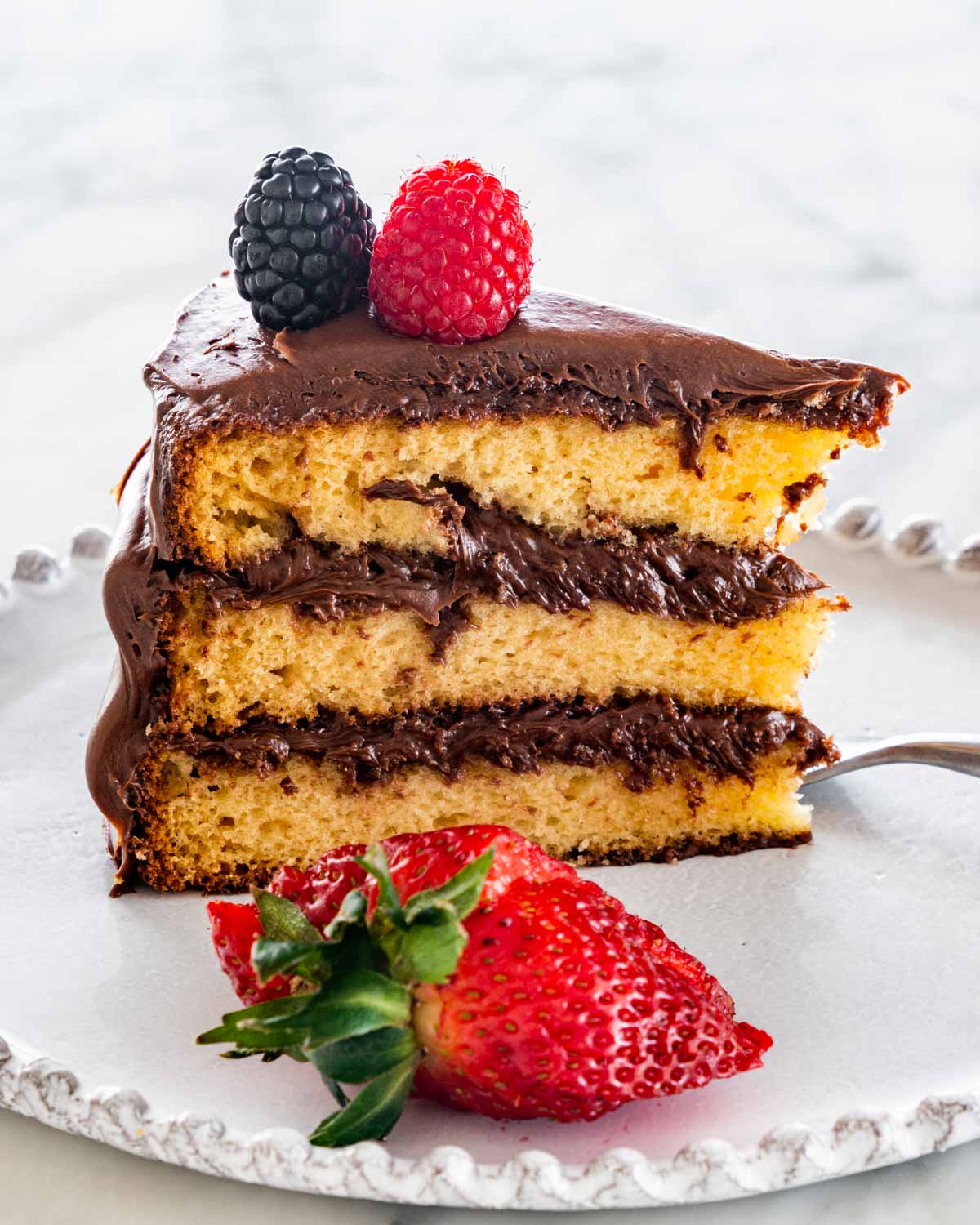
Walk down the baking aisle of any Kroger or Safeway and you'll see them. Dozens of bright boxes. You've got your "Devils Food," your "French Vanilla," and then the ubiquitous, slightly mysterious "Yellow Cake." It’s the backbone of every American birthday party since the 1950s. But honestly, if you stop and think about it, "yellow" isn't a flavor. It's a color. You wouldn't order a "blue" ice cream or a "green" steak, yet we all instinctively know exactly what a yellow cake tastes like.
So, what flavor is yellow cake mix, really?
It’s not just vanilla. It’s definitely not lemon, though the color might trick your brain for a split second. The reality is a bit more complex, rooted in a specific chemical profile and a history of industrial food science that sought to replicate the richness of a farmhouse kitchen using shelf-stable powders.
The Secret Identity of Yellow Cake Mix Flavor
Most people assume it's just vanilla cake with some food coloring. That's a huge misconception. While vanilla is the primary aromatic, yellow cake relies on a heavy hit of custard-like undertones. This comes from the historical inclusion of egg yolks—or at least the flavor profile associated with them.
In a scratch recipe, a white cake uses only egg whites to keep the crumb snowy and light. A yellow cake uses whole eggs. That extra fat from the yolk changes the game entirely. It adds a richness, a certain "density" of flavor that bridges the gap between a plain sponge and a pound cake. When manufacturers design a yellow cake mix, they aren't just aiming for a hue; they are trying to mimic the flavor of cooked egg fat and butterfat.
Then there’s the sugar. It’s not just white granulated sugar. Many high-end mixes or classic "moist" versions incorporate a hint of brown sugar or molasses notes. This gives the sweetness a deeper, slightly caramelized edge compared to the "clean" sweetness of a white or silver cake.
The Role of Vanillin vs. Real Vanilla
We have to talk about the "birthday cake" scent. You know the one. You open the bag and that puff of sweet air hits you. That isn't high-grade Madagascar Bourbon Vanilla. It’s vanillin.
Vanillin is the primary chemical component of the extract from vanilla beans, but in boxed mixes, it's often produced synthetically. It is much more aggressive and "punchy" than real vanilla bean. It’s designed to survive the high heat of the oven without dissipating. When you combine that intense vanillin with the buttery, egg-heavy notes, you get that specific nostalgic flavor that characterizes yellow cake mix. It’s a manufactured nostalgia, sure, but it’s scientifically calibrated to hit our pleasure centers.
Why the Color Matters More Than You Think
Color influences taste. This isn't just a kitchen myth; it's a well-documented psychological phenomenon called cross-modal perception. If you dyed a yellow cake blue, people would tell you it tastes "cooler" or "less rich."
The yellow comes from two places. In the old days, it was purely from the carotenoids in high-quality egg yolks. Today, in the world of boxed mixes, it's often a mix of Annatto, Turmeric, or Yellow 5 and 6. These don't add much flavor in the tiny amounts used, but they prime your brain to expect a buttery experience.
Think about butter. Butter is yellow (mostly because of the grass cows eat). When we see a yellow crumb, our brain pre-loads the "buttery" flavor profile before the fork even touches our tongue. If a yellow cake mix tasted exactly like a white cake but looked yellow, you’d actually feel disappointed. You’d think it was "thin" or "weak."
The Chemical "Magic" of the Box
If you've ever tried to bake a yellow cake from scratch and wondered why it didn't taste like Duncan Hines, it’s because you’re missing the emulsifiers.
Boxed mixes use things like polyglycerol esters of fatty acids. Sounds delicious, right? Well, maybe not, but these ingredients allow the fat and water to bind in a way that creates a specific mouthfeel. That "velvety" texture is a flavor in itself. In food science, we call this "texture-flavor interaction." The way the cake dissolves on your tongue changes how the sweetness is perceived.
A scratch cake often has a larger crumb and a more distinct "bread-like" flavor because of the protein structure in the flour. Mixes use highly chlorinated flour which breaks down those proteins. The result? A cake that tastes less like "wheat" and more like "sweet cream."
Yellow Cake vs. Vanilla Cake: The Great Debate
Are they the same? No. Absolutely not.
- White Cake: Uses only egg whites. The flavor is "clean" vanilla. It's meant to be a blank canvas.
- Vanilla Cake: A broad term, but usually refers to a cake where vanilla bean is the star. It can be white or yellow.
- Yellow Cake: The "workhorse." It’s deeper. It’s saltier. It has those "golden" notes.
If you’re making a trifle or a wedding cake where you want the fruit or curd to shine, you go white. If you’re making a classic chocolate-frosted birthday cake, you go yellow. The salt content in yellow cake is typically higher to balance the richness of the yolk-mimicking flavors, which makes it the perfect foil for a sugary American buttercream.
How to Make Boxed Yellow Cake Taste Like "Real" Food
Let's be real. Even the best box mix can taste a bit "flat" or "chemical" if you follow the directions on the back of the box to the letter. If you want to enhance that specific yellow cake flavor—that buttery, custardy soul—you have to hack the chemistry.
1. Swap the Water for Whole Milk (or Buttermilk) Water does nothing for flavor. Milk adds sugars (lactose) and fats that reinforce the "yellow" profile. If you use buttermilk, the acidity reacts with the leavening agents in the mix to create an even loftier, tender crumb.
2. The Butter Rule The box usually asks for vegetable oil. Oil is great for moisture because it stays liquid at room temperature. But oil has zero flavor. If you want that iconic yellow cake taste, use melted butter. Better yet? Use browned butter. The nutty solids in browned butter play incredibly well with the vanillin in the mix.
3. Add an Extra Egg Yolk The mix already has "egg solids," but adding one fresh, room-temperature egg yolk will take the richness from "grocery store" to "bakery." It deepens the color naturally and improves the emulsification.
4. A Splash of Almond Extract This is the "secret" of many professional bakers. A tiny bit of almond extract—we’re talking maybe a quarter teaspoon—doesn't make the cake taste like almonds. Instead, it acts as a flavor enhancer for the vanilla. It adds a "complexity" that hides the synthetic notes of the boxed mix.
The Cultural Significance of the "Yellow" Profile
It’s interesting to note that yellow cake is a very North American staple. In many parts of Europe, a "yellow sponge" is just a sponge cake, often much less sweet and much more focused on the flavor of the flour and fresh eggs.
The American yellow cake mix flavor is a product of the post-war era. It was about convenience, yes, but also about a specific standard of "luxury" that meant having enough eggs and butter to make something rich. When companies like General Mills and Pillsbury were perfecting these formulas in the 40s and 50s, they weren't just making a cake; they were defining the flavor of American celebration.
That flavor is "Golden." It’s "Rich." It’s "Malt-adjacent."
Actionable Steps for Your Next Bake
To truly master the yellow cake profile, you need to understand that you aren't just baking a dessert; you're balancing fats and aromatics.
Next time you grab a box:
- Check the ingredients: Look for mixes that list "Enriched Bleached Flour" and see if they use natural colors like Annatto.
- Temperature matters: Ensure your eggs and dairy are room temperature before mixing. This allows the fats to emulsify properly, which is key to that "yellow cake" mouthfeel.
- Don't overmix: The more you mix, the more gluten you develop. High gluten ruins the delicate, custardy flavor profile by making the cake tough and "bread-y."
Yellow cake mix flavor is essentially a caramelized-vanilla-custard hybrid. It’s a specific, engineered profile that relies on the marriage of high-fat perception and aggressive vanillin. Understanding this allows you to manipulate it, whether you're baking from a box or trying to replicate that nostalgic magic from scratch. Stop thinking of it as "plain" and start treating it like the rich, egg-forward classic it actually is.



