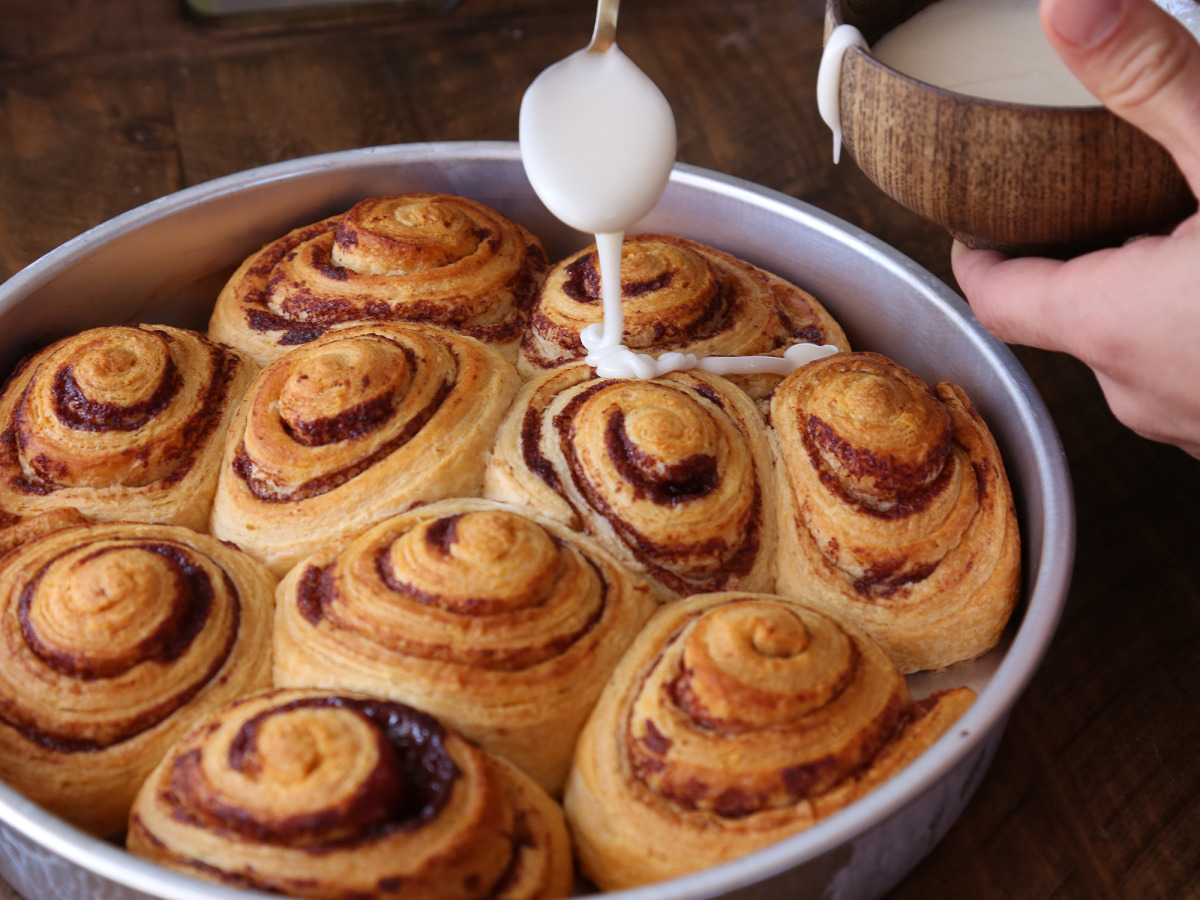
You’re tired. I get it. Sometimes the idea of proofing yeast for forty-five minutes just to see if it’s actually alive feels like a personal affront to your Saturday morning. That's why people keep coming back to yellow cake mix cinnamon rolls. It sounds like a cheat code because it basically is. You aren't just making a cake that looks like a roll; you're hijacking the emulsifiers and pre-measured leavening agents in that box to bypass the finicky nature of traditional brioche.
It’s sweet. It’s fast. Honestly, it’s a little bit genius if you don't mind the extra hit of vanilla flavoring that comes standard in most major brands like Duncan Hines or Betty Crocker.
The Science of the Box
Why does yellow cake mix work for yeast bread? It’s not just sugar and flour. If you look at the back of a box of standard yellow cake mix, you'll see things like monoglycerides and modified corn starch. In a traditional cinnamon roll recipe, you spend a lot of time kneading to develop gluten and adding fat to keep things tender. The cake mix already has those "tenderizers" built-in. When you add yeast and additional flour to a yellow cake mix, you’re creating a hybrid dough. It has the structural integrity of a roll but the "short" crumb of a cake.
Most people think you just bake the cake in a spiral. No. That would be a mess. You have to treat the mix like a base ingredient. You’re adding warm water, yeast, and usually about two to three cups of all-purpose flour to give it enough "body" to actually hold a shape. Without that extra flour, you just have a very thick batter that will slide all over your counter.
How to Actually Make Yellow Cake Mix Cinnamon Rolls Without Making a Mess
Start with two packages of active dry yeast dissolved in about two cups of warm water. Make sure it's warm—about 110°F—not hot. If you kill the yeast, the whole thing is a wash. Toss that into a bowl with your box of yellow cake mix and stir. Then comes the manual labor. You need to add flour gradually.
- Start with two cups.
- Mix until it's a shaggy mess.
- Add a third cup if it’s sticking to your fingers like glue.
You want a dough that is tacky but handleable. Roll it out on a floured surface into a big rectangle. Don't worry about making it perfect. Slather it with softened butter. Not melted. Softened. If you use melted butter, your cinnamon sugar filling will just leak out the bottom of the rolls and burn in the pan, creating a sticky, bitter charcoal.
Sprinkle a heavy layer of cinnamon and brown sugar. Roll it up tight. Use unflavored dental floss to cut the rolls. Seriously. If you use a knife, you’ll squish the air out of the dough and end up with sad, flat pucks. The floss slices through without any downward pressure.
The Texture Debate: Cakey vs. Chewy
There's a divide in the baking community about this. Traditionalists like King Arthur Baking or Martha Stewart emphasize the "chew" of a high-protein bread flour. Yellow cake mix cinnamon rolls are never going to be "chewy" in that specific, artisanal way. They are soft. They are pillowy. They are almost impossibly tender because the protein content in cake flour (which makes up the bulk of the mix) is much lower than bread flour—usually around 7-8% compared to 12-13%.
If you want them to taste less like "boxed cake," add a pinch of salt to the dough. Boxed mixes are notoriously high in sugar but sometimes lack that savory balance that makes a pastry taste high-end.
What Most People Get Wrong
People skip the second rise. They think because it's "cake mix," it doesn't need to behave like bread. That is a lie. After you cut the rolls and put them in the pan, you have to let them sit for at least 30 minutes. They need to crowd each other. They need to puff up so that when they hit the oven, they expand upward, not outward.
Also, the frosting matters. Don't use the tub of canned frosting. It’s too oily and will slide right off the hot rolls. Make a quick cream cheese glaze with four ounces of softened cream cheese, a cup of powdered sugar, and a splash of heavy cream. It adds a tang that cuts through the intense sweetness of the yellow cake base.
Real-World Variations
You can swap the yellow mix for spice cake mix in the fall. It’s a literal game changer. Or, if you’re feeling aggressive, use a lemon cake mix and fill it with blueberry preserves instead of cinnamon sugar. The physics remain the same regardless of the flavor profile.
The limitations? These don't keep as long as traditional rolls. Because of the moisture content and the specific fats used in commercial mixes, they tend to get a bit "soggy" if they sit in an airtight container for more than two days. Eat them fresh. Invite the neighbors.
Moving Forward With Your Bake
To get the best results with yellow cake mix cinnamon rolls, start by checking the expiration date on your yeast. Old yeast is the number one reason this recipe fails. Once you've confirmed your yeast is active (it should smell bready and look foamy after five minutes in water), prepare your workstation with more flour than you think you need.
Keep your butter at true room temperature—it should dent when you press it but not be shiny. Aim for an internal temperature of 190°F when pulling them out of the oven to ensure the centers aren't gummy. Let them cool for exactly ten minutes before icing; this allows the glaze to set slightly rather than melting into a clear puddle.



