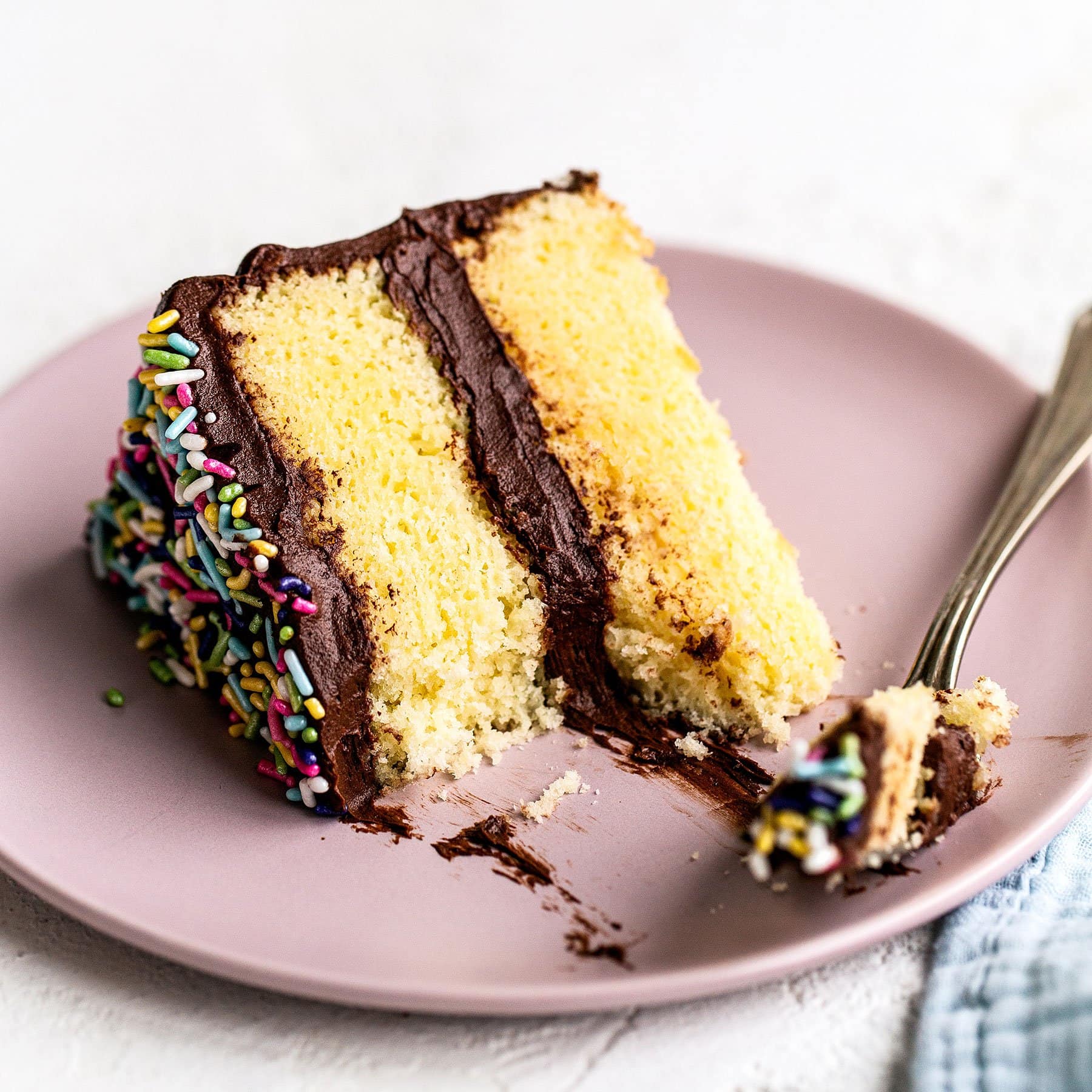
You're standing in the baking aisle, staring at a wall of boxes. One says vanilla. One says white. One says yellow. They all look basically the same, right? Wrong. If you’ve ever wondered what flavor is yellow cake, the answer is a lot more complex than just "it's a sponge."
It's nostalgia. It's richness. It's the taste of every birthday party you attended in 1994. If you enjoyed this article, you should look at: this related article.
Most people assume it’s just vanilla cake with some food coloring. Honestly, that’s a huge misconception. Real yellow cake has a specific chemical profile and a distinct mouthfeel that separates it from its paler cousins. It isn't just a color choice; it’s a structural and flavor-profile decision that changes the entire dessert experience.
The Science of the Egg Yolk
The secret is in the fat. While white cake uses only egg whites to maintain a snowy, pristine look, yellow cake demands the whole egg. Sometimes even extra yolks. For another angle on this event, see the latest update from Vogue.
Egg yolks are nature's little flavor bombs. They contain lecithin, an emulsifier that creates a tighter, more custard-like crumb. When you bite into a yellow cake, you’re tasting the richness of those fats reacting with sugar and flour. It’s dense. It’s moist. It’s got a "custardy" undertone that white cake can’t touch.
Think about the difference between a meringue and a crème brûlée. That’s the gap between white and yellow cake.
Is Yellow Cake Just Vanilla?
Technically, the primary aromatic in yellow cake is vanilla. But it’s not just vanilla.
In the professional baking world, yellow cake often leans on a "bakery emulsion" flavor profile. This usually includes a hint of almond extract or even a tiny touch of butter flavor to enhance the natural richness of the yolks. If you look at the ingredients of a classic Betty Crocker or Duncan Hines yellow cake mix, you'll see "natural and artificial flavors." This is code for a specific blend designed to trigger a comfort response.
Expert bakers like Stella Parks (author of Bravetart) have pointed out that historical yellow cakes often relied on high-quality butter and the distinct golden hue of farm-fresh eggs. This created a flavor that was more "buttery" than "vanilla-y."
- White Cake: Floral, light, clean vanilla, airy texture.
- Yellow Cake: Deep, buttery, eggy, rich vanilla, dense crumb.
Why the Box Mix Tastes "Yellow"
There is a very specific flavor associated with the "box" version of yellow cake. It’s a bit salty, very sweet, and has a lingering richness.
This is largely due to the use of shortening or specific fats that stay soft at room temperature. When you make a yellow cake from scratch, it often tastes like a high-end pound cake. When you make it from a box, it tastes like childhood. That distinction matters because the "flavor" of yellow cake is often as much about the chemical leaveners and the ratio of sugar-to-flour as it is about the actual extract used.
The Role of Chocolate Frosting
You can't talk about the flavor of yellow cake without talking about what goes on top.
Traditionally, yellow cake is paired with chocolate buttercream or fudge frosting. This isn't an accident. The richness of the egg-heavy sponge holds up against the intense, slightly bitter notes of cocoa much better than a delicate white cake would. The yellow cake acts as a sturdy, flavorful base that doesn't get lost.
It’s a marriage of fats. The fat in the chocolate meets the fat in the egg yolks, and suddenly you have the "Standard American Birthday Cake" flavor profile.
What Most People Get Wrong About the Ingredients
People often think they can just swap eggs in any recipe. If you take a white cake recipe and just throw in the yolks, you'll probably ruin it.
The acidity levels change. The fat content spikes.
Yellow cake recipes are specifically balanced to handle the extra weight of the yolks. If you're baking from scratch, the "flavor" also comes from the "creaming method." This is where you beat butter and sugar together until it’s pale and fluffy. This process aerates the fat, and when those yolks hit the mixture, it creates a specific velvety texture that we perceive as "richer flavor," even if the amount of vanilla is the same.
The Nostalgia Factor
Let's be real. Part of the "flavor" is psychological.
Food historians note that yellow cake became the domestic standard in the mid-20th century because it was more "economical" to use the whole egg rather than wasting yolks. Because of this, it became the default cake for millions of families. When you ask what flavor is yellow cake, you’re asking about a collective memory of celebration.
It’s the taste of a Saturday afternoon in a kitchen with the oven humming.
Making it Pop: How to Enhance the Flavor
If you want to move beyond the basic "yellow" taste, there are a few things experts do.
- Brown the Butter: Instead of just softened butter, use browned butter (beurre noisette). It adds a toasted, nutty depth that plays perfectly with the egg yolks.
- Salt Levels: Most people under-salt their yellow cakes. A half-teaspoon of kosher salt cuts through the richness and makes the vanilla notes sing.
- The "Box" Hack: If you are using a mix, swap the water for whole milk and the oil for melted butter. Add an extra egg yolk. This pushes the flavor closer to a traditional, scratch-made yellow sponge.
- Sour Cream: Adding a dollop of sour cream or full-fat Greek yogurt introduces a slight tang. This balances the "heavy" eggy taste that some people find overwhelming in traditional recipes.
Comparing Yellow Cake to Other Varieties
It's easy to get confused with the naming conventions in the baking world.
Pound Cake vs. Yellow Cake: Pound cake is much denser, traditionally using a 1:1:1:1 ratio of flour, butter, eggs, and sugar. Yellow cake is lighter and uses chemical leaveners like baking powder to get a "fluffier" bite.
Gold Cake: This is an old-school term you might see in grandma's cookbooks. Gold cake is basically a yellow cake on steroids—it uses only yolks, no whites at all. It’s incredibly rich and has a deep orange-yellow tint.
Vanilla Bean Cake: This usually refers to a high-end white or yellow cake that uses real vanilla bean specks. While yellow cake is a "flavor type," vanilla bean is more about the specific ingredient quality.
Acknowledging the Limitations
Is yellow cake the "best" cake? That's subjective. Some people find the "eggy" aftertaste of a true yellow cake a bit too much. If you prefer a clean, sharp flavor, you’re a white cake person. If you want something that feels like a hug in dessert form, you’re firmly in the yellow cake camp.
Also, keep in mind that the "yellow" in many commercial cakes today comes from Riboflavin (Vitamin B2) or artificial dyes like Yellow 5. If you're baking at home, the color will be much more muted—a soft primrose rather than a neon glow—unless you're using high-quality pasture-raised eggs with those deep orange yolks.
Actionable Steps for the Perfect Yellow Cake
To get the most out of this specific flavor profile, don't just settle for a bland sponge.
Start by sourcing the best eggs you can find. The darker the yolk, the better the flavor and color of your cake. When mixing, ensure your butter and eggs are at true room temperature—about 65 to 70 degrees Fahrenheit—to ensure the emulsion doesn't break. A broken emulsion leads to a greasy cake, which ruins that signature "yellow cake" mouthfeel.
Finally, don't overbake. Because of the high fat and sugar content, a yellow cake can go from perfect to dry in about ninety seconds. Pull it when a few moist crumbs still cling to the toothpick.
If you're looking to recreate that classic 1950s diner vibe, pair it with a thick layer of chocolate ganache. The bitterness of the dark chocolate against the custardy sweetness of the yellow sponge is the gold standard for a reason. It’s balanced, it’s nostalgic, and it’s a flavor that stands completely on its own.
Next Steps for Your Kitchen:
- Check your extracts: Use a high-quality "Pure Vanilla" rather than "Imitation" to avoid a chemical aftertaste.
- Temperature control: Set your eggs out at least two hours before baking.
- The Toothpick Test: Always test the center of the cake two minutes before the timer goes off.
- Frosting pairing: Try a 60% cocoa dark chocolate frosting to contrast the sweet yellow crumb.



