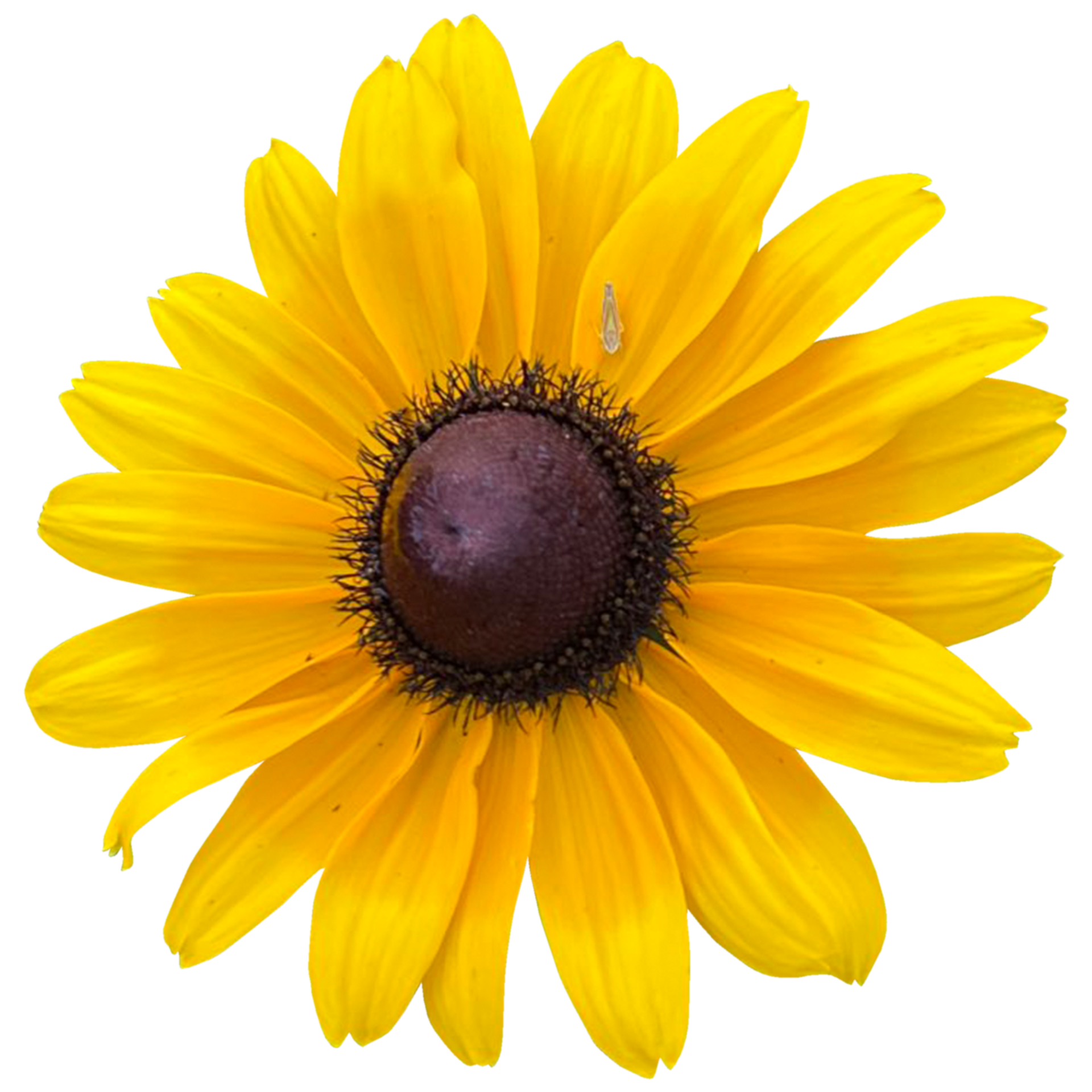
You see them everywhere. They’re on the side of the highway, poking out of cracks in the sidewalk, and anchoring the most expensive professional landscapes in the suburbs. The yellow black eyed susan is basically the "Golden Retriever" of the plant world. It’s friendly, reliable, and remarkably hard to kill. But honestly? Most people treat them as an afterthought. They buy a plastic pot at a big-box store, shove it in the ground, and wonder why it looks like a wilted mess three weeks later.
There’s a massive difference between a plant that’s merely surviving and one that’s actually thriving. If you want that explosive, "I-can-see-this-from-space" yellow, you have to understand what this plant actually wants. It’s not just a flower. It’s Rudbeckia hirta, a North American native that has been surviving droughts and prairie fires long before we started obsessing over curb appeal. For an alternative perspective, read: this related article.
What Most People Get Wrong About the Yellow Black Eyed Susan
Let's clear something up right now. People often confuse these with coneflowers or even small sunflowers. While they’re all in the Asteraceae family, the yellow black eyed susan has a very specific personality.
One big mistake? Thinking they are all perennials. They aren't. Similar insight on this trend has been shared by Refinery29.
Some are annuals. Some are biennials. Some are short-lived perennials. If you plant Rudbeckia hirta, don't be shocked when it doesn't come back next year. It’s often a biennial, meaning it spends year one growing leaves and year two showing off its flowers before calling it quits. However, it’s a prolific self-seeder. If you don't "clean up" your garden too early in the fall, those seeds hit the dirt, and you’ll have a whole new generation by spring. It’s basically a perennial via reincarnation.
The "Fuzzy Leaf" Secret
If you run your fingers over the leaves, they feel scratchy. Hairy, almost. This isn't just a weird texture; it's an evolutionary survival tactic. Those tiny hairs help the plant retain moisture and discourage deer from taking a massive bite. Deer generally hate the "mouthfeel" of a black eyed susan. It’s like eating a wool sweater. While no plant is truly "deer-proof" if the animals are starving, these are about as close as you get in the wildflower world.
Why Soil pH Doesn't Matter as Much as You Think
Gardening influencers love to talk about soil testing and nitrogen-phosphorus-potassium (NPK) ratios. It’s exhausting. For the yellow black eyed susan, most of that is noise. These plants are tough. They grew up in the Great Plains, for crying out loud.
They actually prefer "lean" soil. If you over-fertilize them, you’re going to get a massive explosion of green leaves but very few yellow petals. You’re essentially teaching the plant to be lazy. Give them decent drainage—that’s the non-negotiable part—and they’ll be happy. They hate "wet feet." If they sit in standing water, the roots will rot faster than a dropped avocado.
Sun is Non-Negotiable
You need sun. Lots of it. Six hours is the bare minimum, but eight to ten is where the magic happens. In partial shade, the stems get "leggy." They start stretching toward the light, eventually becoming top-heavy and flopping over into the mud. Nobody wants a floppy susan. If your garden is mostly shade, look into Rudbeckia laciniata (Soi-loop) or just pick a different plant entirely.
The Ecological Powerhouse in Your Backyard
We talk a lot about "pollinator gardens" these days. Usually, it's just marketing speak to sell more seeds. But the yellow black eyed susan is a legitimate heavy lifter.
According to the National Wildlife Federation, these plants support dozens of species of bees and butterflies. But the real stars are the Silvery Checkerspot butterflies. They use Rudbeckia as a host plant. That means they don't just drink the nectar; they lay their eggs there. Their caterpillars eat the leaves.
If you see little holes in your leaves, don't reach for the pesticide. Celebrate. It means your garden is actually working. It’s a tiny ecosystem.
Winter Interest and Bird Snacks
When the yellow petals finally fade and turn brown, most gardeners want to chop them down immediately. Resist the urge. Those dark, cone-shaped centers are packed with seeds. Goldfinches love them. Watching a bright yellow bird balance on a dried-out flower head in the middle of January is one of the best sights in nature. Plus, leaving the stalks provides nesting habitats for native bees that over-winter in hollow stems.
Cultivars: Which One Should You Actually Buy?
Walk into any nursery and you’ll see ten different varieties. It’s overwhelming. Let’s break down the ones that actually perform well in real-world conditions, not just in a climate-controlled greenhouse.
- 'Goldsturm' (Rudbeckia fulgida var. sullivantii): This is the gold standard. If you want a perennial that comes back year after year without fail, this is it. It grows about two feet tall and forms a dense clump. It won the Perennial Plant of the Year back in 1999, and it’s still the king.
- 'Little Goldstar': This is the compact cousin. It’s perfect for small urban gardens or containers. It only gets about 14 inches tall but produces just as many flowers as the big guys.
- 'Prairie Sun': This one is weird—in a good way. Instead of a black center, it has a greenish-light center and petals that fade from orange-yellow to lemon-yellow at the tips. It looks like a sunset.
Avoiding the Dreaded "Black Spot" (Septoria Leaf Spot)
Nothing ruins a yellow black eyed susan faster than Septoria. You’ll see it start at the bottom of the plant—small, dark spots that eventually consume the whole leaf until it turns crispy and black.
It’s a fungus. It loves humidity.
The fix isn't some expensive chemical spray. It's airflow. Don't crowd your plants. I know the tag says "space 12 inches apart," but give them 18. If the air can't move between the leaves, the moisture sits there and invites the fungus to a party. Also, water at the base of the plant. If you’re using a sprinkler that soaks the leaves every night, you’re basically asking for disease. Use a soaker hose or just point the nozzle at the dirt.
How to Get Two Blooms for the Price of One
Here’s a trick most people miss: Deadheading.
When a flower starts to look ragged, don't just let it sit there. Follow the stem down to the next set of leaves and snip it off. This tells the plant, "Hey, we didn't make seeds yet! Try again!" The plant will redirect its energy into producing a second flush of flowers. You can easily extend your bloom time from mid-summer all the way into the first frost of autumn by being a little bit diligent with your pruners.
But remember: stop deadheading in late September. You want those last few flowers to go to seed so the birds can eat and the plant can drop "babies" for next year.
Designing with Yellow: What Looks Good Next to Them?
Yellow is a loud color. It screams for attention. If you surround it with other loud colors, your garden starts to look like a box of melted crayons.
Try contrasting the yellow black eyed susan with deep purples or blues. Salvia, Russian Sage, or Purple Coneflower are classic companions. The blue-purple tones make the yellow look even more vibrant.
For a more "prairie" look, mix them with ornamental grasses like Little Bluestem or Prairie Dropseed. The fine texture of the grass balances out the coarse, chunky look of the flowers. It looks intentional and wild at the same time.
Actionable Steps for Your Garden
If you’re ready to add these to your yard, don't just wing it. Follow this sequence for the best results:
- Check your light first. Don't guess. Actually go outside at 10 AM, 1 PM, and 4 PM. If that spot isn't bathed in bright light, find a different spot.
- Buy 'Goldsturm' if you want a perennial. If you want a massive "wow" factor for one season, go with the Rudbeckia hirta annual varieties like 'Indian Summer' which have huge 6-inch flowers.
- Dig a hole twice as wide as the pot. Don't go deeper, just wider. You want the roots to spread out easily into the surrounding soil.
- Mulch, but don't touch the stem. Put down two inches of wood chips or shredded leaves to keep moisture in, but leave a little gap around the base of the plant so it can breathe.
- Water deeply twice a week for the first month. After that, they’re mostly on their own. They are drought-tolerant, but they aren't cacti. If it hasn't rained in three weeks, give them a drink.
- Leave the stalks in the fall. Your local bees and birds will thank you. Cut them back to the ground in late March once the weather starts to warm up.
The yellow black eyed susan isn't just a "filler" plant. It's a foundational piece of a healthy, low-maintenance landscape. It handles the heat, ignores the pests, and provides a massive splash of color when everything else is starting to wilt in the August sun. Get some in the ground. You won't regret it.



