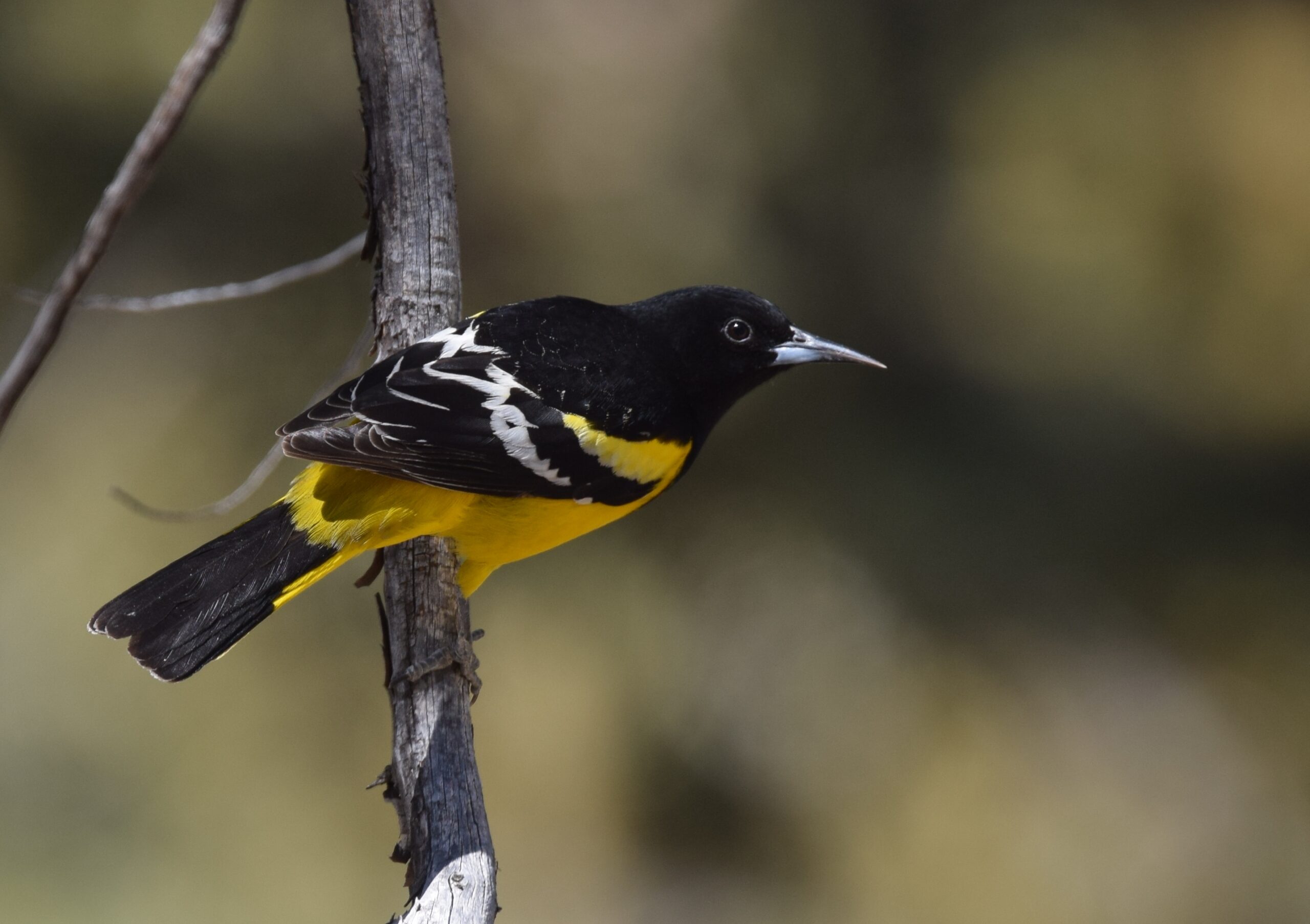
You're standing in your backyard, squinting at a flash of lemon-yellow feathers darting through the oak tree. You think, "Oh, a Goldfinch!" But then it moves. It has a black mask. Or maybe it doesn't. Suddenly, you realize identifying yellow birds North America hosts isn't quite as straightforward as the field guides make it look in those pristine, studio-lit photos.
It’s confusing.
Honestly, even seasoned birders get tripped up by a fall-plumage warbler or a female tanager. Nature isn't always kind enough to give us the "breeding male" version of every species. We get the messy versions—the juveniles, the molting adults, and the females who are intentionally camouflaged to hide from predators. If you want to actually know what you're looking at, you have to look past the color yellow and start looking at the "jizz"—a birding term for the general size, shape, and behavior of the bird.
The Usual Suspects: Goldfinches and Yellow Warblers
When most people search for yellow birds North America, they are usually looking at an American Goldfinch. These are the "wild canaries" of the backyard. They have that bouncy, roller-coaster flight pattern that is a dead giveaway even before you see their faces.
But here is where it gets tricky.
An American Goldfinch in July looks nothing like an American Goldfinch in December. In the summer, the males are a neon, radioactive yellow with a crisp black cap. By winter? They turn a dull, brownish-olive that makes you wonder if they’re even the same species. If you see a yellow bird at your thistle feeder with black wings and white wing bars, it’s a finch. Simple as that.
Then you have the Yellow Warbler. These guys are the "all-yellow" birds. While the Goldfinch has black wings, the Yellow Warbler is yellow pretty much everywhere. If it’s a male, you’ll see these delicate, rusty-red streaks on the chest. They don't hang out at feeders. You’ll find them in willows or wet thickets, constantly moving, hunting for caterpillars. They are frantic. If the bird stays still for more than three seconds, it's probably not a warbler.
Why the Meadowlark is a Different Beast Entirely
Western and Eastern Meadowlarks are iconic, but you won't find them in your suburban hedges. They need space. Big, wide-open grasslands.
They have this stunning bright yellow chest with a bold, black "V" across it, like a piece of high-fashion jewelry. But here is the thing: they are actually quite large, almost the size of a robin, and they spend most of their time on the ground. If you see a yellow-breasted bird perched on a fence post in a cow pasture, singing its heart out with a flute-like whistle, you’ve found a Meadowlark.
The "Yellow-But-Not-Really" Mystery Birds
Sometimes, what we think is a yellow bird is actually a bird with "yellow highlights." This is where identification goes off the rails for beginners.
Take the Evening Grosbeak. It looks like a Goldfinch on steroids. It has a massive, bone-crushing beak and a bulky body. They are erratic. You might see a hundred of them one winter and then none for the next five years. They follow the food—specifically seeds and spruce budworms.
Then there’s the Verdin. If you live in the Southwest, you know this bird. It’s tiny, grey, and looks like a fluffball, but it has a distinct yellow head. It’s a specialist of the scrublands. Most people miss them because they are so small, but once you see that yellow face popping out of a mesquite bush, you won't forget it.
The Tanager Trap
Western Tanagers are some of the most spectacular yellow birds North America offers, but they are master hiders. The male has a bright red head, a yellow body, and black wings. It looks like a tropical escapee.
However, the females and young males are a dull, greenish-yellow. They love the canopy of coniferous forests. You’ll hear them—they sound like a robin with a sore throat—way before you see them. Identifying them requires looking at the beak. Tanagers have thick, blunt beaks compared to the needle-thin beaks of warblers.
How to ID These Birds Like a Pro
Stop looking at the feathers first. I know, it sounds counterintuitive.
Instead, look at the "Three S" rule:
- Size: Is it smaller than a sparrow, or bigger than a robin?
- Shape: Is the beak a tiny tweezer (insect eater) or a heavy nutcracker (seed eater)?
- Station: Where is it? High in a pine tree? Skulking in a marsh? Hopping on your lawn?
A Yellow-breasted Chat, for example, is technically a warbler (or was classified as one for a long time), but it acts like a mockingbird. It’s big, it’s loud, and it hides in briars. If you just look for "yellow," you might confuse it with a Common Yellowthroat. But the Yellowthroat has that famous black "Zorro" mask and stays low in the reeds.
Common Misconceptions About Yellow Birds
Many people think that if a bird is yellow, it must be a "Yellowbird." There is actually no such thing as a species just called a "Yellowbird" in North American ornithology.
Another big mistake is assuming the "Yellow-rumped Warbler" will be yellow. Beginners see the name and expect a bright sun-colored bird. In reality, they are mostly streaky grey and white, with just a tiny patch of yellow on the crown, sides, and—you guessed it—the rump. Birders affectionately call them "Butterbutts." They are the hardiest warblers, often staying north long after the others have fled for the tropics because they can actually digest wax myrtle berries.
Where to Find Them Right Now
If you want to see a high concentration of different species, you need to follow the edges. Birds love edges. Where a forest meets a field, or where a river meets a forest.
- The Great Lakes Region: During spring migration (May), places like Magee Marsh in Ohio are legendary. You can see 20+ species of warblers, many of them yellow, in a single afternoon.
- The Gulf Coast: In the fall, birds are "stacking up" to cross the ocean. This is prime time for spotting Tanagers and Orioles.
- Your Own Backyard: If you plant native plants like Goldenrod or Sunflowers, you are basically putting up a neon sign for Goldfinches.
Real-World Data: Population Trends
According to the State of the Birds report, grassland species like the Meadowlark are actually in trouble. Their numbers have plummeted because we are losing native prairies. On the flip side, some forest birds like the Hooded Warbler are doing okay because of reforestation efforts in the East. It’s a mixed bag.
When you track yellow birds North America populations, you’re really tracking the health of the environment. If the yellow birds disappear, it usually means the insects are gone, or the nesting sites have been paved over.
Practical Steps for Better Birding
Don't buy a $500 field guide yet. Start with your phone.
The Merlin Bird ID app from Cornell Lab of Ornithology is basically magic. You can record the sound of a bird, and it will tell you what it is in real-time. It’s a game-changer for finding those yellow warblers hidden in the leaves.
Actionable Checklist for Your Next Outing:
- Check the Wing Bars: If you see white stripes on the wings, it's likely a Finch or a Kinglet.
- Watch the Tail: Does it wag? Palm Warblers are yellow underneath and constantly "pump" their tails up and down.
- Listen for the "Sweet-Sweet-I'm-So-Sweet": That’s the classic song of the Yellow Warbler. If you hear it, look for the bird near water.
- Focus on the Eyes: Look for an "eye ring"—a circle of white or pale feathers around the eye. A Nashville Warbler has a very distinct white eye ring against a grey head.
- Clean Your Feeders: If you’re attracting Goldfinches with nyjer seed, keep it fresh. They won't touch damp, moldy seed, and it can actually make them sick.
Observation is a muscle. The more you look, the more you realize that the "yellow" is just the beginning of the story. You start seeing the olive tones, the wing bars, the notched tails, and the specific way a bird hops versus how it walks. That’s when you stop being a casual observer and start being a birder.
Get a decent pair of 8x42 binoculars. Anything less and you'll struggle in low light; anything more and the image will shake too much. Find a local patch of woods. Sit still for twenty minutes. The yellow birds will eventually come to you.



