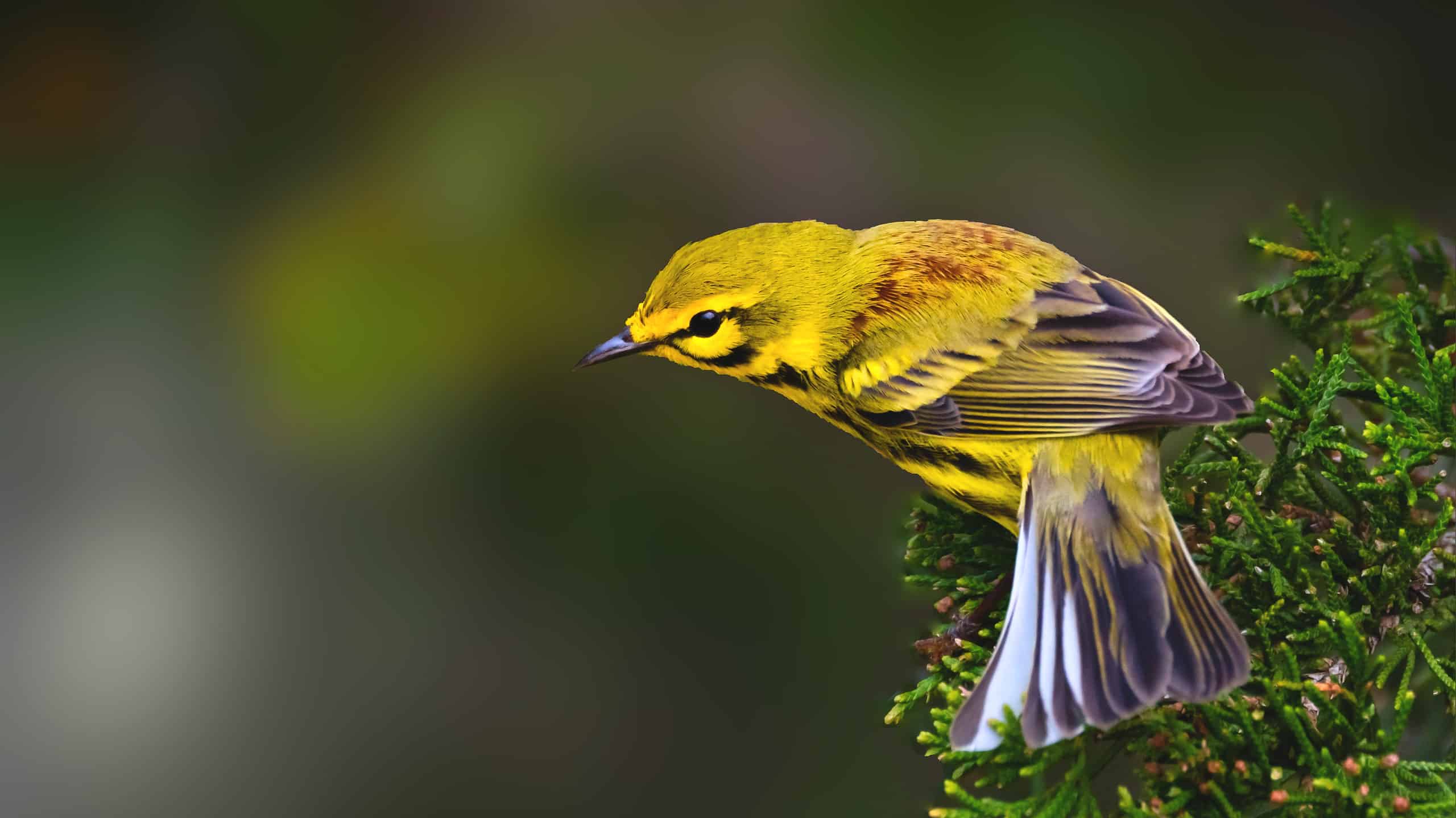
You’re staring at a bright flash of lemon-yellow feathers through your kitchen window, heart racing as you fumble for your phone. By the time the camera app actually opens, that American Goldfinch is long gone. It's frustrating. Honestly, capturing high-quality yellow bird photos is significantly harder than most amateur photographers realize because yellow is a notoriously "loud" color for digital sensors to process. If you’ve ever looked at your shots and noticed the bird looks like a glowing, featureless blob of neon, you aren't alone.
Lighting is usually the culprit.
Yellow reflects a massive amount of light. When the sun is high, your camera's light meter sees that bright yellow plumage and freaks out, often underexposing the rest of the image or "blowing out" the highlights on the feathers so all the detail vanishes. You want to see the individual barbs on the feathers, not a yellow smudge. Achieving that requires a mix of patience, gear knowledge, and a little bit of luck with the weather.
The Technical Struggle of Capturing Yellow Bird Photos
Most people think a "sunny day" is perfect for photography. It's actually the worst. Harsh, midday sun creates deep shadows and "hot spots" on bright subjects. If you're out trying to get yellow bird photos of a Prothonotary Warbler in a swamp or a Yellow Warbler in a willow tree, you want what pros call "bright overcast" light. Think of the clouds as a giant softbox.
Digital sensors have a specific dynamic range. When you point your lens at a Yellow Warbler, the red and green channels of your sensor (which combine to make yellow) hit their limit way before the blue channel does. This is called "clipping." Once those channels clip, the data is gone. You can't "edit" detail back into a blown-out yellow wing. It’s just dead pixels.
To avoid this, use your exposure compensation dial. Dial it down to -0.3 or even -0.7. The image will look a bit dark on your screen, but the yellow feathers will retain their texture. You can always brighten the shadows later in post-processing, but you can't fix a "white" patch on a yellow bird.
Real Examples: Common Species You’ll Actually See
Let's talk about the birds themselves. Not every yellow bird is the same shade, and knowing their behavior helps you get the shot.
The American Goldfinch is the classic. In summer, the males are a vibrant, taxi-cab yellow with a black cap. They love echinacea (coneflowers) and sunflowers. If you want a great photo, don't just point and shoot. Wait for them to land on a seed head. The contrast between the yellow feathers and the dark center of a sunflower makes for a killer composition.
Then you have the Yellow-rumped Warbler. Birders call them "Butter Butts." They aren't fully yellow; they just have specific patches on their rump and flanks. Because they are tiny and move like they’ve had six espressos, you need a fast shutter speed. I’m talking 1/2000th of a second or higher. If you're shooting at 1/500th, you’re just going to have a collection of blurry yellow streaks.
Then there’s the Evening Grosbeak. These guys are chunky. They look like a sparrow that went to the gym and started a cycle of steroids. Their yellow is more of a mustard or "antique gold" hue. Because they are larger and slower, they are fantastic subjects for practicing your depth of field. A wide aperture (like f/4 or f/5.6) will blur the background, making that mustard-colored bird pop off the screen.
The Equipment Myth
You don't need a $10,000 lens. Seriously.
While a 600mm f/4 prime lens is the dream, modern "super-zoom" lenses like the Sigma or Tamron 150-600mm have changed the game for hobbyists. Even a bridge camera with a permanent long lens can produce stunning yellow bird photos if the light is right. The "secret" isn't the glass as much as it is the distance.
Birds have a "flight distance." If you cross that invisible line, they fly. Instead of buying a bigger lens, buy a camo net or just sit still for twenty minutes. Most birds will eventually accept you as part of the landscape. I’ve had Yellow-breasted Chats hop within six feet of me just because I sat on a stump and stopped moving.
Composition: Beyond the "Bird on a Stick"
We've all seen the photo: a bird centered in the frame, sitting on a bare branch. It’s fine. It’s a "record shot." But it isn't art.
To make your yellow bird photos stand out on social media or in a gallery, think about the color wheel. Yellow’s complementary color is purple. If you can photograph a Goldfinch on a purple thistle or near some lavender, the colors will vibrate. It creates a natural visual tension that draws the eye immediately.
Also, watch your background. A bright yellow bird against a bright sky usually looks washed out. Try to position yourself so the background behind the bird is in shadow. A dark, leafy green background makes a yellow bird look almost incandescent. It’s all about contrast.
Ethical Photography and Why it Matters
Don't use playback.
A lot of photographers use apps to play bird calls to lure them closer. This is a huge debate in the birding community. During nesting season, playing a call makes the bird think a rival has entered its territory. It stops feeding its young and starts looking for the "intruder." It stresses them out.
If you want the best yellow bird photos, earn them. Learn the bird’s habitat. Learn that the Prothonotary Warbler loves standing water and cypress knees. Learn that the Western Tanager likes the tops of Douglas firs. When you understand the biology, you can predict where the bird will be before it even gets there. That’s how you get the shot of the bird taking flight or catching an insect, rather than just sitting there.
Post-Processing Secrets for Yellow Tones
When you get home and dump your cards, the "Yellow" slider in Lightroom is your best friend and your worst enemy.
Most people over-saturate. Don't do that. Instead, play with the "Luminance" of the yellow channel. Lowering the luminance slightly will make the yellow look deeper and richer. If the bird looks a bit orange, shift the "Hue" slider slightly toward the green side.
Remember: digital cameras often struggle with the "Red" channel when processing yellow. If your bird looks "flat," check your histogram. If the red channel is touching the right side, you've lost detail. This is why shooting in RAW format is non-negotiable. JPEGs discard too much data, and with a color as tricky as yellow, you need every bit of data you can get.
Actionable Steps for Your Next Outing
Stop chasing the birds. It doesn't work. They are faster than you and they can fly. Instead, find a "perch" near a food or water source.
- Find the light first. Identify a spot where the sun will be at your back (the "Golden Hour" shortly after sunrise).
- Pre-focus on a branch. If you see a bird repeatedly landing on the same twig, focus on that twig manually. When the bird returns, you won't waste time with the autofocus hunting back and forth.
- Check your shutter speed. For small songbirds, 1/2000s is the floor. Anything slower risks "motion blur" from the bird’s constant twitching.
- Use "Burst Mode." Take ten photos at once. Birds move their heads in millisecond increments. Out of ten shots, usually only one has the "catchlight" (that little spark of light) in the eye that makes the bird look alive.
- Crop with caution. It’s tempting to crop in tight to see the bird better. But every time you crop, you lose image quality. Try to fill at least 25% of the frame with the bird before you rely on cropping.
High-quality photography is less about the gear and more about understanding how light interacts with specific pigments. Yellow is a bold, reflective, and beautiful challenge. By underexposing slightly and focusing on the "complementary" colors in the environment, you transform a simple snapshot into a professional-grade image. Get out there, sit still, and wait for the light to hit the feathers just right. You'll know it when you see it.



