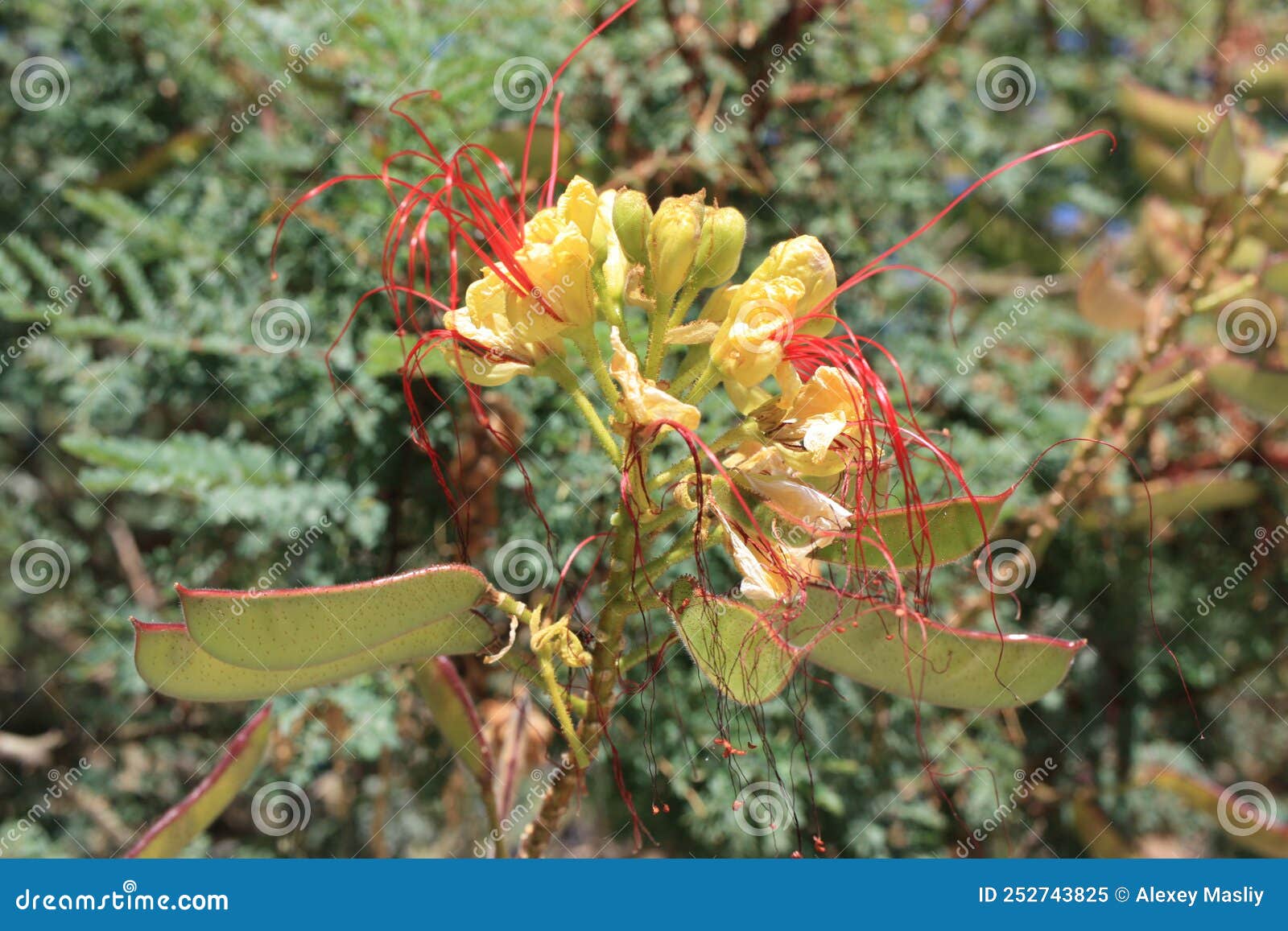
You've likely seen those iconic, neon-orange crane-like flowers in tropical landscaping. They're everywhere. But there is a scrappier, tougher, and—honestly—more interesting relative that people constantly mix up. The yellow bird of paradise flower isn't just a color swap of the common houseplant. It is a completely different beast. Botanically known as Erythrostemon gilliesii (though many old-school nurseries still label it Caesalpinia gilliesii), this plant doesn't want a humid rainforest. It wants heat. It wants rocky soil. It basically wants to be left alone in the middle of a desert summer.
Most people see the name and assume it's a Strelitzia. It isn't. While the common orange bird of paradise is a clumping, fleshy perennial from South Africa, the yellow bird of paradise is a woody, deciduous shrub originally hailing from Argentina and Uruguay. It has adapted to thrive in the high-altitude, arid regions of the Andes. This isn't just a "pretty face" for your patio; it’s a rugged survivor that handles neglect with a weird kind of grace.
The Identity Crisis of the Yellow Bird of Paradise Flower
The confusion starts at the nursery. If you walk in and ask for a "yellow bird," you might get the Strelitzia reginae 'Mandela's Gold,' which is just a yellow version of the tropical classic. That’s a fine plant, but it’s not what we’re talking about here. The true yellow bird of paradise flower features fern-like, feathery foliage and stunning lime-yellow petals. But the real showstopper? The stamens. Long, crimson-red filaments explode out of the center like a firework frozen in mid-air. It looks exotic, almost alien.
It’s a bit of a rebel. While other plants are wilting in the 100-degree heat of August in places like Phoenix or West Texas, this shrub is just getting started. It actually loves the heat. In fact, if you give it too much water or shade, it gets "leggy" and sad. It needs the struggle.
Why the "Bird" Moniker Stuck
It's all about the silhouette. When the blooms open, the red stamens arch upward and outward, mimicking the crest of a tropical bird. The yellow petals form the body. In the wind, they bob around, and if you squint, it looks like a flock of tiny, flamboyant birds landing on a mess of green lace. It’s a great example of convergent evolution in aesthetics—two totally unrelated plants ending up with the same nickname because humans love a good visual metaphor.
How to Actually Grow It (Without Killing It)
Honesty time: most people kill this plant by being too nice to it. We’ve been conditioned to think that "more water equals more love." For the yellow bird of paradise flower, that's a death sentence. Root rot is its primary enemy.
Soil and Drainage
You need soil that drains faster than a sieve. If you have heavy clay, don't even bother planting it directly in the ground without massive amendments. You're better off building a raised mound or using a large pot with plenty of perlite and sand. It thrives in alkaline soil, which is a blessing for gardeners in the American Southwest who struggle with "caliche" or salty dirt that kills off more sensitive species.
Sun, Sun, and More Sun
This is not a "bright indirect light" kind of plant. It needs full, blasting, unapologetic sun. We are talking six to eight hours of direct exposure minimum. If you try to grow this in the shade, the branches will stretch out, looking thin and pathetic, and the flowering will be sparse. It’s a desert native. It wants to bake.
Cold Hardiness
Here is where it gets surprising. Despite its tropical looks, Erythrostemon gilliesii is remarkably cold-hardy compared to its orange cousins. It can usually handle temperatures dropping down to $10^{\circ}F$ or even $5^{\circ}F$ once established. In colder zones (like USDA Zone 8 or lower), it might die back to the ground in winter. Don't panic. Usually, the root system survives, and it’ll come roaring back when the ground warms up in the spring.
Maintenance: The "Less is More" Strategy
Pruning is probably the only high-maintenance thing about this plant. Left to its own devices, it can become a bit of a wild, scraggly mess, reaching 10 feet tall and just as wide. Most gardeners prefer to keep it tucked in.
- Deadheading: If you want more flowers, snip off the spent blooms before they turn into seed pods.
- The Pod Problem: It produces large, flattened bean pods. They are part of the legume family, after all. These pods eventually "pop" to throw seeds everywhere. If you don't want a thousand babies next year, cut the pods off early.
- Winter Shape-Up: In late winter, you can prune it back hard. This encourages new, bushy growth and more flower sites.
A Warning for Pet Owners and Parents
This is a critical point that often gets skipped in glossy garden magazines. The seeds and pods of the yellow bird of paradise flower are toxic. They contain tannins and other compounds that can cause severe gastrointestinal distress if eaten. We're talking vomiting and diarrhea that can get pretty nasty. If you have a dog that eats everything in sight or curious toddlers, maybe plant this in the backyard behind a fence or skip it altogether. It’s a "look but don't taste" kind of plant.
The Wildlife Connection
If you want hummingbirds, this is your golden ticket. The red stamens are like a neon "Open" sign for pollinators. Because the nectar is tucked deep inside the floral structure, long-tongued insects and birds are the primary visitors. Watching a hummingbird hover around a 7-foot tall yellow bird of paradise is one of those quintessential gardening moments that makes the thorns (yeah, it has small prickles sometimes) worth it.
It also serves as a host plant for certain butterflies. The biodiversity value of this plant in a suburban xeriscape can't be overstated. You're basically creating a mini-ecosystem that requires almost zero supplemental irrigation once the roots are set.
Common Misconceptions and Troubleshooting
People often complain that their yellow bird of paradise isn't blooming. 90% of the time, the issue is nitrogen. If you’re using a standard high-nitrogen lawn fertilizer nearby, the plant will put all its energy into those feathery green leaves and zero energy into flowers. It’s a legume; it can actually fix its own nitrogen from the air. It doesn't need your help. Use a phosphorus-heavy fertilizer if you must, but honestly, "benign neglect" is usually the best fertilizer.
Another issue is the "Yellowing" of the leaves—ironically. If the leaves start turning a sickly pale yellow (not the vibrant green they should be), it might be iron chlorosis. This happens in very high-pH soils where the plant can't grab the iron it needs. A little chelated iron supplement usually fixes it right up.
Is it Invasive?
In some parts of the world, like South Africa and parts of the Australian outback, it’s considered a bit of a nuisance because it spreads so easily via those popping seed pods. In the U.S., it’s generally considered "naturalized" in the Southwest but not a major ecological threat. Still, being a responsible gardener means keeping an eye on those pods.
Actionable Steps for Your Garden
If you're ready to add a yellow bird of paradise flower to your landscape, don't just go buy the first one you see. Follow this game plan:
- Check the Label: Ensure it says Erythrostemon gilliesii or Caesalpinia gilliesii. Avoid Strelitzia if you want the desert-hardy version.
- Timing: Plant in the spring. You want the root system to have an entire summer to establish before the first frost hits.
- Site Selection: Find the hottest, driest spot in your yard. Near a south-facing wall is perfect because the "thermal mass" of the wall will keep the plant warm during chilly nights.
- Watering Routine: Water it once or twice a week for the first month. After that? Only water it if the leaves start to look slightly wilted or if you haven't had rain in three weeks.
- Mulching: Skip the wood chips. Use crushed rock or gravel mulch. Wood chips hold too much moisture near the base of the stem, which can lead to fungal issues.
This plant is a testament to the idea that beauty doesn't have to be fragile. It’s a tough-as-nails shrub that brings a hit of high-definition color to environments where other plants just give up. Whether you're trying to save water or just want a plant that looks like a fire-breathing bird, this is the one.