You’re standing in the candy aisle. Your eyes scan the rainbow of plastic wrappers, and you see it—the iconic yellow bag. It stands out. It screams for attention. But if you're expecting the classic strawberry and grape experience, you're about to get a massive shock to your taste buds.
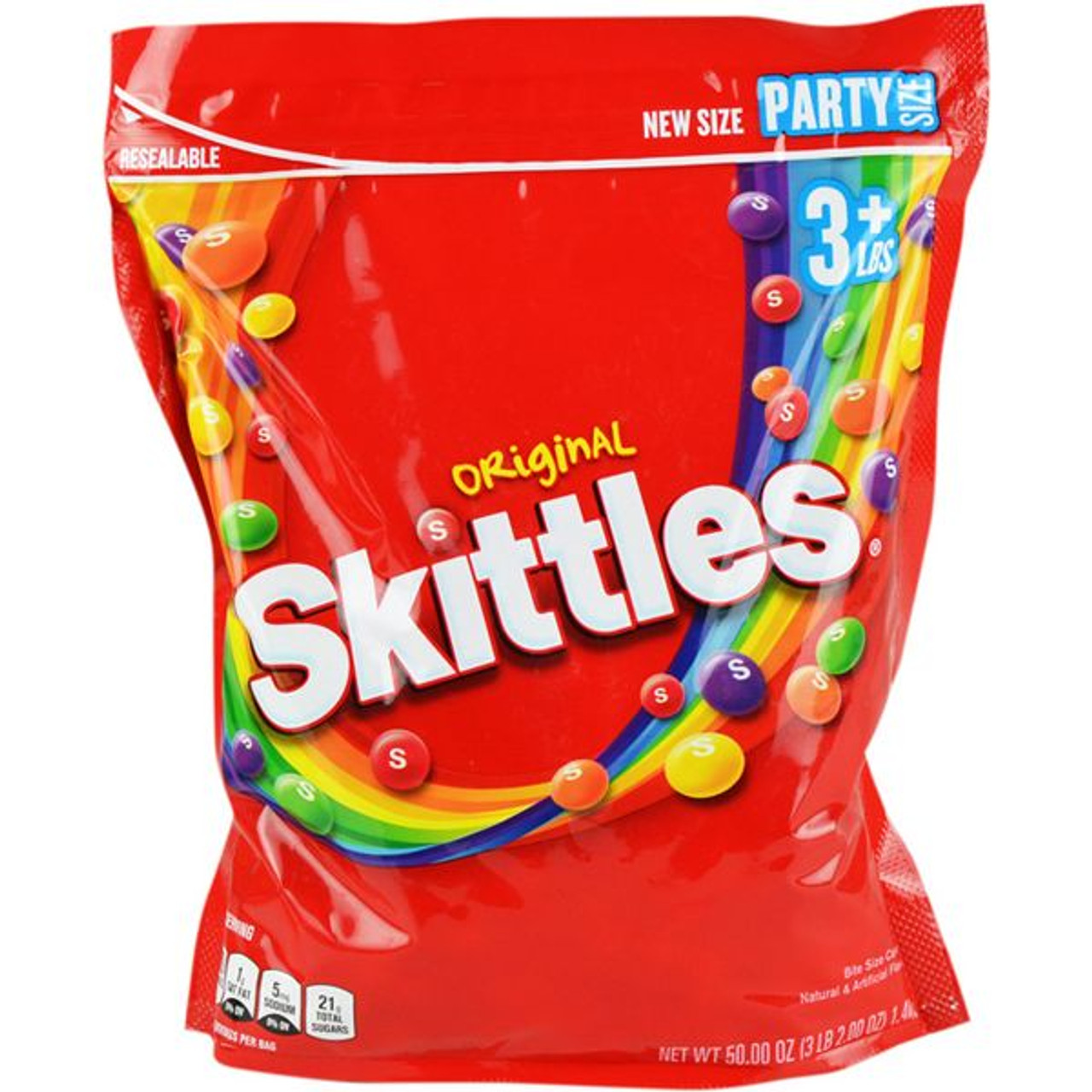
Yellow Bag Skittles are almost always synonymous with Skittles Sour. It's a branding choice that has confused people for decades, yet it remains one of the most consistent sights in the confectionery world. While the red bag is the "Original" king, the yellow bag represents the rebellious, pucker-inducing sibling.
Why yellow? It makes sense from a psychological perspective. Yellow represents citrus, acidity, and sharpness. When Mars, Incorporated—the parent company behind the brand—decided to launch a sour variant, they needed a visual cue that screamed "danger" to your tongue.
What’s Actually Inside the Yellow Bag?
Honestly, the lineup inside a yellow bag of Skittles Sour isn't a carbon copy of the original flavors. Most people assume they just tossed the standard flavors in citric acid and called it a day. That’s not quite right.
The current standard lineup for the Sour Skittles in the United States includes Sour Strawberry, Sour Green Apple, Sour Lemon, Sour Orange, and Sour Grape. Wait. Did you notice that? Green Apple is still the star here. While the original red bag famously switched from Lime to Green Apple in 2013—and then switched back to Lime in 2021 after a massive public outcry—the Sour version has its own evolution.
For a long time, the sour coating was the main event. It’s a crystalline powder, mostly a mix of citric acid and sugar, that hits you the second the candy touches your tongue. It's intense. Some people love the "sandpaper" texture it adds to the shell. Others find it ruins the smooth "S" embossed experience.
The Great Texture Debate
There is something fundamentally different about the mouthfeel of Skittles in the yellow bag. Because of that sour sanding, the shells often feel thinner. They shatter differently.
Have you ever noticed how a fresh bag of Sour Skittles smells compared to the Original? It’s sharper. It's more chemical, but in that nostalgic, 90s-candy-store kind of way. If you leave a bag open for too long, the sour dust absorbs moisture from the air. The candies get sticky. They clump. It’s a disaster.
But when they’re fresh? They provide a specific type of sensory overload that the classic red bag just can't touch. It’s not just about sweetness; it’s about that physical reaction—the salivary glands working overtime, the slight squint of the eyes.
Why Do People Keep Looking for Other Yellow Bags?
Here is where things get a bit complicated. Depending on where you are in the world, or what limited-edition run is happening, the "yellow bag" might not always be the Sour variety.
- Skittles Desserts: In some international markets, like the UK, "Desserts" flavors have appeared in yellowish or light-orange packaging. These featured flavors like Strawberry Ice Cream and Blueberry Tart.
- Tropical Skittles: While usually in a blue or teal bag, some regional variations and older promotional packs have leaned into yellow-adjacent colors.
- Brightside Skittles: These come in a very bright, almost neon yellow-green bag. They include flavors like Kiwi Banana and Watermelon.
If you are a Skittles purist, you know that the "Yellow Bag" label almost exclusively refers to the Sour line in the North American market. If you see a yellow bag in a gas station in the middle of Ohio, you better be prepared for a tart experience.
The Ingredients: What Makes the Sour Pop?
If you flip that yellow bag over and look at the fine print, you'll see a list that looks pretty standard for a chewy candy. Sugar, corn syrup, hydrogenated palm kernel oil. But the magic is in the acids.
Citric Acid is the primary driver here. It’s what gives lemons their kick. But Skittles Sour also uses Fumaric Acid and Malic Acid. Malic acid is what you find in tart green apples. It has a "persistent" sourness that lingers longer than citric acid. This combination is why the sourness doesn't just vanish; it builds as you chew.
Interestingly, many fans have noticed that the "sourness level" has fluctuated over the years. In the early 2000s, there was a persistent rumor (and a lot of anecdotal evidence) that Sour Skittles were significantly more acidic than they are today. Some people claimed they would get "Skittles tongue"—a raw sensation on the roof of the mouth or the tongue after eating a whole bag.
Whether Mars actually dialed back the formula or our adult palates have just become desensitized to extreme candy is a mystery. But the cult following for the "Original Sour" formula remains strong on Reddit threads and candy forums.
The Problem With the Yellow Bag
Let's talk about the mess. You can't talk about Skittles in the yellow bag without mentioning the "dust."
Unlike the Original, Wild Berry, or Tropical varieties, the Sour ones leave a residue. If you’re gaming or typing while eating these, your keyboard is going to be covered in white, acidic powder. It’s the Cheeto-finger equivalent of the candy world.
There is also the "bottom of the bag" phenomenon. Every yellow bag ends with a pile of sour sugar at the bottom. Some people throw it away. Others—the true enthusiasts—tip the bag back and take the "sour shot." It’s a bold move. It’s also a great way to ensure you can’t taste anything else for the next three hours.
A Global Perspective on the Yellow Aesthetic
It is worth noting that the "yellow bag" hasn't always been the global standard for Sours. In some European countries, the Sour Skittles actually come in a bright green bag. This creates a massive amount of confusion for travelers.
Imagine being a Brit used to the green bag for Sours, then coming to the US and seeing the yellow bag. You might think it’s a lemon-only bag. Or a "Citrus Mix."
Actually, the Citrus Mix was a real product for a while. It had a yellow-orange bag and featured flavors like Lime, Lemon, Orange, Pink Grapefruit, and Tangerine. It was widely considered one of the best "niche" Skittles varieties ever made. Sadly, it’s mostly a ghost now, living on only in the memories of those who prefer tangy fruit over the standard "Original" profile.
Health and Dietary Realities
Let's be real: no one is eating Skittles for their health. But it's worth noting the specifics for those with dietary restrictions.
As of 2026, Skittles in the US are generally considered vegan-friendly because they moved away from gelatin years ago. They also don't use carmine (a red dye derived from beetles) anymore in most markets. However, they do contain processed sugar and palm oil, which are sticking points for some strict vegans or environmentalists.
For those with allergies, Skittles are often a "safe" candy because they are gluten-free and gelatin-free. But always check the back of your specific yellow bag. Manufacturing locations change, and cross-contamination warnings can vary by batch.
The Legacy of the Yellow Wrapper
The yellow bag remains a staple because it offers a break from the cloying sweetness of modern snacks. It represents a specific era of candy marketing—the "Extreme" era—that somehow managed to stick around while other gimmicky snacks faded away.
It’s about the balance. The sugar provides the base, but the yellow bag’s specific acid profile provides the "bite." It's why they are a favorite for long road trips. The sourness keeps you alert in a way that a standard chocolate bar simply can't.
Practical Steps for the Skittles Enthusiast
If you're hunting for the yellow bag or trying to get the most out of your Skittles experience, here is how to do it right:
- Check the "Best By" Date: Sour Skittles age worse than the originals. If the bag is old, the sour powder can turn into a hard, unpleasant crust rather than a light dust.
- The "Mix" Strategy: Many connoisseurs buy a red bag and a yellow bag and mix them 50/50. This tempers the sourness and adds a layer of complexity to the flavor profile. It also prevents the "raw tongue" issue.
- Temperature Matters: Keep your yellow bag in a cool, dry place. Humidity is the enemy of the sour coating. If you've ever had a "sweaty" Skittle, you know exactly how unappealing that is.
- Use as a Garnish: Believe it or not, crushed Sour Skittles from the yellow bag make an incredible rim for a summer cocktail or a topping for a very specific type of lemon cupcake. The acidity cuts through the frosting beautifully.
The yellow bag isn't just a container; it's a warning label and an invitation. Whether you’re a lifelong fan of the pucker or someone who just accidentally grabbed the wrong bag at the checkout counter, there’s no denying that it holds a unique, sharp place in the candy world.
Next time you see that bright yellow plastic, you'll know exactly what you're signing up for. It’s loud, it’s messy, and it’s undeniably sour. Just the way it’s supposed to be. For the best experience, try pairing a handful of these with a cold sparkling water to cleanse the palate between the heavy hits of malic acid. Your taste buds will thank you—or at least, they’ll be too busy reacting to notice anything else.



