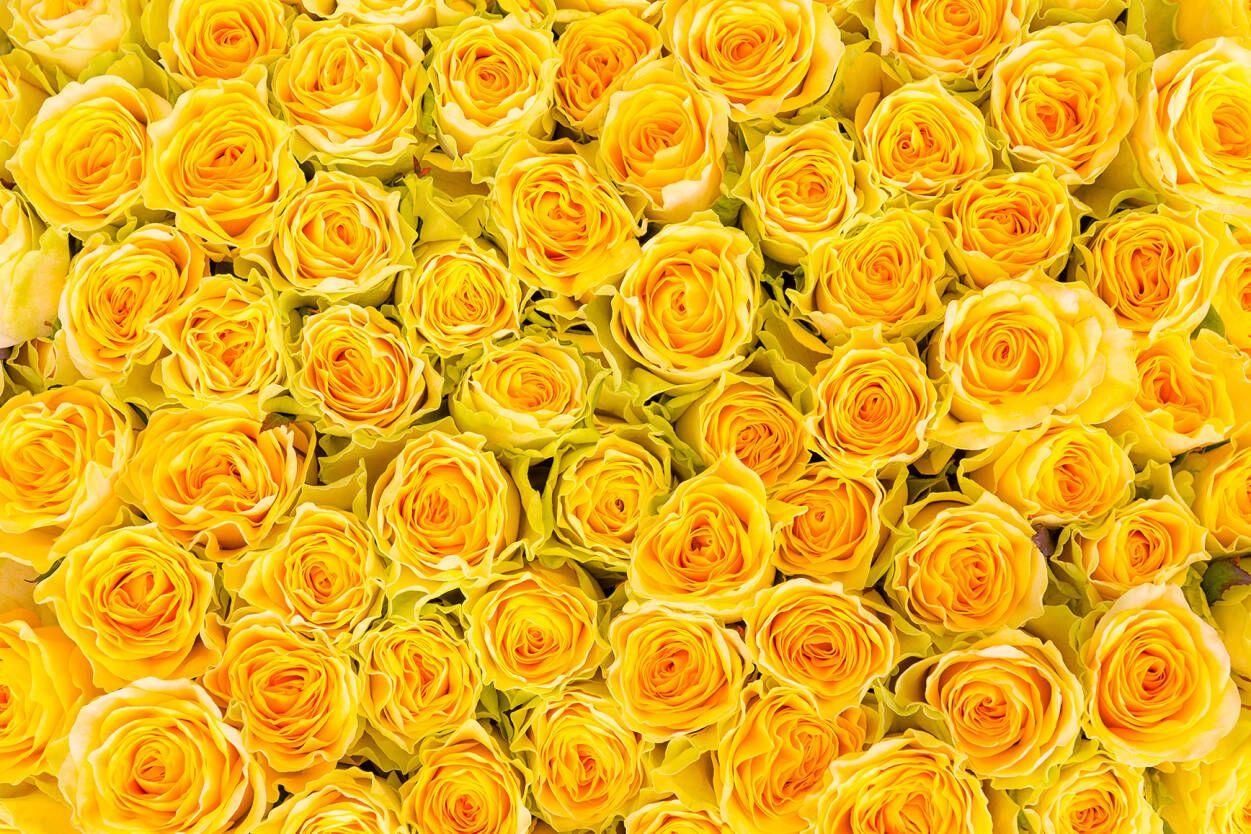
Walk into any high-end florist in Manhattan or a small-town garden shop in the Midwest, and you’ll likely see them. Tucked between the aggressive reds and the trendy "millennial pinks" are the staples. Yellow and white roses. They're everywhere. But honestly, most people treat this combination as a "safe" backup choice for a last-minute gift. They shouldn't.
There is a weirdly specific history behind these colors that dates back centuries. It’s not just about looking "bright" or "clean." When you mix yellow and white roses, you’re actually tapping into a visual language that has shifted dramatically from Victorian England to modern-day Tokyo.
The Weird History of Yellow and White Roses
For a long time, yellow roses were the "bad boys" of the floral world. In the 18th century, if you sent someone a yellow rose, you weren't saying "Let's be friends." You were basically accusing them of cheating or expressing intense jealousy. It was a slight. A floral middle finger, if you will.
White roses, meanwhile, have almost always been the "good kids." Since the Middle Ages, they've been tied to purity and the Virgin Mary. White roses (specifically the Rosa alba) were the symbol of the House of York during the Wars of the Roses in the 15th century. They represented a sort of rigid, aristocratic dignity.
So, why do we put them together now?
Because the meaning of yellow changed. By the early 20th century, the "jealousy" vibe faded away, replaced by the idea of "platonic sunshine." When you combine that with the "new beginnings" energy of white, you get a bouquet that is essentially the floral equivalent of a fresh start. It’s bright. It’s light. It doesn't carry the heavy, sometimes suffocating romantic weight of a dozen long-stemmed reds.
Species Matter More Than You Think
If you're going to plant these or buy them, don't just grab "Yellow Rose #4."
The Graham Thomas rose is probably the most famous yellow English rose. It has this deep, rich buttery hue that smells like tea. It’s a climber. It’s messy. It’s beautiful. If you pair that with a Winchester Cathedral (a classic white shrub rose), you get a texture that looks like an oil painting rather than a grocery store arrangement.
The contrast works because yellow is the most visible color in the spectrum to the human eye. White acts as a "buffer" or a neutralizer. Without the white, a bunch of yellow roses can look like a neon sign. With the white, it looks like a garden.
Why This Combo is Secretly Taking Over Weddings
Trends in the wedding industry are shifting. Hard. People are moving away from the "all-white-everything" look because, frankly, it doesn't photograph well in high-contrast sunlight. It just looks like a white blob in pictures.
Photographers actually prefer yellow and white roses. Why? Depth.
Yellow provides a mid-tone that the camera sensor can grab onto. It creates shadows and highlights that make the bouquet look three-dimensional. Also, from a psychological standpoint, yellow is linked to the release of serotonin. It makes guests feel good.
- Pro tip: Use "creamy" whites rather than "stark" whites.
- Avoid: Using too many greens. Let the yellow be the primary "pop."
- Try: Adding a third, darker yellow (like a mustard tone) to bridge the gap between the white and the bright lemon colors.
Actually, let's talk about the "Lemon-Vanilla" trend. Florists like Sarah Ryhanen of Saipua have popularized a more organic, asymmetrical style where the yellow isn't uniform. You might have one pale primrose yellow rose and one deep amber one, held together by a cloud of white. It looks intentional. It looks "expensive."
Longevity and Care
Here is a boring but necessary fact: Yellow roses often have a slightly different petal structure than whites.
Because many modern yellow varieties are descended from the Rosa foetida (which literally means "stinky rose," though they've bred the smell out mostly), they can be a bit more finicky about water temperature.
Use lukewarm water. Always.
If you use ice-cold water, the white roses will often "bruise" or turn brown at the edges faster. The yellow ones might just droop. Keeping the water at a steady room temperature prevents that "thermal shock" that kills bouquets within three days.
The Cultural Divide
In some cultures, this color combo is more than just a decor choice. In Japan, yellow is often associated with courage and the sun. White is associated with death, but also rebirth. Combining them can be seen as a celebration of a life well-lived.
In the Southern United States, "The Yellow Rose of Texas" is a cultural touchstone. Adding white roses to a yellow arrangement there is often a way to soften the ruggedness of the yellow rose's symbolism, making it more appropriate for formal events or church services.
It's all about context.
How to Style Them Without Looking Dated
Most people mess this up by using too much baby's breath. Stop doing that. Baby's breath with yellow and white roses looks like a 1984 prom bouquet.
If you want it to look modern, use "negative space."
Group the yellow roses in one cluster and the white ones in another, rather than alternating them like a checkerboard. This is a technique called "zoning." It allows the eye to rest on one color at a time, which feels more sophisticated.
Also, consider the vase. A clear glass vase is fine, but a matte black or deep charcoal ceramic pot makes the yellow and white roses "vibrate" visually. The contrast is insane.
Common Misconceptions
People think yellow roses mean "just friends" and that giving them to a partner is a "breakup move."
That's mostly a myth perpetuated by outdated etiquette books. In reality, most people just think they look pretty. However, if you are worried about the "friendzone" vibe, that's exactly why you mix in the white roses. The white adds a level of "solemnity" and "purity of intent" that clarifies the message. It says, "I value you," rather than just "Hey, thanks for the coffee."
Actionable Steps for Your Next Arrangement
If you are ready to use this color palette, don't just wing it.
- Pick your "hero" rose. This should be the largest yellow rose you can find, like a 'Sunstruck' or 'Gold Medal.'
- Layer in "filler" whites. Don't use more roses for the white. Use something like white Ranunculus or even white Lisianthus. They have a similar petal count but a different shape. This makes the arrangement look like it was done by a pro.
- Strip the leaves. People leave too much foliage on. Green is the enemy of a clean yellow-and-white aesthetic. Strip the leaves until only the top two inches remain.
- Use a "frogging" technique. Instead of floral foam (which is terrible for the environment), use a "flower frog" or a bit of chicken wire at the bottom of the vase. This allows the roses to stand up straight rather than flopping to the sides.
- Change the water every 24 hours. Yellow roses are particularly prone to bacterial growth in the water. Keep it clear, or they'll be dead by Thursday.
Yellow and white roses aren't just a fallback option. They are a specific design choice that balances high-energy "look at me" yellow with high-class "I am elegant" white. Use them when you want to celebrate something without the "heavy" drama of red or the "sweetness" of pink. They are the "grown-up" choice for a bright space.