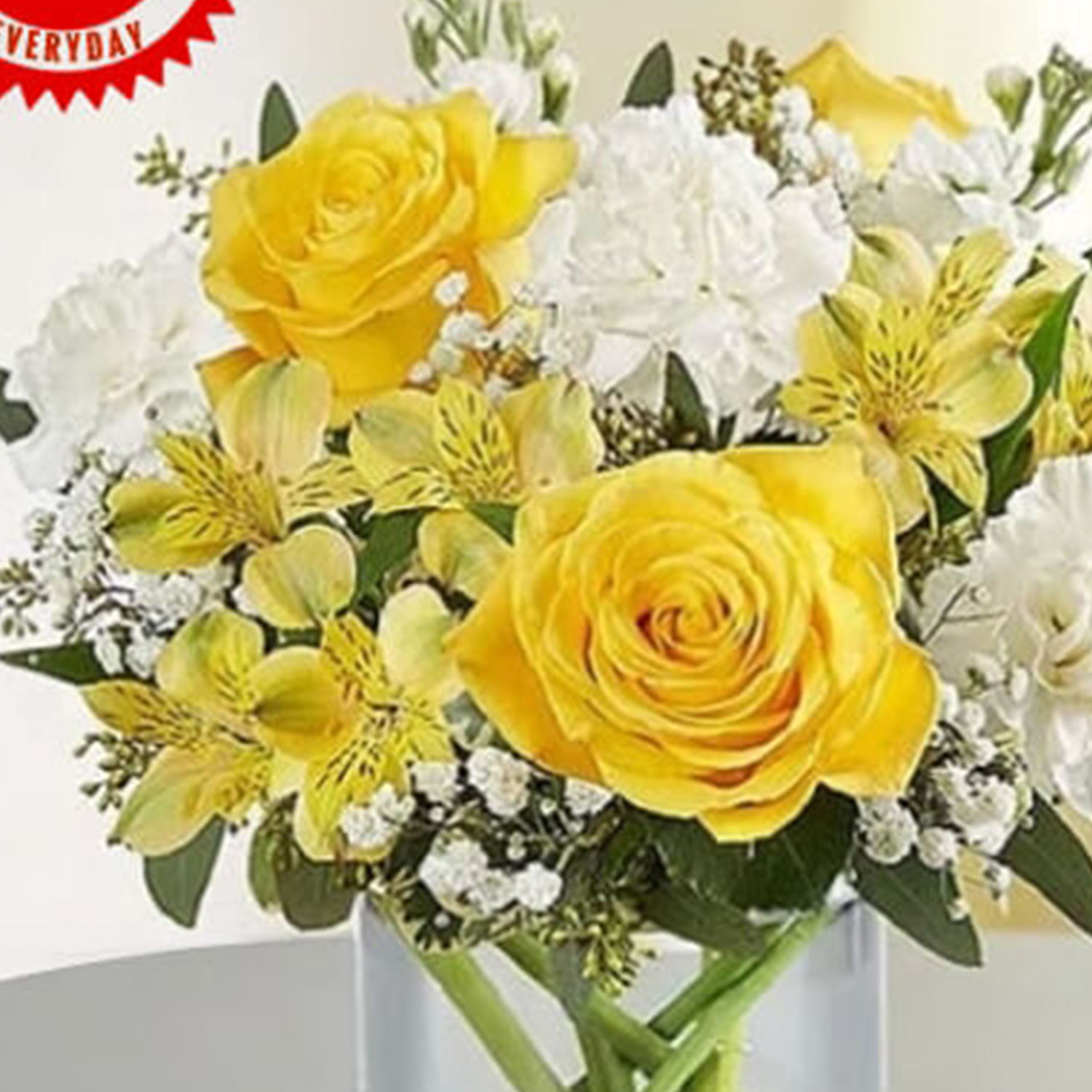
Walk into any high-end florist in Manhattan or a small-town flower shop in middle-of-nowhere Ohio, and you’ll see it. That crisp, sunny, unmistakably cheerful vibe. Honestly, the yellow and white bouquet is the unsung hero of the floral world. People think it’s basic. They think it’s just for "get well soon" cards or maybe a casual brunch centerpiece. They’re wrong.
When you mix these two colors, you aren't just putting flowers in a vase. You're playing with the most fundamental contrast in color theory—the brightness of the sun versus the purity of a blank canvas. It’s light. It’s energy. It’s a literal mood booster that scientists have actually studied.
The Science of Why This Combo Works
We have to talk about color psychology for a second, but I’ll keep it brief. Yellow is scientifically linked to dopamine release. It’s the color of the sun, and our brains are hardwired to respond to it with a sense of alertness and optimism. White, on the other hand, provides the "visual rest" your eyes need. Without the white, a solid yellow bunch can feel overwhelming, almost aggressive. The white softens the blow.
Varying the textures is where the magic happens.
If you just grab some yellow carnations and white baby’s breath, it looks like a grocery store checkout lane special. There's no soul in that. But if you take a buttery yellow "Graham Thomas" English rose and pair it with the jagged, architectural spikes of white veronica, suddenly you have a conversation piece. Texture is the secret sauce that separates a "nice" arrangement from a "who made that?" arrangement.
Getting the Yellow and White Bouquet Right for Weddings
Brides are often scared of yellow. They think it’ll look "cheap" or too much like a child’s birthday party. But look at what professional designers like Erin Benzakein of Floret Farm are doing. They use "muddy" yellows—think honey, ochre, and mustard—to give the yellow and white bouquet a sophisticated, earthy feel.
Then you have the classic "Springtime" look. This is where the Narcissus (daffodils) come in. Did you know that in some cultures, giving a single daffodil is considered bad luck, but a bunch is a sign of joy? It’s a weird floral superstition, but flower people take it seriously. A wedding bouquet of white ranunculus and tiny yellow "Billy Balls" (Craspedia) is basically the gold standard for a modern, whimsical wedding.
- The Minimalist Approach: Three large white peonies, two stems of yellow dancing orchid, and some eucalyptus. Simple.
- The Wildflower Vibe: Feverfew (which looks like tiny daisies), white cosmos, and yellow goldenrod. This looks like you just ran through a meadow and happened to be holding a ribbon.
- The Secret Ingredient: Bupleurum. It’s a green-yellow filler that bridges the gap between the two main colors perfectly.
Don't forget the stems. A lot of people ignore the ribbon. If you've got a bright yellow and white bouquet, a velvet navy ribbon or a raw-edge silk champagne ribbon can completely change the "era" of the look. Navy makes it preppy. Silk makes it ethereal.
Seasonal Realities: What’s Actually Available?
You can't just demand a specific flower whenever you want. Well, you can, but you'll pay a "import fee" that'll make your eyes water.
In the Winter, you’re looking at white anemones with those dark centers and maybe some yellow mimosa. Mimosa is incredibly fragile, though. It wilts if you even look at it wrong, so keep it hydrated.
Spring is the peak. This is when the yellow and white bouquet shines. Tulips, daffodils, lily of the valley, and sweet peas. The scent of a white sweet pea mixed with a yellow freesia is something you won't forget. Honestly, it’s better than any candle you can buy at the mall.
Summer brings the big guns: Sunflowers. But wait. Big sunflowers are heavy and they droop. If you’re doing a hand-held bouquet, look for "Teddy Bear" sunflowers—they’re fluffy and smaller. Or go for yellow zinnias. They are tough as nails and last forever in a vase.
Fall is the "harvest" phase. Use white dahlias—specifically the "Café au Lait" variety if you can find the ones that lean more creamy-white—and pair them with yellow yarrow. Yarrow has a flat top that creates a great platform for other flowers to rest on.
The Mistake Everyone Makes
I see this constantly. People use too much green.
Standard floral foam comes with a lot of greenery, and while green is a natural complement, too much of it muddies the "yellow and white" clarity. If you want that high-contrast, "Discover-page" look, you need to keep the foliage minimal or use "silver" greens like Dusty Miller or Eucalyptus. The silver-grey tones don't compete with the yellow the way a bright lime green leaf does.
Also, watch your whites. "White" isn't just one color in the flower world. You have stark, refrigerator white (like a paper white narcissus) and then you have "creamy" white (like a gardenia). Mixing a blue-toned white flower with a yellow-toned white flower makes one of them look dirty. Stick to one "temperature" of white.
Maintaining the Look at Home
If you’ve just bought or received a yellow and white bouquet, don’t just stick it in a vase and walk away.
- Cut the stems at a 45-degree angle. This isn't just a myth; it increases the surface area for water intake.
- Remove any leaves that will be below the water line. Rotting leaves create bacteria, and bacteria kills flowers. Fast.
- Change the water every single day. If the water looks cloudy, your flowers are already dying.
- Keep them away from the fruit bowl. Seriously. Ripening fruit (especially apples) releases ethylene gas, which tells flowers to wilt. It’s like a "self-destruct" signal for your bouquet.
Why This Combo Is Trending in 2026
We are seeing a massive shift back to "joyful" interiors. After years of everything being "millennial gray" or "sad beige," people want color. But they’re scared to go full rainbow. The yellow and white bouquet acts as a gateway drug to colorful living. It’s safe but bold. It fits in a mid-century modern living room just as well as a farmhouse kitchen.
Basically, it's timeless.
If you’re looking to gift one, think about the person’s personality. A bubbly, energetic friend? Go for bright yellow Gerbera daisies and crisp white lilies. A more reserved, elegant person? Go for white roses and "Butterscotch" colored spray roses.
Actionable Steps for Your Next Arrangement:
- Audit your vase collection: This color combo looks best in clear glass or a solid blue ceramic vase (blue and yellow are complementary colors).
- Pick a "Hero" flower: Start with one large type of flower (like a white Hydrangea or a yellow Sunflower) and build everything else around it.
- Use the 60-30-10 rule: Aim for 60% white, 30% yellow, and 10% accent/foliage for a balanced look that doesn't feel chaotic.
- Don't ignore the scent: If the visual is 10/10 but it smells like nothing, you're missing half the experience. Add a few stems of white Stocks or yellow Freesia to fill the room with fragrance.
- Shop local: Check what's blooming in your zip code right now. Local flowers haven't been refrigerated for a week in a plane, so they'll actually have a scent and last twice as long.



