Color isn't actually real. That sounds like something a philosophy major says at 3:00 AM after too much caffeine, but it's the biological truth. Your brain creates it. When you look at yellow and what makes purple, you aren't just looking at light; you're looking at how your eyes struggle to make sense of a chaotic electromagnetic spectrum. It is weird. Honestly, it's a bit of a miracle we see anything at all.
Think about it. We live in a world where a banana looks yellow because it absorbs every single wavelength of light except for the ones that make your brain scream "YELLOW!" But then you have purple. Purple is the weird cousin of the color wheel. If you’ve ever tried to mix paint and ended up with a muddy, disgusting brown mess instead of a vibrant violet, you know the struggle. There is a specific science to why yellow pops and why purple is so incredibly hard to get right.
The Science of Yellow: Why It’s the Loudest Color in the Room
Yellow is the most visible color in the entire spectrum. It’s why school buses are painted that specific "National School Bus Glossy Yellow" and why high-visibility vests aren't, say, a nice forest green. Human eyes are physically built to see yellow better than almost anything else.
We have these things called cones in our retinas. Most of us have three types: red, green, and blue. Notice something missing? We don't have a "yellow" cone. Instead, yellow happens when the red and green cones are stimulated almost equally. Because it hits two of our primary color receptors at full blast, the brain perceives it as incredibly bright. It’s an evolutionary shortcut.
In the world of art and psychology, yellow is polarizing. Goethe, the famous German writer who was weirdly obsessed with color theory, thought yellow was the "nearest color to light." He wasn't wrong. But he also noted that it could easily become "unpleasant" if it was tainted even a little bit. That’s the catch with yellow. It’s fragile. Add a drop of black, and you don’t get "dark yellow"—you get a sickly olive green.
Why the Sun Isn't Actually Yellow
Here is a fact that messes with people: the sun is white. If you stood in space and looked at it without blinding yourself, it would look like a giant white ball. The reason we draw it as yellow in kindergarten is because of Earth’s atmosphere. Our air scatters shorter wavelengths (blue and violet) more easily. The light that’s left over—the stuff that actually makes it through the atmosphere to hit your eyes—is skewed toward the longer, warmer end of the spectrum. So, we see yellow.
What Makes Purple? The Mystery of the "Non-Existent" Color
Now, let's get into the messy part. What makes purple is a question that actually has two different answers depending on whether you are talking about light or paint. This is where most people get tripped up.
If you are a painter, purple is a secondary color. You mix red and blue. Simple, right? Except it’s usually not. If your red has a little bit of yellow in it (like a cadmium red), and you mix it with blue, you get a muddy brown. To get a "true" purple in the physical world, you need a cool red (like quinacridone magenta) and a clean blue.
But physics is weirder.
In the actual light spectrum—the rainbow—purple doesn't exist in the way we think it does. There is "violet," which is a single wavelength of light at the very end of the visible spectrum. Then there is "purple." Purple is a "non-spectral" color. This means there is no single wavelength of "purple" light. Your brain creates purple when it sees red light and blue light at the same time, but no green light.
Basically, purple is a hallucination. Your brain sees the two ends of the rainbow (red and blue) and decides to bridge the gap by inventing a color that isn't actually on the line.
The Tyrian Purple Obsession
For centuries, purple was the most expensive thing you could own. It wasn't just a color choice; it was a flex. The famous Tyrian purple came from the mucus of sea snails—specifically Bolinus brandaris. You needed about 12,000 snails to make enough dye for the trim on a single garment.
It smelled like rotting fish. It cost more than gold. It was literally illegal for commoners to wear it in some societies.
Yellow and Purple: The Ultimate Power Couple
There is a reason why the Los Angeles Lakers, the Minnesota Vikings, and LSU all use yellow (or gold) and purple. These two are "complementary colors." On the color wheel, they sit directly across from each other.
When you put yellow and what makes purple next to each other, they do something called "simultaneous contrast." Because they share absolutely no common ground in terms of light wavelengths, they make each other look more intense. The yellow looks brighter. The purple looks deeper.
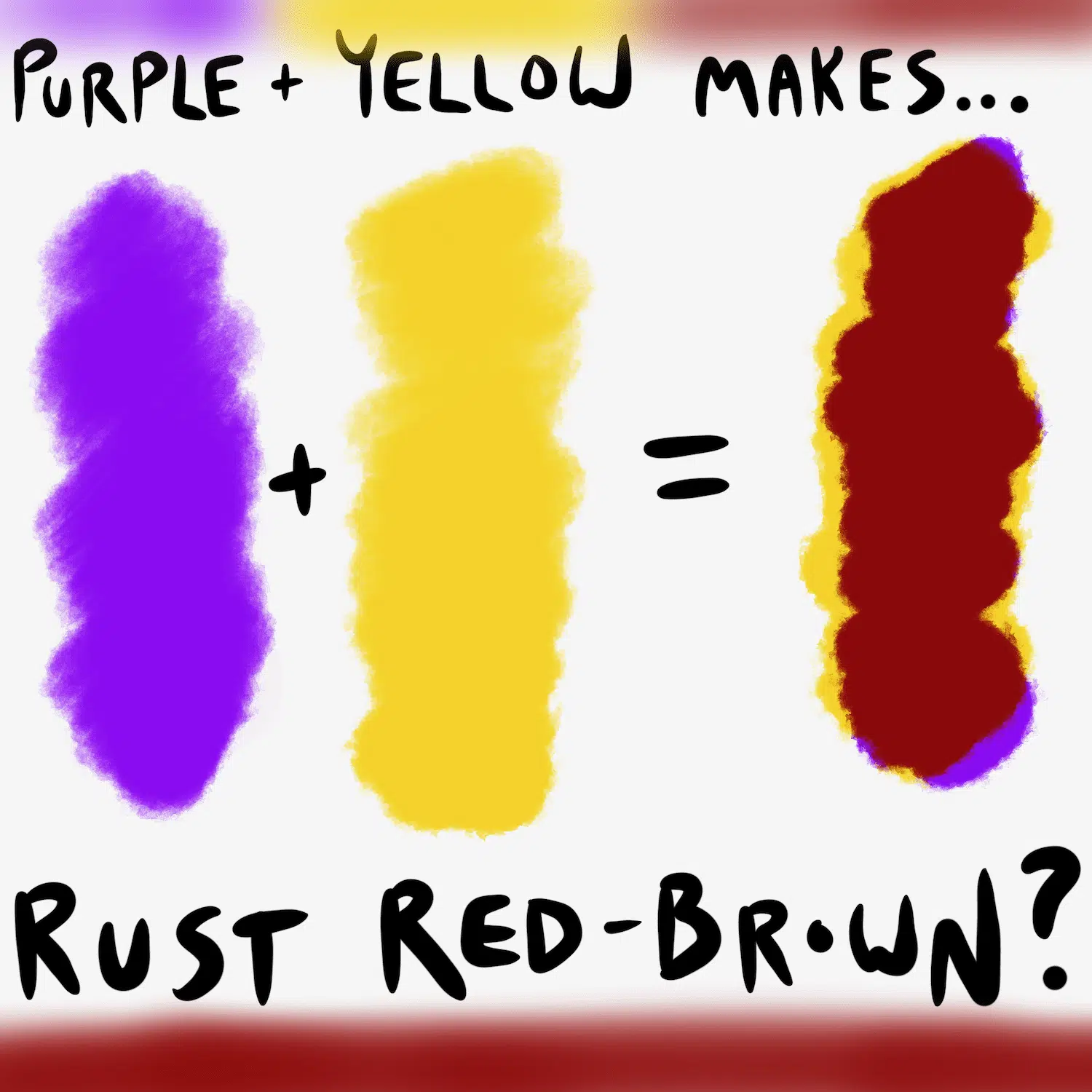
If you mix them together as paint, they cancel each other out and turn gray or brown. But side-by-side? They vibrate. It’s a visual tension that the human eye finds both exhausting and captivating. This is why a field of yellow sunflowers against a deep purple twilight sky looks so cinematic. It’s literally "color harmony" through total opposition.
Common Misconceptions About the Violet-Purple Divide
People use the terms "violet" and "purple" interchangeably. They shouldn't.
- Violet is a real place. It’s a specific frequency of electromagnetic vibration. If you have a prism, you can find violet.
- Purple is a state of mind. You cannot find purple in a prism. It only exists when your brain sees a mix of red and blue light.
- Digital screens lie to you. Your phone or computer screen cannot actually produce the color violet. It simulates it by firing red and blue pixels. You’ve probably never actually seen "true" violet on a digital device.
It’s kind of wild to realize that digital art is just a series of tricks played on your optic nerve. We've spent billions of dollars on technology just to convince our brains that we're seeing a color that isn't there.
The Emotional Weight of the Spectrum
Why do we care? Because color dictates how we feel before we even realize we're feeling it. Yellow is associated with the left side of the brain—logic, fast thinking, and alertness. That’s why Post-it notes are yellow. They grab your attention and tell your brain to "deal with this now."
Purple, on the other hand, is the color of the "subconscious." It’s historically linked to mystery, magic, and the divine. Because it’s so rare in nature (outside of a few flowers and those expensive snails), it feels unnatural. It feels intentional.
Actionable Steps for Using These Colors
If you are a designer, a homeowner, or just someone trying to pick an outfit that doesn't look like a disaster, understanding these two colors is a superpower.
- In Home Decor: Never paint an entire room bright yellow. It actually increases heart rates and can make people feel anxious or irritable over long periods. Use yellow as an accent—a pillow, a vase, a single chair.
- For Branding: If you want to look "luxury" but "creative," use a deep, desaturated purple. If you want to look "budget-friendly" and "fast," use yellow. (Think IKEA or Ferrari).
- The "Mud" Rule: If you are painting and your purple looks like dirt, look at your red. If your red has any hint of orange (yellow), it is "killing" the purple. Switch to a rose or magenta-based red.
- Gardening Tip: Plant "Purple Sensation" Alliums next to yellow "Dutch Master" daffodils. Since they bloom at different times, try pairing purple lavender with yellow coreopsis for a summer-long visual explosion.
The world of yellow and what makes purple is basically a masterclass in how human biology interacts with physics. Yellow is the scream; purple is the whisper. One is the sun, the other is the shadow. Knowing how they work doesn't just make you better at trivia—it changes how you literally see the world. Stop looking at things as "colored" and start looking at them as light-absorbing machines that are talking to your brain. It’s much more interesting that way.
Next time you see a purple sunset or a yellow lemon, remember that your brain is doing a massive amount of math just to give you that image. Yellow is a double-hit to your receptors, and purple is a bridge across a gap that doesn't exist. You're basically a walking, talking supercomputer that interprets light as emotion. Use that knowledge to decorate your life, or at least to win your next argument about why "violet" and "purple" aren't the same thing.



