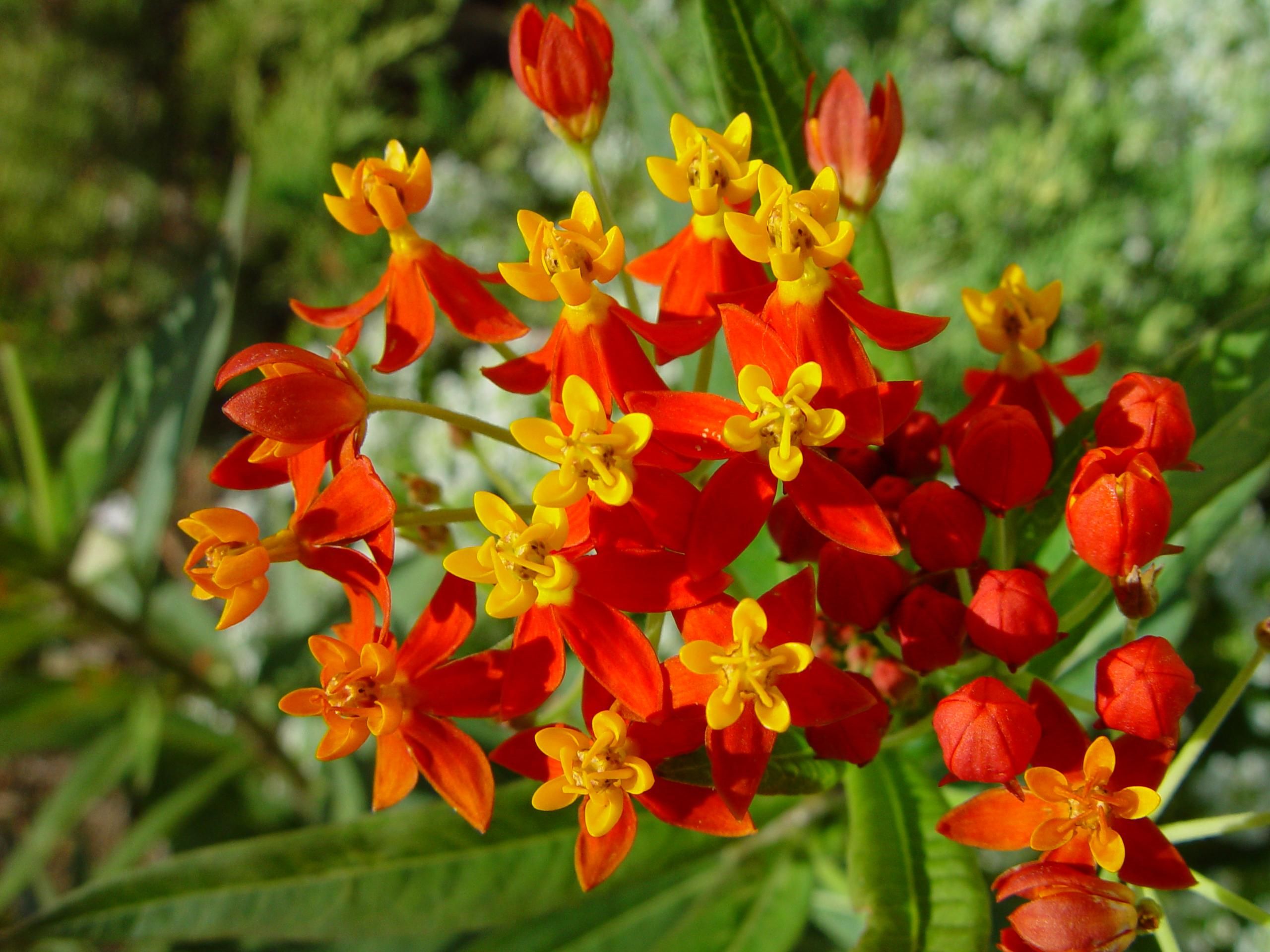
Color theory is weird. Most people walk into a garden center and head straight for the "safe" stuff—the pale blues, the soft pinks, maybe a classic white rose. They want a "serene" vibe. But honestly? That's how you end up with a garden that looks like a blurry watercolor painting from a hotel lobby. If you want a space that actually feels alive, you need the heavy hitters. I'm talking about yellow and orange flowers.
These colors aren't just bright. They're biological signals. There’s a reason why a massive patch of California Poppies or a towering stand of Sunflowers stops traffic. It’s because these shades occupy a specific frequency in the visible spectrum that our brains are hardwired to notice first. Yellow and orange flowers are the "loud" part of the botanical world, and they do a lot of the heavy lifting that your pastel perennials just can't handle.
Why yellow and orange flowers actually change the vibe
Most folks think of yellow as "happy" and orange as "energetic." That’s the surface-level Hallmark card version. In reality, the impact of these colors is much more practical. Yellow is the most visible color in the garden during twilight. As the sun dips, your purple salvias and red geraniums turn black or muddy grey. But those yellow marigolds? They literally glow in the "blue hour." They hold the light.
Orange is the bridge. It’s the color of transition. It takes the frantic energy of yellow and pulls it toward the grounded heat of red. When you mix yellow and orange flowers together, you aren't just making a "bright" garden; you're creating a sense of depth and warmth that mimics a sunset. It’s a trick used by professional landscape designers like Piet Oudolf, who often uses "hot" palettes to create focal points that draw the eye through a space.
The science of the "glow"
It’s all about carotenoids. These are the organic pigments found in the chromoplasts of plants. While chlorophyll makes things green, carotenoids like lutein and beta-carotene give us those searing oranges and yellows. Interestingly, these pigments aren't just for show. They protect the plant from "photo-oxidation"—basically, they act like a high-SPF sunscreen for the flower's delicate reproductive parts.
When you see a vibrant Mexican Sunflower (Tithonia rotundifolia), you aren't just looking at a pretty face. You're looking at a high-performance biological machine designed to survive intense UV radiation. It’s kind of cool when you think about it.
The "Must-Have" yellow and orange flowers for actual gardeners
Forget the grocery store carnations. If you want to get serious about this palette, you have to look at plants that offer texture along with color.
The Power of Rudbeckia (Black-Eyed Susans) These are the workhorses of the late summer garden. Specifically, Rudbeckia fulgida 'Goldsturm'. It’s an old-school choice, but it’s popular for a reason: it’s virtually unkillable. It provides a mass of deep yellow petals with a dark, structural center. It’s gritty. It’s tough. It doesn't care if you forget to water it for a week in July.
The Drama of the Canna Lily If you want something that feels almost prehistoric, go for Canna lilies. Varieties like 'Phaison' (often sold as Tropicanna) have foliage that is striped with burgundy, green, and gold, topped with screaming orange flowers. They look like something out of a jungle. They grow fast. They want lots of water and even more sun. Basically, they're the extroverts of the plant world.
Calendula: The "Healing" Orange Commonly known as Pot Marigold, Calendula is a staple in medicinal gardens. It’s not just a pretty orange flower; it’s been used for centuries in salves and teas. The petals are edible. They have a slightly peppery taste. Throw them in a salad, and you’ll feel like a fancy chef. But the real win is how they self-seed. Once you plant them, you’ve basically got them for life.
Stop overthinking the "clash"
A lot of beginner gardeners are terrified of clashing. They worry that a bright yellow Coreopsis will look "tacky" next to a vivid orange Zinnia.
Stop it.
In nature, yellow and orange flowers are almost always found together. Look at a wildflower meadow in the Midwest during August. It’s a riot of goldenrod and butterfly weed. It’s chaotic, and it’s beautiful. The "clash" is actually what creates visual tension. That tension is what makes a garden interesting to look at for more than five seconds.
If you're really worried about it, use a "buffer" color. Ornamental grasses are perfect for this. The silvery-green of Festuca or the airy tan of Sporobolus (Prairie Dropseed) acts as a visual palate cleanser between the bold pops of color.
The Pollinator Connection
Here is a fact most people ignore: bees love yellow, but butterflies crave orange.
Bees see the world through a UV filter. To them, many yellow flowers have "nectar guides"—patterns we can't see that act like landing lights on a runway. Orange flowers, particularly flat-topped ones like Asclepias tuberosa (Butterfly Weed), are like a neon "Open" sign for Monarchs. If you want a garden that’s humming with life, you literally cannot skip these colors. A garden of only white and blue is a desert for many specific pollinator species.
Specific varieties for different "vibes"
- The "Desert Modern" Look: Stick to structural plants. Use Kniphofia (Red Hot Poker). It has these torch-like spikes that fade from deep orange at the top to yellow at the bottom. Pair them with blue-grey succulents for a high-contrast, architectural look.
- The "Cottage Chaos" Look: You want nasturtiums. Everywhere. They're sprawling, messy, and produce flowers in every shade of sunset. Plus, you can eat the leaves. They taste like radishes.
- The "Sophisticated Border": Look for "soft" yellows like Achillea 'Moonshine' (Yarrow). It’s a pale, buttery yellow that plays well with silver-leafed plants like Lamb's Ear or Russian Sage. It’s yellow for people who are afraid of yellow.
Managing the "Heat" in your landscape
One thing to watch out for is where you place these plants. Because yellow and orange flowers reflect so much light, they can actually make a small space feel even smaller if you overdo it. They "advance" visually—meaning they look closer to you than they actually are.
If you have a long, narrow yard, put your blue and purple flowers at the very end. Put your yellow and orange flowers closer to your patio or back door. This creates an optical illusion of depth. It makes the garden feel like it goes on forever.
Also, consider the season. Most people associate these colors with autumn—pumpkins, turning leaves, the whole deal. But you can get yellow in the garden as early as February with Winter Aconite or Witch Hazel. Orange is a bit harder in the early months, but certain varieties of Tulips (like 'Ballerina') can give you that citrus hit while there’s still frost on the ground.
Real-world expert tips for maximum impact
- Deadhead like you mean it. Especially with Marigolds and Zinnias. If you don’t cut off the dying orange flowers, the plant thinks its job is done. It stops producing. Cut the "spent" blooms, and the plant will panic and produce even more. It’s a win-win.
- Watch the soil pH. Some yellow flowers, like certain Daylilies, can look a bit "washed out" or chlorotic if the soil is too alkaline. If your yellow flowers are looking more like "sickly lime," check your iron levels.
- Group by "Saturation." Don't mix a neon-orange Zinnia with a pale, buttery Primrose. They’ll fight. Group your "neon" hot colors together in one bed and your "pastels" in another.
Why we need these colors now
There's a psychological component here. We live in an era of "millennial grey" and beige interiors. It’s boring. It’s sterile. Bringing yellow and orange flowers into your immediate environment is a low-cost way to trigger a dopamine response.
Dr. Roger Ulrich’s research into "biophilia" suggests that looking at complex, colorful natural scenes reduces cortisol levels. Yellow, specifically, is often associated with cognitive stimulation. It’s the color of focus. Orange is associated with social interaction. So, if you’re planning a backyard where you actually want people to talk and hang out, ditch the "calming" white garden and plant some Lantana.
Practical Next Steps for Your Garden
Instead of buying a random assortment of plants, pick one "anchor" species for each color. For yellow, grab a three-pack of Coreopsis 'Moonbeam'. For orange, find some Geum 'Totally Tangerine'.
Plant them in "drifts"—meaning groups of at least three or five. Single plants look like accidents; groups look like a design choice.
If you’re working with a balcony or small containers, go for Million Bells (Calibrachoa). They come in intense "Tequila Sunrise" patterns that trail over the edges of pots. They don't require deadheading and will bloom from May until the first hard frost.
Don't be afraid of the "loud" colors. They are the heartbeat of a healthy, vibrant landscape. Start with one corner of your yard. Throw down some seeds, wait for the sun, and watch how much more "alive" the space feels when it's glowing with the heat of a summer sunset. No fancy design degree required—just a willingness to embrace the bright side.



