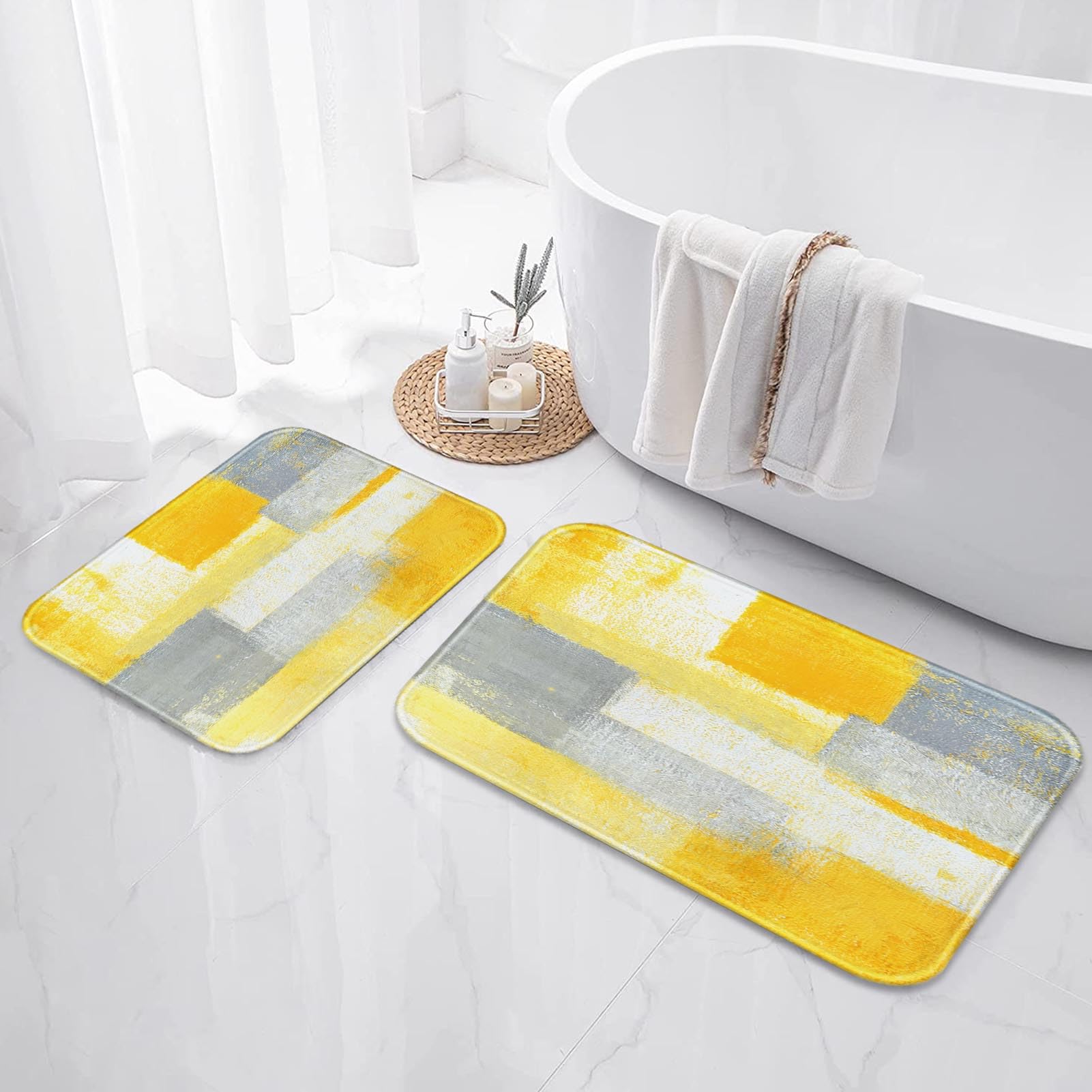
Grey isn't dead. People keep saying it is, claiming that "Millennial Grey" has finally been buried by the rise of earthy terracottas and moody forest greens. But walk into any high-end tile showroom or scroll through Pinterest for more than five minutes and you’ll see it’s still the backbone of modern design. The problem isn't the grey; it's the boredom. That’s where yellow comes in. Yellow and grey bathroom decor is one of those combinations that sounds like a 2011 IKEA catalog until you see it done with actual intention.
It’s about contrast.
You’ve got this cool, stony, industrial base and then—bam—a shot of canary, mustard, or ochre that wakes the whole room up. It’s high-energy but grounded.
Honestly, getting this right is harder than it looks. If you go too heavy on the yellow, you feel like you’re inside a lemon. Too much grey and it’s a rainy Tuesday in London. Finding that sweet spot requires understanding light, texture, and the psychological impact of color. Pantone famously leaned into this in 2021 with "Ultimate Gray" and "Illuminating," and while design trends move fast, the logic behind that pairing remains solid for spaces that need to feel both clean and cheerful.
Why Yellow and Grey Bathroom Decor Often Fails
Most people fail because they treat yellow as a secondary color rather than an accent. In a bathroom, where surfaces are usually hard and reflective, color behaves differently than it does in a carpeted living room. If you buy a yellow shower curtain, yellow rugs, yellow towels, and a yellow soap dispenser, you’ve overdone it. It looks cheap. It looks like you’re trying too hard to "brighten things up."
The trick is the 60-30-10 rule, though in a bathroom, I usually tweak it. Think 70% grey (tiles, walls, floor), 20% white or wood tones to soften the blow, and only 10% yellow. That 10% is where the magic happens. It should be the "star," not the background.
Color temperature matters. A cool, blue-toned grey paired with a warm, orange-toned mustard will fight each other. They’ll look "dirty." You want to match the undertones. If your grey tile is a warm "greige" (grey-beige), stick to golden yellows. If your grey is a crisp, slate-like charcoal, you can get away with those sharper, acidic lemons.
The Lighting Trap
Bathrooms are notoriously difficult for lighting. Most have small windows—or no windows at all. Artificial light changes everything. Incandescent bulbs (which are warmer) will turn your beautiful grey walls into a muddy brown and make your yellow decor look neon. If you’re going for yellow and grey bathroom decor, you absolutely must switch to "Daylight" or "Cool White" LED bulbs. This keeps the grey crisp and ensures the yellow stays true to its hue instead of veering into "aged nicotine" territory.
Choosing the Right Grey Base
Don't just pick "Grey." There are thousands of them.
- Charcoal and Slate: These are the heavy hitters. Dark grey creates a moody, sophisticated vibe. When you put a pop of bright yellow against charcoal, it creates a high-contrast, modern look that feels very urban.
- Dove Grey: This is soft. It’s airy. It’s great for smaller bathrooms where you don't want the walls to close in on you.
- Concrete Texture: This is my favorite. Using a concrete-effect tile adds texture. Texture is the secret weapon of interior design. Without it, grey looks flat. With it, it looks expensive.
Let's Talk About Yellow Tones
Yellow is a spectrum. You aren't limited to school-bus yellow.
- Mustard/Ochre: These are the sophisticated cousins. They feel grounded, slightly vintage, and incredibly cozy. They pair beautifully with dark wood vanities or matte black fixtures.
- Pastel Yellow: Use this with caution. It can quickly look like a nursery. However, in a very traditional bathroom with white wainscoting and light grey accents, a pale primrose yellow can feel very "English countryside."
- Electric Lemon: This is for the bold. Only use this in tiny amounts—maybe just the trim on a towel or a single piece of glass art.
Texture and Materials
Stop thinking just about paint. Decor isn't just color; it's material. A yellow ceramic vase feels different than a yellow waffle-weave towel. A grey marble countertop with gold (yellow-adjacent) veining is a much more subtle way to execute this theme than painting a wall.
Consider the "Hard vs. Soft" balance. Bathrooms are full of hard surfaces: porcelain, tile, glass, metal. You need soft elements to break that up. A plush, grey bath mat with a subtle yellow geometric pattern can ground the room. Wood is also a vital "third wheel" in this relationship. A light oak or bamboo vanity acts as a bridge between the grey and the yellow, preventing the room from feeling too sterile or "Lego-like."
Real-World Examples of Successful Designs
Look at the work of designers like Kelly Wearstler or the minimalist approaches seen in modern Scandinavian hotels. They don't use yellow and grey bathroom decor as a "theme"; they use it as a palette.
In a recent renovation project in London, a designer used oversized slate grey tiles on the floor and halfway up the walls. The top half of the wall was kept a crisp, stark white. The "yellow" wasn't paint at all—it was a custom-made brass vanity and a single, oversized ochre-colored linen Roman shade over the window. The result was stunning. It felt high-end because the yellow was represented through metallic gold tones and rich fabric rather than plastic accessories.
Another approach is the "Pattern Play." Think about cement tiles. There are some incredible Moroccan-style encaustic tiles that use grey and yellow in their patterns. Because the colors are baked into a complex design, the yellow doesn't overwhelm. It feels like an integrated part of the architecture.
The Role of Hardware
Your faucets and handles are the "jewelry" of the bathroom. If you're doing yellow and grey, you have a choice to make.
- Matte Black: This is the modern choice. It provides a sharp outline that makes both the grey and the yellow pop. It’s very "industrial chic."
- Brushed Gold/Brass: This is the "cheat code" for yellow decor. Brass is yellow, but in a metallic, luxurious form. If you're worried about actual yellow paint or towels looking tacky, swap them for high-quality brass fixtures. It hits the same color note but feels much more permanent and intentional.
- Chrome: Be careful here. Chrome is very "cool" and can make a grey bathroom feel cold. If you use chrome, you’ll need a "warmer" yellow (like mustard) to balance the temperature.
Common Misconceptions About the Duo
One big myth is that yellow and grey make a room look smaller. That’s only true if you use dark versions of both without any white space. White is the "breath" of your bathroom. You need white porcelain (the toilet, the sink, the tub) to act as a neutral field that lets the other colors exist.
Another mistake is thinking you have to stick to solid colors. Stripes, florals, and abstracts can all work. A grey-on-white floral wallpaper with tiny yellow centers in the flowers is a gorgeous, subtle way to bring this to life without committing to a "yellow room."
Practical Steps to Get Started
If you’re staring at a boring bathroom and want to make the jump, don't go to the paint store yet.
Step 1: The Towel Test. Buy one set of high-quality towels in your chosen shade of yellow. Hang them up. Leave them there for a week. See how they look in the morning light and under your evening lights. If you hate them after three days, you’ve saved yourself a lot of money on paint and tile.
Step 2: Swap the Hardware. Before changing tiles, try switching your cabinet knobs to brushed brass. It’s a low-effort way to see if you like the "warmth" that yellow tones bring to your grey space.
Step 3: Add Life. Yellow and grey can feel a bit "constructed." Plants are the fix. The green of a snake plant or a pothos works incredibly well with both colors. It adds a third organic element that makes the room feel lived-in rather than staged for a magazine.
Step 4: Focal Point Painting. If you decide to paint, don't do all four walls. Paint the vanity. A mustard-yellow vanity against a grey-tiled wall is a massive style statement. It's much easier to repaint a cabinet in five years than it is to re-tile a shower.
Maintenance and Longevity
Yellow shows dirt. It just does. If you choose a bright yellow rug, be prepared to wash it weekly. Grey, on the other hand, is great at hiding water spots and dust, which is why it’s so popular for flooring.
When picking materials, go for "through-body" porcelain tiles if you're doing grey floors. If they chip, the color is the same all the way through. For yellow accents, look for "solution-dyed" fabrics for your shower curtains or window treatments—they won't fade as quickly in the humid, sunny environment of a bathroom.
Actionable Insights for Your Space
- Audit your lighting: Replace "Warm White" bulbs with 3500K-4000K LEDs to prevent your grey from looking brown.
- Use the 70-20-10 ratio: Keep 70% of the room grey, 20% neutral (white/wood), and 10% yellow.
- Integrate natural wood: Use oak or teak to soften the transition between the clinical grey and the vibrant yellow.
- Focus on texture: Mix matte grey tiles with glossy yellow ceramic accessories to create visual depth.
- Think beyond paint: Use brass or gold hardware as a sophisticated substitute for yellow pigments.
- Start small: Introduce the color through textiles (towels, mats) before committing to permanent fixtures or paint.
- Balance the "weight": Use darker greys (charcoal) at the bottom of the room (floors) and lighter tones (yellows/whites) at the top to keep the space feeling open.



