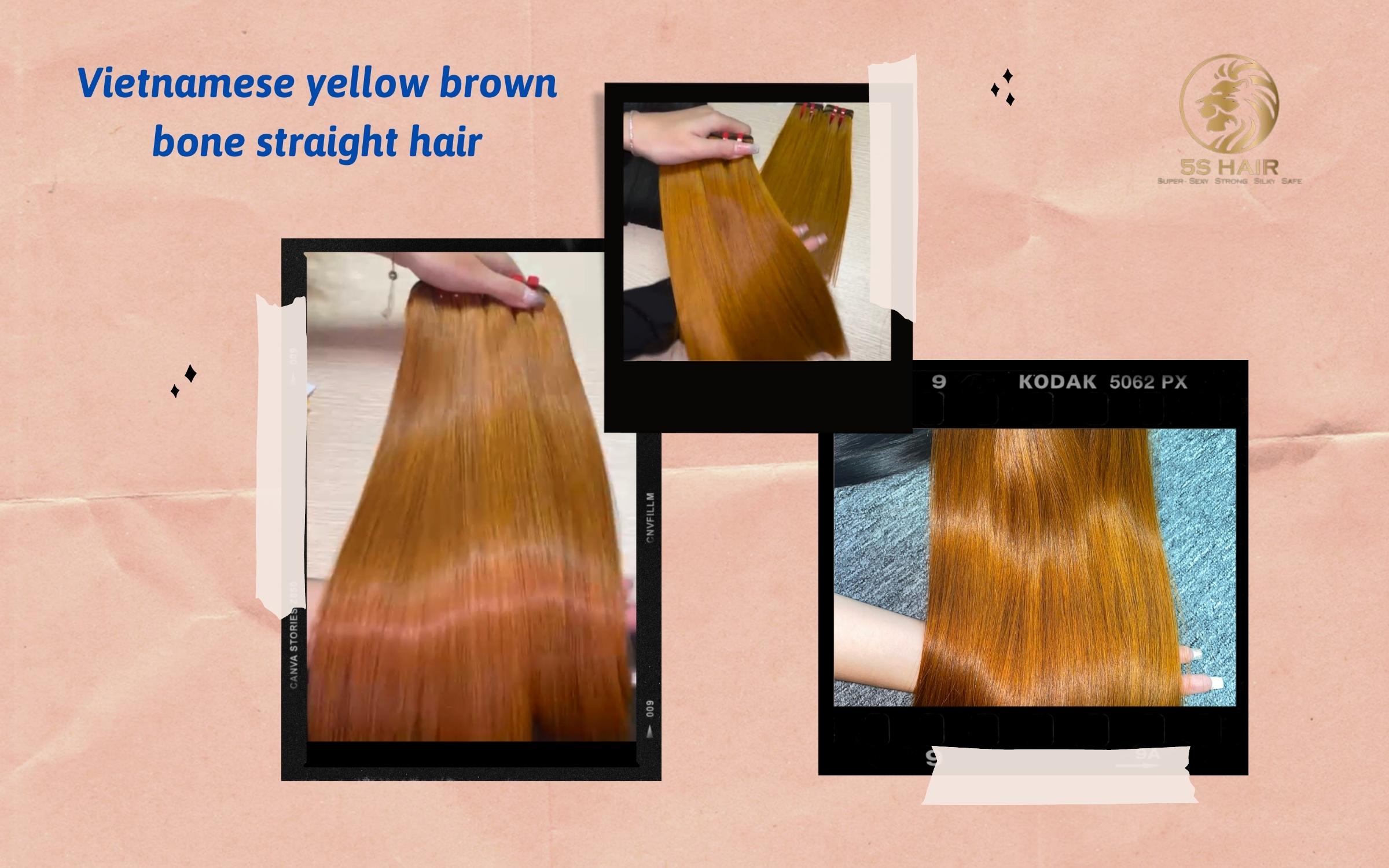
You look in the mirror and see it. That weird, muddy, egg-yolk tint creeping through your expensive brunette dye job. It’s frustrating. One week you’re rocking a rich, chocolatey espresso, and the next, you’ve got this strange yellow and brown hair situation that looks more like a rusted penny than a salon finish.
It happens to almost everyone who dyes their hair darker or tries to maintain a "bronde" look.
Hair isn't just one solid block of color. Underneath that brown pigment lies a literal rainbow of warm undertones—reds, oranges, and yellows. When you lift hair or when your dye starts to molecules start to bail, those underlying tones scream for attention. It’s chemistry. You can’t really fight the laws of science, but you can definitely outsmart them.
The Science of Why Yellow and Brown Hair Happens
Why does your hair do this? Basically, brown hair is packed with large color molecules. These molecules are the first to go when you wash your hair, sit in the sun, or use a cheap shampoo with harsh sulfates. As the blue and red pigments wash away, the most stubborn, smallest molecules—the yellow ones—stay behind.
This is what stylists call "brassiness."
If you’ve ever looked at a color wheel, you’ll see that purple is the opposite of yellow. That’s why your stylist is always nagging you to buy a specific shampoo. When your yellow and brown hair starts looking a bit too much like a banana peel, it’s usually because the "cool" tones in your dye have evaporated, leaving the "warm" structural pigments exposed.
Environmental factors are huge here too.
Hard water is a silent killer for hair color. If you live in an area with high mineral content—think calcium, magnesium, and iron—those minerals literally plate themselves onto your hair shaft. Iron turns hair orange. Chlorine in pools can turn it a sickly greenish-yellow. Even the UV rays from a weekend hike act like a tiny, invisible bleaching agent, stripping away the refined brown tones and leaving the raw, yellowed base behind.
The Porosity Problem
Not all hair holds color the same way. If your hair is "high porosity," meaning the cuticle is wide open like a window, color enters easily but leaves even faster. This is common if you’ve over-processed your hair with bleach or heat tools.
You’ll notice that the ends of your hair—the oldest, most damaged part—often turn yellow and brown much faster than the roots. It’s because the hair is too tired to hold onto the pigment. It’s like trying to fill a bucket with holes in the bottom. You keep pouring in the brown, but it just leaks out, leaving the stained yellow interior of the hair fiber visible to the world.
How to Kill the Brassy Tones Without Re-Dying
You don't always need to run back to the salon.
Sometimes a quick "toning" session at home can buy you another four weeks. Blue shampoos are usually marketed for brunettes because blue cancels out orange. However, if your hair is leaning more toward a pale yellow and brown hair mix, you actually want a violet-based product.
Be careful, though.
If you leave purple shampoo on porous brown hair for too long, you might end up with a muddy, swampy tint. Honestly, it's better to under-do it than over-do it. Start with two minutes. See how it looks. You can always do it again, but stripping out accidental purple pigment is a nightmare you don't want.
Professional Glossing vs. At-Home Filters
A "gloss" is different from "dye."
When you go to a pro like Kristin Ess or use her at-home glosses, you’re essentially putting a sheer tint over your hair. Think of it like lip gloss for your head. It doesn't change the structure of the hair; it just coats it in a temporary, translucent layer of ash or cool brown that neutralizes the yellow.
Pro Tip: Look for "acidic" hair color. Most permanent dyes are alkaline, which opens the cuticle. Acidic glosses (like Redken Shades EQ) actually help close the cuticle, making the hair shinier and locking that brown pigment in so the yellow doesn't peek through.
Shower Filters: Seriously, spend the $30 on a shower head filter. It catches the minerals before they hit your head. This is the single easiest way to stop yellow and brown hair from happening in the first place.
Heat Protection: If you’re using a flat iron at 450 degrees, you are literally cooking the color out of your hair. Turn it down. Use a spray. Your hair—and your wallet—will thank you.
Real Examples: Celebs and Color Correction
Think about celebrities who go from dark to light frequently. Someone like Margot Robbie or even the Kardashians. When they are in that "in-between" stage, you often see a lot of yellow and brown hair in paparazzi shots. Why? Because lifting dark pigment is a slow process.
Stylists like Guy Tang or Tracey Cunningham often explain that you can't just jump from a level 2 (black-brown) to a level 9 (blonde) without hitting the "orange" and "yellow" stages. If your hair is currently a mix of yellow and brown, it might just be because you’re mid-process.
It takes patience.
If you try to cover that yellow with a dark brown dye that has "warm" in the name, you’re just layering warmth on warmth. You’ll end up with a glowing, fiery hot root. You always want to look for "ash," "cool," or "neutral" tones to balance the natural heat of your hair’s anatomy.
The Role of Blue vs. Purple
People get this confused all the time.
If your brown hair looks like a pumpkin, use blue. If your brown hair looks like a lemon, use purple.
It’s a simple rule of the color wheel. If you use the wrong one, you won't see much of a difference. Most "brunette" shampoos are actually blue-toned because most brunettes struggle with orange. But if you've had highlights that have faded, you're likely dealing with a true yellow and brown hair contrast, which requires that violet/purple intervention.
Actionable Steps to Save Your Color
Stop washing your hair every day.
Every time you soak your hair in water, the hair shaft swells and pigment escapes. Use dry shampoo. Use a hat. Just stop the daily scrubbing.
When you do wash, use lukewarm or cold water. Hot water is the enemy of hair color. It opens the cuticle and lets the brown wash right down the drain, leaving you with that dull, brassy yellow.
- Check your water. If your tub has orange stains, your hair will too. Get a filter.
- Swap your shampoo. Get rid of anything with "Sodium Lauryl Sulfate." It's basically dish soap and it’s killing your brown.
- Tone once a week. Don't overdo the purple/blue shampoo. Once a week is plenty to keep the yellow at bay.
- Seal the cuticle. Use a leave-in conditioner with a low pH. This keeps the "scales" of your hair laid flat, trapping the brown molecules inside.
- UV Protection. If you're going to be outside, use a hair mist with UV filters. Hair "sunscreen" is a real thing and it prevents the sun from bleaching your brown into a sickly yellow.
Managing yellow and brown hair isn't about one magic product. It’s about a system. It’s about understanding that your hair is a delicate fabric that reacts to its environment. If you treat it like a cheap rug, it’s going to look like one. But if you protect the pigment and neutralize the natural warmth, you can keep that "just-left-the-salon" look for months instead of days.
Get a good violet toning mask, turn down the heat on your curling iron, and watch the yellow disappear. It’s mostly just physics, and now you know how to play the game.



