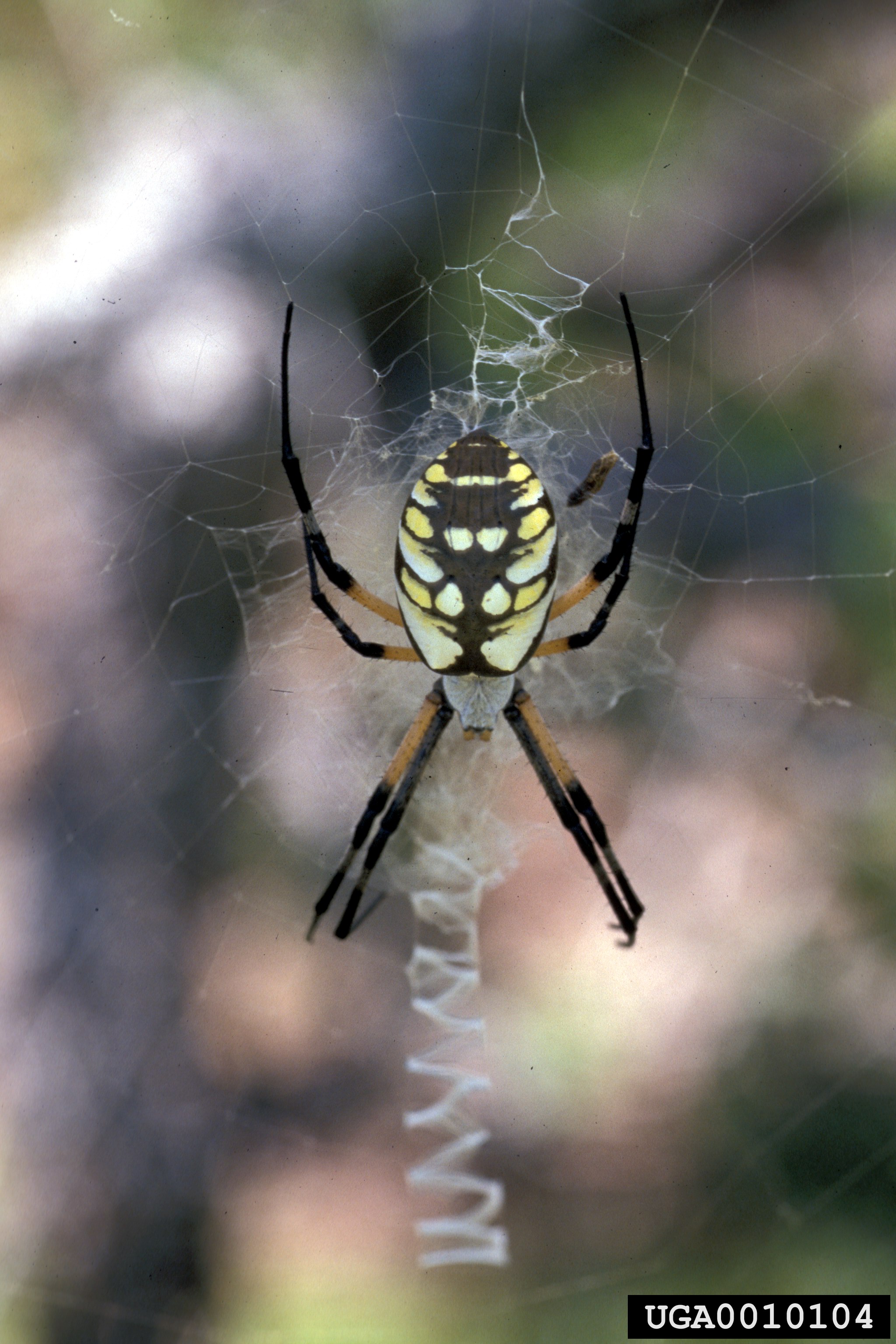
You’re walking through the garden, maybe coffee in hand, and suddenly you’re face-to-face with a creature that looks like it was painted by a hazard sign designer. It’s huge. It’s vibrant. It’s hanging right at eye level in a web that looks strong enough to catch a small bird. Seeing yellow and black spiders in your backyard for the first time usually triggers one of two reactions: a frantic search for a broom or a fascination that keeps you staring for twenty minutes.
Most people panic. They see those bright, "look-at-me" colors and assume the worst. Nature uses yellow and black as a warning—think wasps, coral snakes, or poison dart frogs. But with spiders, the story is a bit more nuanced than just "bright equals deadly."
Honestly, these spiders are some of the most misunderstood residents of your yard. They aren't lurking in the shadows waiting to bite your ankles. They’re basically the architectural engineers of the insect world, sitting out in the open, doing the heavy lifting of pest control while we worry about our flower beds.
The Garden Spider: Not a Monster, Just an Artist
The most common culprit when people search for yellow and black spiders is Argiope aurantia. You might know it as the Black and Yellow Garden Spider, the Writing Spider, or even the Zig-Zag Spider. That last name comes from the stabilimentum, a thick, white silk pattern they weave right down the center of their web.
Why do they do it? Scientists like those at the American Arachnological Society have debated this for decades. Some think it’s to attract insects by reflecting UV light. Others swear it’s a "stay away" sign for birds so they don't fly through the web and ruin all that hard work. Imagine spending eight hours building a house only for a pigeon to delete it in three seconds. You'd put up a sign too.
These females are massive. They can grow over an inch long, not counting the legs. The males? They’re tiny, drab little things that spend most of their lives trying not to get eaten by the females. It’s a tough gig.
But here is the thing you actually care about: are they dangerous? Not really. If you grab one, she might bite you. It’ll feel like a bee sting—maybe some redness and swelling. Unless you have a specific allergy to spider venom, it's just an annoyance. They are incredibly docile. You can practically put your face inches from the web (if you’re brave) and they’ll just sit there, maybe shaking the web to try and scare you off.
Meet the Joro: The New Neighbor Moving North
If you live in the Southeastern United States, specifically Georgia or South Carolina, you’ve likely seen a different kind of yellow and black spider lately. The Joro spider (Trichonephila clavata) has been making headlines, and honestly, the headlines are a bit dramatic.
They arrived from East Asia around 2014, likely hitching a ride on shipping containers. Now, they’re spreading. Fast. They have these incredibly long, spindly legs and webs that can span several feet across. People get freaked out because they appear in huge numbers, sometimes turning a single backyard into a golden-silk obstacle course.
Dr. Andy Davis from the University of Georgia has done some fascinating work on these. His research suggests they have a high metabolism and can withstand cold better than our native species. This means they’re probably going to keep moving north.
- They don't kill off native spiders as aggressively as we feared.
- Their silk is famously strong—gold-colored and tough.
- They eat brown marmorated stink bugs, which most native spiders won't touch.
So, if you’re seeing these "invasive" giants, don't reach for the pesticide immediately. They’re effectively a free, organic pest control service for some of the most annoying invasive bugs we have.
The Misidentified: Golden Silk Orb Weavers
Sometimes people confuse the Garden Spider with the Golden Silk Orb Weaver (Trichonephila clavipes). These are the ones with the "tufts" of hair on their legs that look like little leg warmers. They love the humidity of the Gulf Coast and Florida.
Their silk is actually yellow. If you see a web glistening in the sun and it looks like it's made of actual 24-karat gold thread, that’s her. The strength of this silk is insane. It’s been studied for use in everything from medical sutures to lightweight body armor. Nature is a better chemist than we are, half the time.
Why Do They Choose Yellow and Black?
It seems counterintuitive. If you’re a predator, don't you want to be camouflaged? If you’re a bird-sized snack, why would you wear neon?
It’s called aposematism. It’s a visual "back off" signal. But for spiders, it’s a double-edged sword. Research published in journals like Animal Behaviour suggests that for some insects, these colors are actually attractive. Bees and flies might mistake the bright spots for flowers or gaps in the foliage.
It’s a high-stakes game of bait-and-switch. The spider is the bait and the trap all at once.
Identifying the "Bad" Ones (Spoiler: It’s Rarely These)
When people see yellow and black spiders, they often worry about the "widow" family. While the Black Widow is famous for its red hourglass, there are "Brown Widows" (Latrodectus geometricus) that have tan, black, and yellowish markings.
How do you tell the difference? Look at the web. The "friendly" garden spiders build those beautiful, circular, geometric masterpieces. Widows build "cobwebs"—messy, tangled, chaotic nests in dark corners, woodpiles, or under porch eaves. If the web looks like a piece of art, you’re probably fine. If it looks like a dusty pile of lint in a dark corner, use caution.
Habits and Life Cycles
These spiders are annuals. They live fast and die young. In the spring, tiny spiderlings hatch from a silk sac that looks like a little brown kettle drum. They disperse by "ballooning"—throwing a strand of silk into the wind and flying miles away.
By late summer and early autumn, the females are at their peak size. This is when you notice them. They’re eating constantly, preparing to lay eggs before the first frost kills them off. It’s a bit sad, really. That giant spider you’ve been watching all August will be gone by November, leaving only her egg sac behind to start the cycle over again.
What to Do if You Find One
If you find a yellow and black spider on your porch or in your garden, you have a few options.
- Leave it. This is the best move. She will eat hundreds of mosquitoes, flies, and moths.
- Relocate it. If it’s across a doorway and you’re tired of eating silk for breakfast, use a large cup and a piece of cardboard. Move her to a tall bush or a fence line. She’ll likely rebuild within 24 hours.
- Observe. Take a flashlight out at night. You can sometimes see them repairing their webs or wrapping up a late-night snack.
Common Myths vs. Reality
I hear people say these spiders are "poisonous." Technically, they are venomous (poison is something you eat; venom is something that bites you), but their venom isn't designed for humans. It’s designed for grasshoppers.
Another myth is that they "write your name" in the web and it’s a death omen. That’s pure folklore. If you see your name in a spider web, you’re probably just looking at a very talented Argiope and should perhaps consider a career in fiction writing.
Actionable Steps for Homeowners
If you're still feeling uneasy about having these massive arachnids around your home, here’s how to handle the situation like a pro without resorting to chemicals that kill the "good" bugs too.
- Check your lighting: Spiders build webs near outdoor lights because lights attract moths. Switch to yellow "bug bulbs" to reduce the buffet line and the spiders will likely move further into the yard.
- Clear the perimeter: Keep tall grass and shrubs trimmed away from the foundation of your house. This creates a "no-man's land" that orb weavers aren't fond of crossing.
- The "Broom Relocation" Method: If a web is in a high-traffic area, don't kill the spider. Take a broom, gently catch the main support strands, and move the whole mess to a nearby tree. The spider will usually stay with the web.
- Educate the kids: Instead of teaching them to stomp on spiders, show them the "writing" in the web. It's a great way to introduce biology without the fear factor.
Living with yellow and black spiders is just part of having a healthy ecosystem. If you have them, it means your yard is full of life. It means you have a food chain that works. They are the silent, colorful guardians of the garden, and honestly, we’re lucky to have them.
Next time you see that flash of yellow in the sunlight, take a breath. She isn't interested in you. She’s just waiting for the next fly to make a mistake. Give her some space, and she'll pay you back by keeping the mosquito population in check.



