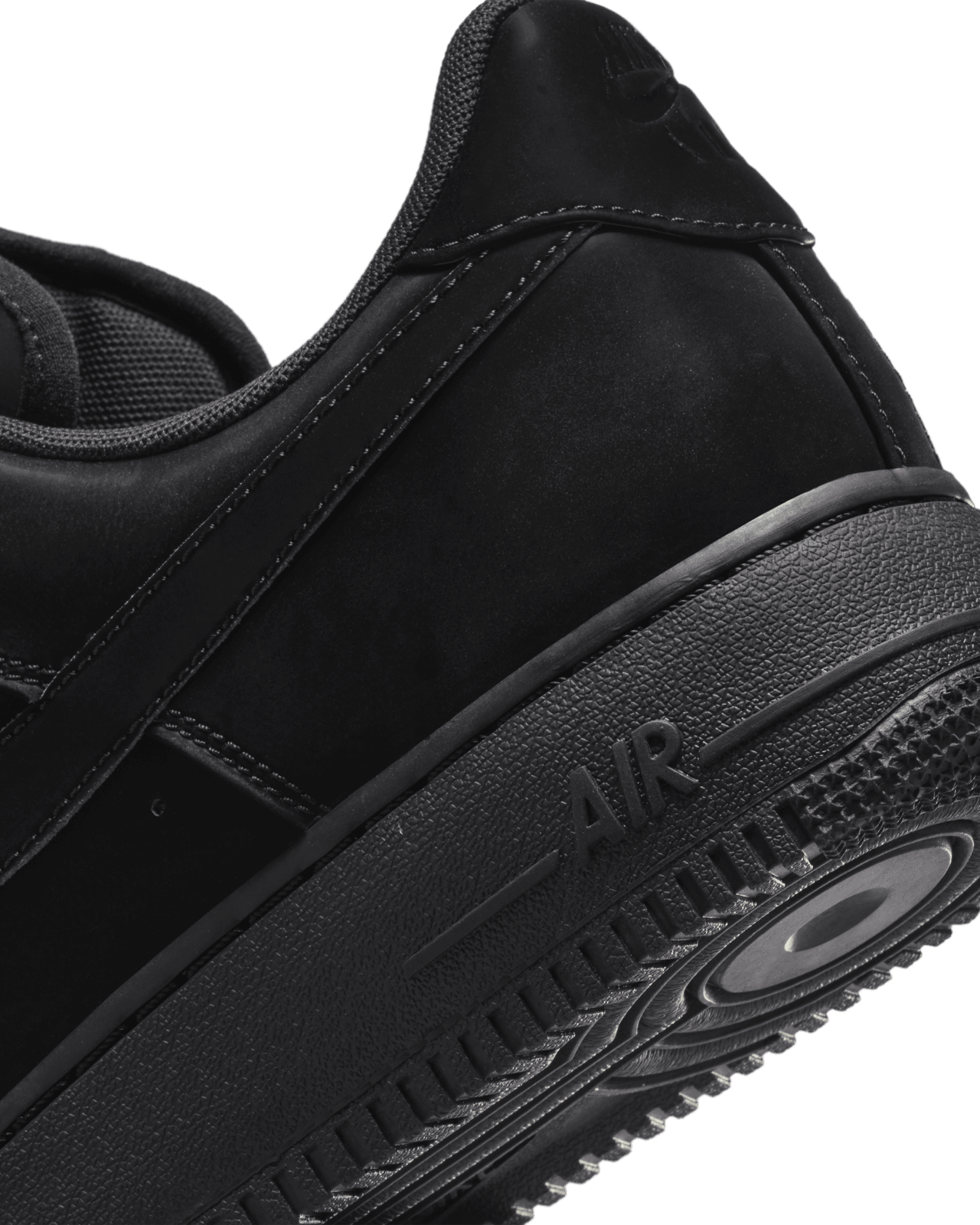
You’ve seen them. You know the ones. That sharp, high-contrast sting of a yellow and black Nike Air Force 1 cutting through a crowd of generic white sneakers. It’s a look that’s been around since Bruce Lee rocked the Game of Death jumpsuit, and yet, every time Nike drops a new variation of the "Taxi" or "Ochre" palette on an AF1 silhouette, the internet loses its mind. Why? Because it’s aggressive. It’s unapologetic. It’s a statement piece that doesn't try to be "minimalist" or "clean" in the way we’ve been told sneakers should be lately.
Honestly, the Air Force 1 is a bit of a tank. It’s heavy. It’s bulky. But when you douse that 1982 basketball DNA in vibrant yellow and deep black, the shoe stops being a gym relic and becomes a piece of industrial design.
The "Wu-Tang" Effect and the History of the Sting
We can't talk about yellow and black sneakers without mentioning the 1999 Wu-Tang Dunk. Even though that wasn't an Air Force 1, it set the blueprint for how we perceive this color combination in the culture. It represents "Killer Bees." It represents grit. When Nike started porting these high-contrast looks over to the yellow and black Nike Air Force 1, they tapped into a specific kind of East Coast energy.
The colorway usually follows a few specific patterns. You’ve got the "Taxi" style, which mimics the iconic NYC cab with white side panels, yellow overlays, and black accents. Then there’s the "Black/University Gold" mix that feels a bit more like a Pittsburgh Steelers jersey. Recently, we’ve seen the "Yellow Ochre" take over, which is a slightly more muted, earthy tone compared to the neon-adjacent yellows of the early 2000s.
But here is what most people get wrong: they think any yellow AF1 is a "classic." It’s not. The leather quality on these varies wildly depending on whether you’re buying a standard "GR" (General Release) or a "Premium" (PRM) drop. If you’re hunting for these, you have to look at the grain. A pebbled leather yellow panel will age ten times better than the plastic-y synthetic stuff found on the cheaper versions that tend to crack at the toe box after three months of heavy wear.
Breaking Down the Variations
Not all yellow and black Nike Air Force 1s are created equal. You’ve got the Lows, the Mids, and the Highs, but let’s be real—the Low is the king of this colorway.
One of the standout releases in recent years was the "Evolution of Icons" pack, which played with these colors in a way that felt nostalgic but fresh. Then you have the "Off-Noir" and "Dark Sulfur" combos. These are for the people who want the vibe but don't want to look like they’re wearing a literal hazard sign on their feet. The sulfur tones lean more into a mustard territory, which plays incredibly well with black denim.
Then there's the "Voltage Purple and University Gold" which is basically a Lakers shoe, but when you strip the purple and just leave the black and gold, you get a sneaker that feels more "Gotham City" than "Staples Center."
Why the Midsole Matters
Have you ever noticed how a white midsole completely changes the shoe? A yellow and black Nike Air Force 1 with a black midsole looks like a boot. It’s heavy. It’s stealthy. But put that same upper on a crisp white midsole, and suddenly it’s a "summer shoe." Most purists argue for the black midsole because it hides the inevitable "AF1 grime" that accumulates on the bottom, but the white midsole provides a visual break that makes the yellow pop more.
How to Actually Style These Without Looking Like a Bumblebee
This is the hard part. If you wear a yellow shirt, yellow pants, and yellow and black Nikes, you look like a mascot. Don't do that.
The trick is "the anchor." Black is your anchor. A pair of black cargo pants or heavy-tapered black jeans allows the sneakers to be the loudest thing in the room without fighting for attention. If you’re feeling bold, a grey marl hoodie works because it’s neutral enough to let the yellow breathe.
Some people try to match the yellow exactly with their hat or a graphic tee. That’s a bit 2005. Today’s look is more about "complementary discord." Maybe a navy blue jacket? Yellow and blue are high-contrast complements. It works. Honestly, even a forest green can work if the yellow on the AF1 is more of a "Taxi" gold than a "Lemonade" yellow.
The Technical Reality of the AF1
Let's talk shop. The Air Force 1 uses a pressurized "Air" unit in the heel. By modern standards? It’s basically walking on a brick. Compared to ZoomX or React foam, the AF1 is stiff. But that stiffness is exactly why people love it. It’s stable. It doesn't bottom out.
The leather on a yellow and black Nike Air Force 1 is usually "Action Leather," which is a coated leather. It’s durable and water-resistant, making it a decent choice for fall weather. However, the yellow pigment is notorious for showing scuffs. Unlike a white AF1 where you can sometimes buff out a mark, a deep scuff on a yellow leather panel can reveal the grey or white base underneath.
If you're buying these for the long haul, invest in a decent matte finisher or a leather touch-up pen. You'll thank me when you accidentally kick a curb in downtown traffic.
Common Misconceptions About the "Taxi" Colorway
People often confuse "University Gold" with "Yellow." In Nike-speak, University Gold is almost orange. It’s deep. It’s rich. If you want a "true" yellow, you’re looking for "Speed Yellow" or "Opti Yellow."
Another myth: "They run true to size." No. Almost everyone should go down a half-size in Air Force 1s. They are notorious for heel slip, and once that yellow leather stretches out—and it will—you’ll be flopping around like you’re wearing scuba fins.
The Resale Market vs. Retail
Right now, you can often find a yellow and black Nike Air Force 1 sitting on shelves at major retailers like Foot Locker or JD Sports. They aren't always immediate "sell-outs" like a Travis Scott collab. This is great for you. It means you don't have to pay a 300% markup on StockX.
However, specific iterations—like the "Vanta Black" custom-styles or the high-end "Collab" versions—can spike. If you see a pair with an embroidered "Nike Air" logo on the heel in a contrasting color, grab it. Those tend to hold value better than the screen-printed versions.
Taking Care of the Vibrancy
Yellow fades. UV rays are the enemy of your sneakers. If you leave your shoes near a window, that bright "University Gold" will turn into a sickly "Piss Yellow" in about six months. Keep them in a cool, dark place.
Also, watch out for "denim bleed." If you wear raw indigo denim with yellow sneakers, the blue dye will rub off onto the yellow leather. It’s nearly impossible to get out without ruining the finish. Stick to washed denim or cuffed pants to keep that yellow pristine.
Actionable Steps for Your Next Pickup
If you’re ready to pull the trigger on a pair of yellow and black Nikes, do these three things first:
- Check the SKU: Look up the specific color code (e.g., 315122-XXX). Look at "on-foot" videos on YouTube. Studio lighting makes yellow look way brighter than it actually appears in natural sunlight.
- Size Down: Go a half-size smaller than your typical Jordan 1 or Dunk size. The AF1 interior is cavernous.
- Inspect the Stitching: On yellow panels, Nike often uses yellow thread. If the stitching is messy, it stands out way more than it does on a white-on-white shoe. Look for clean lines around the "Swoosh" and the toe box.
The yellow and black Nike Air Force 1 isn't just a shoe; it’s a mood. It’s for the days when you don't want to blend in. It’s a loud, heavy, historical piece of footwear that, when styled correctly, proves that you don't need a limited-edition collaboration to have the best fit in the room. Just keep them clean, keep your pants dark, and for the love of everything, don't wear them with yellow socks.
Once you’ve secured your pair, focus on the break-in period. The leather on these can be stiff initially, especially around the Achilles. Wear thick socks for the first three or four outings to avoid blisters. After about ten miles of walking, the midsole will soften slightly, and the "Air" unit will finally start to provide that classic, dampened bounce the silhouette is known for. Check the outsole regularly for "heel drag"—the AF1 rubber is durable, but the pivot circles on the forefoot and the stars on the toe are the first things to smooth out. If you see the stars disappearing, you’re officially a "daily driver" owner. Enjoy the process.



