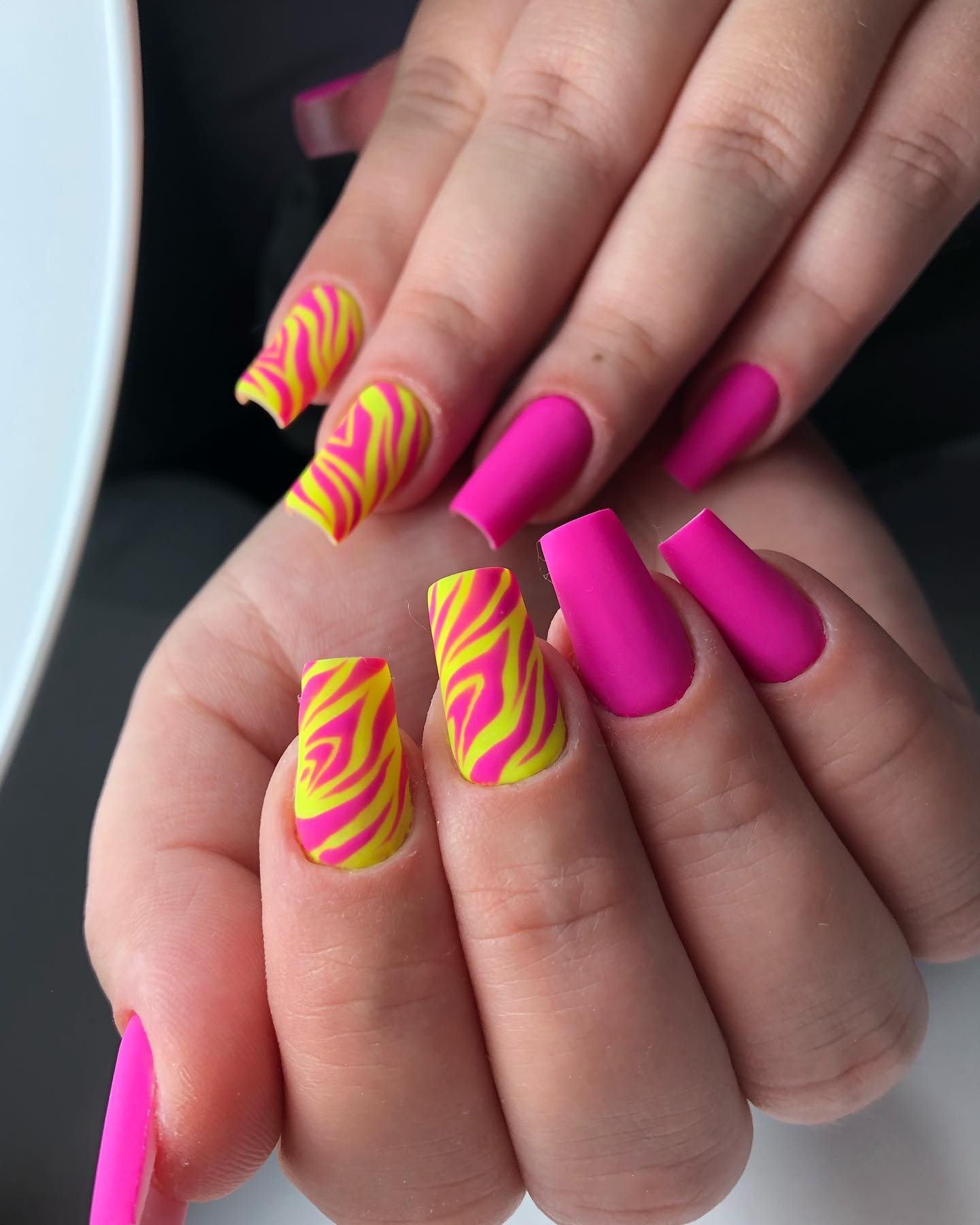
Yellow and black nail designs are basically the ultimate visual paradox. On one hand, you’ve got the universal symbol for "caution" or a literal bumblebee. On the other, it’s one of the most sophisticated, high-fashion color palettes you can put on your fingertips if—and this is a big "if"—you get the tones right. Most people shy away from it because it feels too loud. Or too much like a Pittsburgh Steelers jersey. But honestly, if you look at the runway trends from the last few seasons or what's popping off on Pinterest, you'll see that this specific contrast is having a massive moment for anyone bored with "clean girl" neutrals.
Yellow is notoriously the hardest color to formulate in the nail world. Ask any professional tech. Yellow pigments are often streaky, sheer, or just plain stubborn. Then you throw black into the mix—the most unforgiving, opaque shade in existence—and you have a recipe for a messy manicure if you aren’t careful. But when it works? It’s electric. It’s the kind of set that stops people in the grocery store.
The Science of Why Yellow and Black Nail Designs Work
Color theory explains the "why" behind the intensity. Yellow sits as one of the brightest spots on the visible spectrum. Black is the absence of light. When you put them together, you create the highest possible contrast reachable by the human eye. This is why road signs use it. It demands attention.
In the world of professional manicuring, we call this "visual weight." A soft pastel yellow paired with a matte black creates a completely different vibe than a neon "highlighter" yellow with a glossy jet black. You’ve gotta decide what kind of energy you're putting out. Are we going for "Sunflowers in the Dark" or "Cyberpunk 2077"?
I’ve seen people try to DIY this and get frustrated because the black bleeds into the yellow. Pro tip: always seal your yellow base with a quick-dry top coat before you even think about touching it with a black detail brush. It’s a game changer. If you mess up the black line, you can wipe it off the dried yellow surface without ruining the whole nail.
Modern Takes on the Classic Sting
Forget the literal bee stripes. Unless you’re going to a very specific themed party, that look is a bit dated. Today’s yellow and black nail designs are all about negative space and abstract geometry. Think about a "mismatched" set. Maybe three fingers are a solid, moody mustard yellow, and the other two feature a crisp black French tip or a single, off-center black dot at the cuticle. It’s minimalist but punchy.
Then there’s the "Aura" trend. This involves using a sponge or an airbrush to create a soft, glowing yellow center that fades into a smoky black outer edge. It looks like a solar eclipse on your nails. It's moody. It’s slightly gothic but remains vibrant.
Texture Matters More Than You Think
Mixing finishes is a secret weapon here. Imagine a matte black base with a high-gloss yellow drip. Or a "velvet" magnetic yellow polish paired with a sharp, matte black geometric frame. The way light hits the different textures adds a level of sophistication that prevents the colors from looking like a costume.
Real-World Inspiration and Expert Advice
Looking at the work of celebrity nail artists like Betina Goldstein or Mei Kawajiri, you see a move toward "micro-art." Instead of painting the whole nail yellow, they might use a sheer "jelly" yellow base—which looks like sea glass—and add tiny, hand-painted black botanical silhouettes. It’s delicate. It’s expensive-looking.
If you’re worried about your skin tone, don't be. There is a yellow for everyone.
- Cool tones: Look for "lemon" or "zinc" yellows with a slight green undertone.
- Warm tones: Go for "marigold," "amber," or "honey."
- Deep skin tones: Neons and bright "canary" yellows look absolutely incredible and pop against the skin with zero effort.
Avoid the "Caution Tape" Trap
The biggest mistake? Symmetrical, thick stripes. If the stripes are the same width, your brain automatically goes to "construction zone." To avoid this, vary your line weights. If you’re doing a graphic design, make some lines paper-thin and others bold. Use the "rule of thirds" to place your black accents. Don’t just center everything. It feels too stiff.
Common Pitfalls with Yellow Pigment
Let's get real for a second. Yellow polish often stains the natural nail plate. Because of the chemical composition of the pigments used to get that bright hue, it can leave your nails looking a bit "smoker-esque" once you take the polish off.
You need a high-quality base coat. Not the cheap stuff. You want something that acts as a true barrier. Brands like CND or OPI have specific formulations that prevent pigment migration. If you’re using gel, make sure you’re curing for the full time—yellow is thick and can sometimes "wrinkle" if the UV light doesn't penetrate all the way through the pigment to the base.
Achieving Longevity with High-Contrast Art
Black polish is a pigment hog. It takes forever to dry if you’re using traditional lacquer. If you’re doing detailed art, I highly recommend using a "gel paint" rather than a regular "gel polish." Gel paints are much thicker and don’t spread, so your crisp black lines stay crisp instead of turning into blobs while you’re trying to get your hand into the lamp.
Also, consider your top coat. A yellow and black design lives and dies by its crispness. A "no-wipe" tempered top coat will give you that glass-like finish that prevents the yellow from looking dull after a few days of wear. Yellow can sometimes pick up dyes from your jeans or hair products—a strong top coat prevents that dingy "dirty yellow" look.
Actionable Steps for Your Next Manicure
If you're ready to dive into the yellow and black aesthetic, start with a "soft" entry.
- The Accent Nail: Paint four nails a deep, charcoal black and do one nail (the ring finger or thumb) in a bold, matte mustard. It’s a safe way to test the waters.
- Negative Space: Use a clear base coat. Paint a single thick black diagonal stripe across the nail, then a thinner yellow line right next to it. Leave the rest of the nail bare. It's chic, modern, and grows out beautifully without a harsh line at the cuticle.
- Invest in Quality Brushes: If you’re doing this at home, throw away the brush that comes in the bottle for the detail work. Buy a "liner brush" with long, thin bristles. It’s the only way to get those sharp edges that make the yellow and black pop.
- Prepare the Canvas: Yellow shows every bump and ridge on your nail. Buff your nails gently or use a ridge-filling base coat before you start. You want a surface as smooth as a car hood.
This color combo isn't just a trend; it's a statement about confidence. It’s for the person who isn't afraid to be seen. Whether it's a "honeybee" inspired shimmer or a "Bauhaus" geometric masterpiece, yellow and black remains one of the most powerful pairings in the history of design. Own the contrast.



