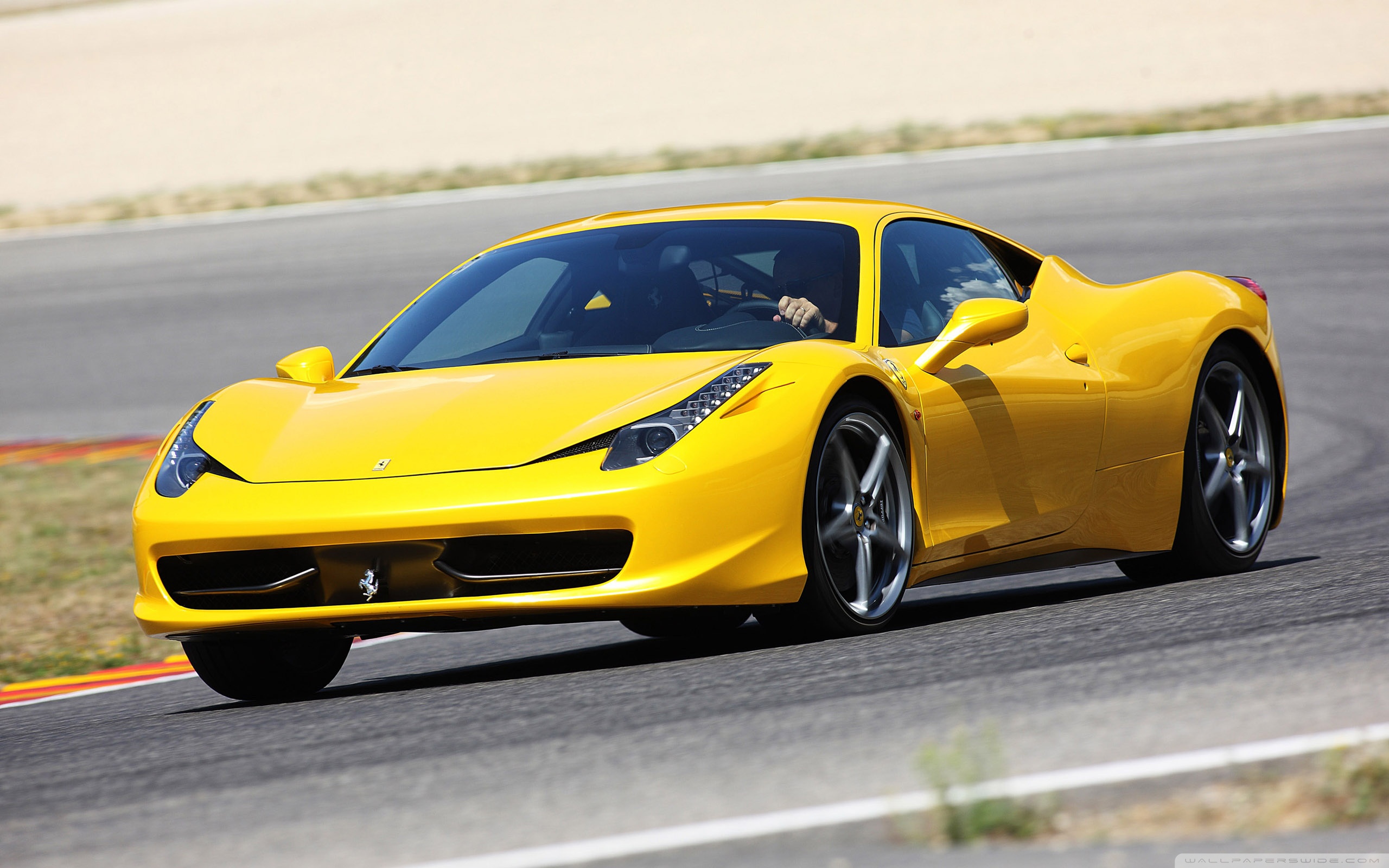
Enzo Ferrari had a thing for yellow. Most people don't realize that. Everyone associates the Scuderia with Rosso Corsa—that blazing, aggressive red that defines Italian racing. But yellow? Yellow is the soul of Modena. It’s the background of the Cavallino Rampante logo. When you see a yellow and black Ferrari, you aren't just looking at a flashy car; you're looking at a piece of history that predates the red obsession.
It hits different.
The contrast is jarring in the best way possible. While red Ferraris blend into the expected "supercar" aesthetic, a Giallo Modena body paired with Nero accents creates a visual tension that’s hard to ignore. It’s loud. It’s unapologetic. Honestly, it’s a choice for people who find the standard red a bit too predictable.
The Giallo Modena Heritage
Let's clear something up right away. Ferrari's official color isn't actually red. Technically, red was assigned to Italian grand prix cars by the FIA in the early 20th century. If Enzo had his way from the start, we might be seeing a lot more yellow on the grid. He chose yellow for the company shield because it is the color of Modena, his birthplace.
When you spec a yellow and black Ferrari today, you're tapping into that specific lineage. Usually, this means Giallo Modena paint with a Nero Noctis or carbon fiber roof. This "bi-colore" look has exploded in popularity over the last decade. It isn't just a random paint job; it’s a design strategy used to make the cars look lower and wider.
By painting the pillars and the roof black, designers create a "canopy" effect. It’s a trick of the light. The car’s silhouette appears sliced in half horizontally, making the bottom half—the part with the actual engine and wheels—look more muscular and grounded. You see this heavily on the SF90 Stradale and the 296 GTB.
Carbon Fiber: The Secret "Black" Ingredient
When enthusiasts talk about a yellow and black Ferrari, they aren't always talking about paint. They’re talking about the raw, exposed weave. Ferrari’s use of carbon fiber is extensive, and on a Giallo car, those dark grey-to-black components pop with incredible clarity.
Think about the front splitters. The side skirts. The massive rear diffusers on an 812 Competizione. On a black car, these details vanish. On a red car, they’re visible but expected. But on yellow? The black carbon fiber components look like structural skeletons. It highlights the aerodynamics. You can actually see where the air is supposed to flow.
It's functional art, basically.
Famous Yellow and Black Ferraris You've Definitely Seen
There are a few specific models where this color combo isn't just an option—it’s the definitive look.
The LaFerrari is the big one. While many were delivered in Rosso Corsa, the Giallo Modena versions with the full black glass roof are arguably the most striking. It looks like a spaceship. The way the black intake "nostrils" on the hood contrast with the yellow paint makes the car look like it's breathing.
Then there's the 458 Speciale. You've probably seen the one with the Nart Blue and White stripe, but the yellow ones with the black racing stripe and black wheels? Those are the ones that hold their value like crazy on the secondary market. Collectors love them because they feel "pure."
- The F40 Exception: You almost never see a yellow and black F40. Why? Because Ferrari officially only made them in red. If you see a yellow one, it’s likely been repainted or was a very special order for a Sultan or a high-tier VIP.
- The 599 GTO: This car popularized the matte black roof look. A yellow 599 GTO with a Grigio Opaco or Nero roof is peak 2010s supercar design.
- The Purosangue: Ferrari’s newest "four-door" actually looks surprisingly lean in yellow. The black wheel arches (which some people hate) actually blend in better if the car has other black accents to balance it out.
Why the Resale Market Craves the Contrast
Buying a Ferrari is an investment, whether we like it or not. The "Red over Tan" (Red paint, tan leather) is the safe bet. It’s the "Resale Red." But the market is shifting. Younger collectors are gravitating toward high-contrast specs.
A yellow and black Ferrari often commands a premium on sites like Bring a Trailer or at RM Sotheby’s auctions. Why? Because it’s rarer. When only 10% of a production run is painted yellow, and only a fraction of those have the black roof/trim package, you're looking at a limited commodity.
It’s also about the interior. A yellow car usually gets a black Alcantara interior with yellow stitching. That "bumblebee" aesthetic is cohesive. It feels intentional.
The Psychological Impact of Giallo
Color theory is real, even in the world of high-performance V12s. Yellow is the most visible color in the spectrum. It signals caution, speed, and energy. Black is the opposite—it’s sophisticated, heavy, and mysterious.
When you combine them, you get a machine that looks both dangerous and refined. It’s less "look at how pretty I am" and more "look at how fast I am."
I’ve talked to owners who say they chose yellow specifically because they didn't want to be "another guy in a red Ferrari." There is a certain level of confidence required to pull off a yellow and black Ferrari. You can't hide in this car. You will be photographed. You will be stared at.
Maintenance: The Part Nobody Tells You
Keep in mind that yellow is a nightmare to keep clean, though maybe not as bad as black. Yellow shows every single bug splatter from a high-speed canyon run.
And that black trim? If it's gloss Nero, it’s a fingerprint magnet. If it’s matte, you have to be incredibly careful with waxes and polishes because you can’t "buff out" a scratch on matte paint without ruining the finish. Most owners end up doing a full PPF (Paint Protection Film) wrap. It’s basically mandatory at this point if you want to actually drive the thing.
How to Spec It Right
If you're actually in the position to spec a new Ferrari—or you're looking at the used market—there are a few things that make or break the yellow and black look.
- Wheel Choice: Always go with the forged diamond-turned wheels or the matte black wheels. Silver wheels on a yellow/black car look "off." They break the two-tone flow.
- Calipers: This is where people mess up. Don't get red calipers on a yellow car. It’s the "McDonald’s" look. Go with black calipers or matching yellow ones.
- The Stripe: If you're getting a "Pista" or "Speciale" model, the stripe is everything. A black stripe on yellow paint is classic. Avoid adding a third color if you can help it. Keep it binary.
What Most People Get Wrong About Ferrari Yellow
There isn't just one yellow. This is a common mistake.
Giallo Modena is the bright, solid yellow. It’s the one you see most often. But there’s also Giallo Tristrato, which is a three-layer pearlescent paint. It is insanely expensive—sometimes a $30,000+ option. It has a depth and shimmer that makes the car look like it's glowing from inside.
When you pair Giallo Tristrato with black carbon fiber, the contrast is even more pronounced because the paint has a metallic flake that catches the sun, while the carbon stays dark and moody.
The Verdict on the "Bumblebee" Ferrari
Is it better than red? That’s subjective. But a yellow and black Ferrari is objectively more "Modena" than a red one. It’s a nod to the foundations of the brand while looking firmly toward the future of hypercar design.
It represents a break from the "standard" Ferrari experience. It’s for the person who respects the history but wants to stand out in the paddock. Whether it’s an old 355 Berlinetta or a brand-new SF90 XX, the high-contrast look remains one of the most striking visual statements in the automotive world.
If you are looking to get into the world of yellow Ferraris, start by researching the specific paint codes. Don't just settle for "yellow." Look at the difference between Giallo Modena and Giallo Tristrato in person. The way the light hits those curves matters.
Next, check the service history on any car with a black-painted roof. Sometimes these were done aftermarket, which can hurt the value. You want a factory "Bi-Colore" car if you're looking for an investment.
Finally, consider the interior. A yellow and black Ferrari is a bold statement, and the cabin should reflect that. Look for "Extra-Campionario" stitching or carbon fiber racing seats to complete the look.
Driving a Ferrari is an event. Driving a yellow and black one is a spectacle. Choose wisely.



