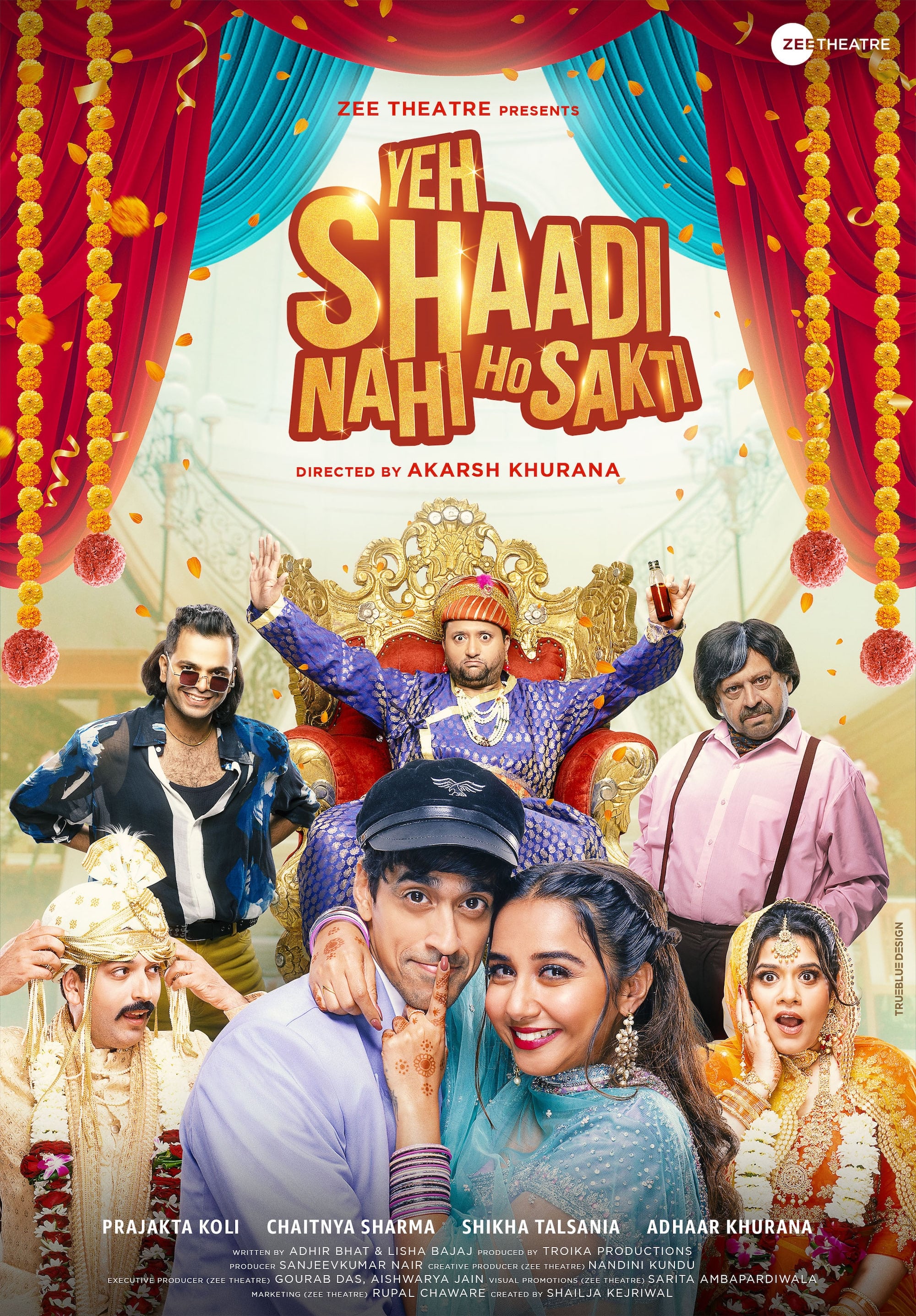
If you’ve ever sat through a three-hour Bollywood epic or stayed up late watching a Pakistani drama on YouTube, you’ve heard it. The music stops. The camera zooms in on a shocked face. Someone shouts, Yeh Shaadi Nahi Ho Sakti. It translates to "this marriage cannot happen," but it’s more than just a line of dialogue. It’s a cultural phenomenon that has defined South Asian storytelling for decades.
It's basically the "Luke, I am your father" of the subcontinent.
The phrase has evolved from a serious plot device into a self-aware meme. Yet, despite how predictable it seems, showrunners keep using it. Why? Because it works. It hits on deep-seated societal fears about family honor, class struggles, and the eternal battle between "log kya kahenge" (what will people say) and individual happiness.
The Anatomy of the Wedding Sabotage
Most people think this trope is just about a jilted lover running into a mandap. It's actually way more complex than that. In classic cinema, like the 1960 masterpiece Mughal-e-Azam, the "cannot happen" part wasn't just a choice—it was a literal decree. Prince Salim’s love for Anarkali was a threat to the entire empire. When we talk about Yeh Shaadi Nahi Ho Sakti in that context, we’re talking about the crushing weight of the establishment.
Fast forward to the 90s. The tone shifted. It became about the "sacrifice." You’ve got the hero standing at the back of the wedding hall, tears in his eyes, refusing to stop the wedding because he wants the girl to be happy with the guy her father chose.
Honestly, it’s kinda exhausting. But it sells tickets.
The drama usually stems from one of three specific triggers. First, there’s the "Paternity Reveal." Someone walks in with a birth certificate or a grainy photo. Second, the "Class Barrier." Think Devdas. The family would rather see their son spiral into a self-destructive void than let him marry someone from a "lower" social standing. Third, and perhaps most common in modern TV, is the "Misunderstanding." Someone saw someone else at a cafe with a cousin, assumed it was a secret lover, and now the whole 500-guest event is being called off.
Why Modern Audiences Still Watch
You’d think we’d be bored by now. We aren't.
Social media has breathed new life into the trope. Platforms like TikTok and Instagram are flooded with reels parodying the high-intensity zooms associated with the line. Even the show Yeh Shaadi Nahi Ho Sakti (2023), directed by Anis Bhajmee for Amazon Prime Video as a cinematic play, leaned heavily into the comedy of the situation. It starred Prajakta Koli and Shikher Swarup, playing with the absurdity of a wedding that everyone is trying to stop for various ridiculous reasons.
This shift from tragedy to comedy is a big deal. It shows that the audience is in on the joke. We know the tropes. We know the girl isn’t actually going to marry the villainous cousin. But we stay for the "how."
The Psychology of the Interruption
There is a specific thrill in the disruption of a ritual. Weddings in South Asia are massive, expensive, and rigid. They represent the ultimate order. When someone screams Yeh Shaadi Nahi Ho Sakti, they are effectively shattering that order. It’s a moment of pure, unadulterated chaos that breaks the monotony of "perfect" family expectations.
Nuance matters here. In many rural or conservative settings, a canceled wedding is a genuine social catastrophe. It can ruin reputations for generations. When writers use this trope, they are tapping into a very real, very visceral fear. It’s high-stakes gambling with social capital.
Beyond the Screen: Real World Echoes
Sometimes, life mimics art. We’ve seen news reports where weddings are called off for the most "filmy" reasons imaginable. In 2021, a story went viral about a bride in Uttar Pradesh who stopped the ceremony because the groom couldn't read a newspaper without his glasses—basically a real-life version of the trope.
In these cases, the phrase isn't a cliché; it’s an act of agency.
Historically, the trope was used to keep women in their place—the "rejected" bride was a figure of pity. Now, we see a shift. Often, it’s the bride herself saying it. She’s the one realizing the guy is a creep or that she’d rather pursue her degree. The power dynamic has flipped.
Notable Examples in Pop Culture
- Dilwale Dulhania Le Jayenge (DDLJ): While the actual line isn't the focus, the entire third act is built on the premise that this marriage (Simran and Kuljeet) must not happen.
- Kuch Kuch Hota Hai: The climax at the summer camp is essentially a slow-burn version of the trope.
- Zindagi Gulzar Hai: Pakistani dramas often handle this with more subtlety, focusing on the internal psychological reasons why a union is doomed from the start.
How to Spot a "Wedding Saboteur" Plot Coming
If you're watching a new series and want to predict the "big stop," look for these red flags. The writers usually leave breadcrumbs.
Is there a long-lost brother? Did someone overhear a conversation through a very thin door? Is there a character who is "too perfect"?
Usually, if the wedding happens in episode 3 of a 20-episode series, it’s going to be a disaster. If it’s the finale, there’s a 50/50 chance a helicopter is going to land in the middle of the pheras.
It’s about the pacing. A "Yeh Shaadi Nahi Ho Sakti" moment requires a build-up of at least three sub-plots. You need the disgruntled aunt, the secret debt, and the old flame. Without the trifecta, the payoff feels unearned.
Actionable Insights for Content Creators and Fans
If you're writing your own script or just trying to understand why your favorite show is obsessed with wedding drama, keep these points in mind:
Subvert the expectation. The most successful modern takes on this trope don't use a dramatic entrance. They use a quiet realization. Having a character calmly walk away is often more shocking to a modern audience than a loud confrontation.
Focus on the consequences. The "stop" is easy. The "what happens next" is where the real story lies. How does the family pay back the caterers? Who keeps the jewelry? Addressing the mundane aftermath makes the drama feel grounded.
Check the cultural context. A wedding stop in a metropolitan setting like Mumbai or Karachi carries different weight than one in a small village. The "why" must match the "where."
Use the trope as a mirror. Use the interruption to highlight a specific social issue, like colorism, dowry, or mental health. When the marriage "cannot happen" because of a systemic flaw, the story moves from entertainment to social commentary.
The next time you hear those iconic words, don't just roll your eyes. Look at what's being challenged. Is it love? Is it tradition? Or is it just a really clever way to make sure you tune in for next week’s episode? Either way, the "wedding that wasn't" is a permanent fixture of our collective imagination.
To truly appreciate the depth of this trope, watch the transition in cinema from the 1970s to the 2020s. You’ll notice that while the volume of the shout has decreased, the emotional stakes have only gotten higher. The best way to engage with this content today is to look for the "why" behind the "no." Examine the power structures being defied. Support stories that use the trope to empower characters rather than just provide cheap thrills. Whether you're a casual viewer or a budding screenwriter, understanding the mechanics of the "interrupted wedding" is key to mastering the language of Desi storytelling.



