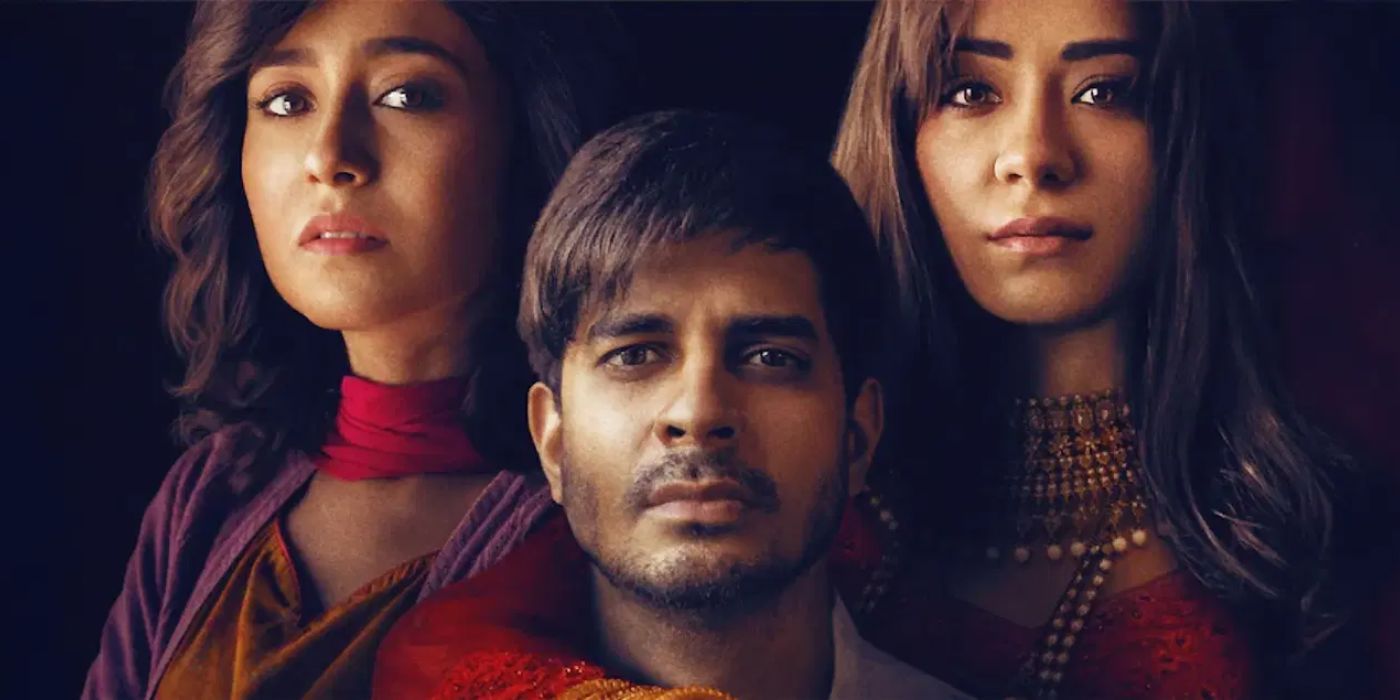
Tahir Bhasin looks terrified. Honestly, that’s the first thing you notice when you hit play on Yeh Kaali Kaali Ankhein. He isn't your typical Alpha hero swaggering through a small town in Uttar Pradesh. He's Vikrant, a guy who just wants a simple life, a decent job, and a chance to marry Shikha. But then Purva enters the room. Shweta Tripathi Sharma plays Shikha with such grounded warmth that you actually feel the stakes, but it’s Anchal Singh’s Purva who flips the script. This isn't just another Netflix thriller; it’s a twisted reversal of the "obsessive lover" trope we've seen a thousand times in Bollywood history. Usually, it's the guy stalking the girl. Here? The power dynamic is shifted, warped, and fueled by political muscle.
The show dropped in early 2022 and immediately clawed its way into the cultural zeitgeist. Why? Because it felt like a fever dream. It took the campy, over-the-top energy of 90s pulp cinema and shoved it into a modern, slick streaming format. You've got the title itself, a direct nod to the iconic song from Baazigar. That’s not an accident. The showrunners are leaning hard into that Shah Rukh Khan-era anti-hero vibe, but they’re doing it with a wink and a much darker edge.
The Purva Problem and Why We Love to Hate Her
Most villains have a "why." Purva Awasthi doesn't need one. She wants Vikrant. She’s wanted him since they were kids. Because her father is a powerful politician (played with terrifying calm by Saurabh Shukla), she gets what she wants. It’s that simple. And that’s what makes Yeh Kaali Kaali Ankhein so uncomfortable to watch. It taps into that primal fear of being "owned" by someone with more resources than you.
Anchal Singh plays Purva with this chilling, quiet intensity. She doesn't scream. She doesn't have to. A single look says, "I can ruin your life or make it perfect, choose one." Most viewers went into this expecting a romantic drama, but what they got was a psychological trap. Vikrant’s descent from an innocent engineer to a man contemplating murder just to escape a "golden cage" is the heartbeat of the show. It’s messy. It’s chaotic. It’s exactly what Indian digital content needed at a time when everything was starting to feel a bit too formulaic.
Fact-Checking the Production: Behind the Scenes
Directed by Siddharth Sengupta, the creator behind Apharan, the series was filmed across various locations including Madhya Pradesh and Himachal Pradesh. Sengupta has this specific knack for capturing the grit of North India without making it look like a caricature. He uses the landscape as a character. The narrow lanes, the sprawling mansions, the suffocating heat—you feel it all.
The music deserves its own paragraph. While the title track is a remix, the background score by Shivam Sengupta and Anuj Danait does the heavy lifting. It’s frantic. It’s anxious. It mirrors Vikrant’s internal state perfectly. When the show was renewed for a second season, fans weren't just asking about the plot; they were asking if the soundtrack would keep that same jagged, nervous energy. Netflix confirmed Season 2 because the completion rate was massive. People weren't just starting the show; they were binging it in a single night.
What Most People Get Wrong About the 90s References
People keep saying this is a "tribute" to the 90s. It’s not. Not really. A tribute implies a respectful nod. Yeh Kaali Kaali Ankhein is more like a deconstruction. It takes the tropes of films like Darr and Anjaam and asks: "What if the person being chased had absolutely no way out?"
In the 90s, obsession was often romanticized. Here, it’s a horror story. Vikrant isn't flattered. He’s drowning. The show subverts the "hero" archetype by making Vikrant weak. He makes bad choices. He lies. He hurts people he loves. Honestly, he’s kind of a coward for the first half of the season, and that’s a brave choice for a lead character. We’re used to protagonists who find a magical way to win. Vikrant just finds more ways to get stuck.
The Power of Saurabh Shukla
We have to talk about Saurabh Shukla. As Akheraj Awasthi, he is the sun around which all this dark gravity pulls. He’s a politician who loves his daughter so much he’ll destroy a village to keep her happy. It’s a terrifyingly real portrayal of nepotism and power in rural India. There are no grand speeches. Just a man eating his dinner while deciding who lives or dies. His performance anchors the show in a reality that feels uncomfortably close to home for many.
Season 2 and the Cliffhanger That Ruined Sleep
That ending. If you haven't seen it, stop reading. Okay, if you’re still here, let’s talk about that ransom plot gone wrong. The final moments of Season 1 didn't just leave us on a cliffhanger; they reset the entire board. Everything Vikrant tried to do to win back his freedom blew up in his face.
The anticipation for the next chapter isn't just about "what happens next." It’s about how much darker Vikrant can get. Can you remain a good person when you’ve started playing the devil’s game? Probably not. The show suggests that power doesn't just corrupt; it consumes. By the end of the first eight episodes, Vikrant is no longer the victim. He’s a player. And that shift is where the real story begins.
Breaking Down the Visual Language
The cinematography by Murzy Pagdiwala is worth noting. Notice the color palettes. When Vikrant is with Shikha, the lighting is often soft, natural, and airy. It feels like a life that could have been. But the moment Purva enters the frame, the shadows get longer. The colors get saturated and heavy.
There’s a specific scene in a library where the tension is so thick you could cut it with a knife. It’s just two people talking, but the framing makes Vikrant look like he’s already behind bars. It’s visual storytelling 101, but executed with a flair that many OTT shows miss. They aren't just showing you a story; they’re making you feel the claustrophobia of his situation.
Key Takeaways for Your Next Watch
If you’re planning a rewatch or diving in for the first time, keep an eye on these elements:
- The Evolution of Vikrant’s Eyes: Tahir Bhasin does incredible work with his expressions. Watch how his eyes go from hopeful to dead inside over the course of the season.
- The Dialogue: It’s sharp. It avoids the "theatrical" feel of many Hindi dramas, opting instead for a conversational, almost casual tone that makes the violence even more jarring.
- The Symbolism of the Title: It’s not just about eyes; it’s about being watched. Constantly. By the state, by the family, and by the woman who claims to love you.
How to Get the Most Out of the Series
To truly appreciate what the creators have done here, you have to look past the "thriller" label. This is a satire of the Indian wedding obsession and the lengths people go to for "status."
- Watch the 90s films first: If you have time, revisit Baazigar. It makes the subversion in the show much more satisfying.
- Pay attention to the side characters: From the quirky best friend to the ruthless henchmen, every character has a distinct motivation. No one is there just to fill space.
- Analyze the power dynamics: The show is a masterclass in how soft power (money, influence) is often more dangerous than physical force.
Yeh Kaali Kaali Ankhein succeeded because it didn't try to be "prestige TV" in the boring, slow-burn sense. It’s fast. It’s loud. It’s unapologetically entertaining. It takes the bones of a Bollywood masala movie and puts them through a meat grinder, resulting in something that feels fresh, dangerous, and deeply addictive.
For those looking to understand the current state of Indian streaming, this is the benchmark. It proves that you don't need a massive international budget if you have a tight script and a cast that is willing to go to some very dark places. The wait for the continuation has been long, but if the quality remains consistent, it will be well worth it.
The next step is simple. Go back and watch the first season again. Look for the small cues—the way Purva touches Vikrant’s shoulder, the way his father cowers in the presence of the Awasthis. The clues for his eventual breakdown are all there from the first ten minutes. Don't just watch the plot; watch the trap being built.



