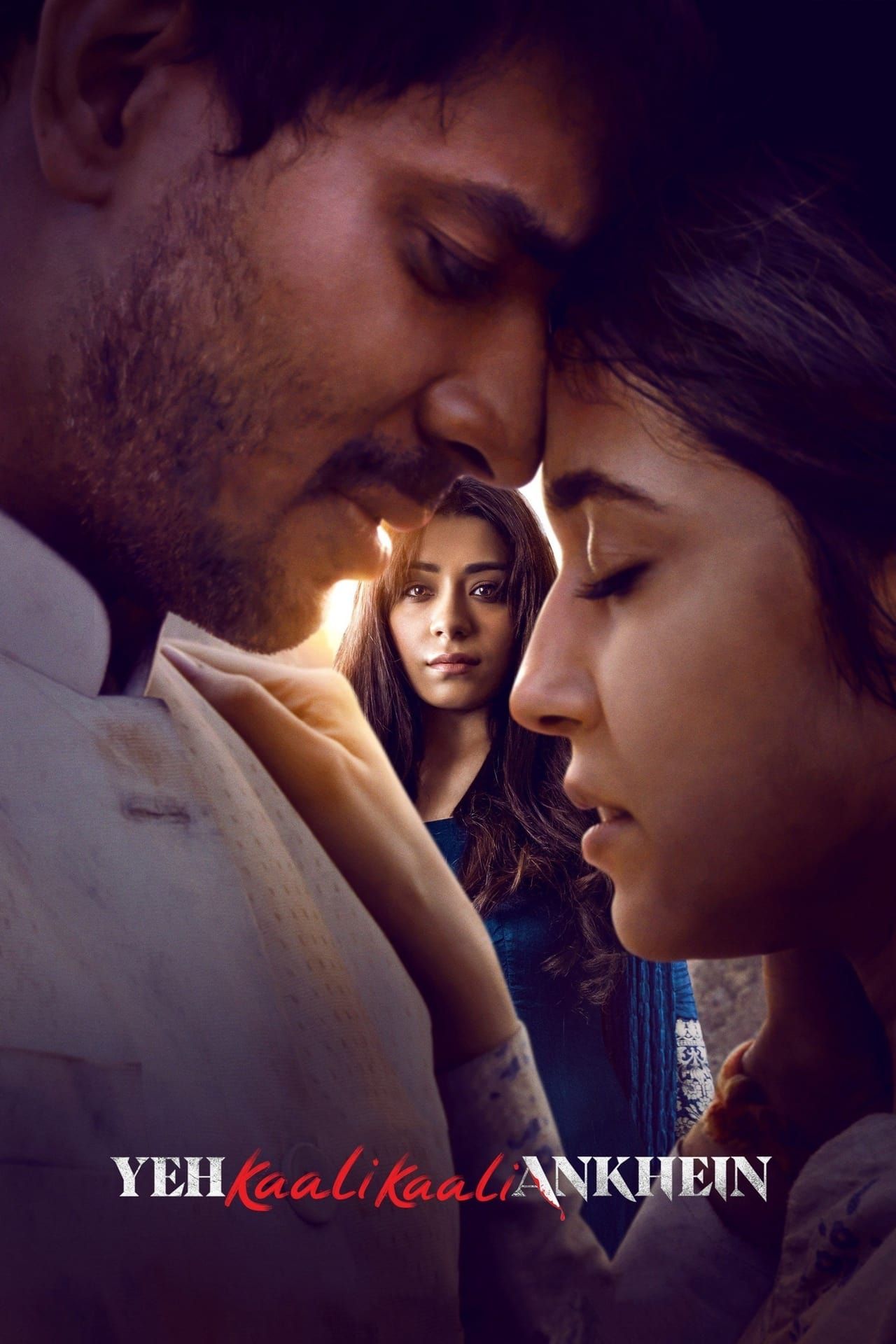
Netflix India usually plays it safe with gritty crime dramas or polished rom-coms. Then came Yeh Kaali Kaali Ankhein Season 1. It felt different. Honestly, it felt like a fever dream curated by someone who grew up on 90s Bollywood tropes but had a dark, twisted sense of humor. You’ve got the small-town charm of Purvanchal clashing violently with a psychological obsession that borders on the horrific. It’s messy. It's loud. It is surprisingly smart.
The story follows Vikrant, played by Tahir Raj Bhasin. He’s just a regular guy. He wants a simple life, a decent job, and to marry Shikha, the girl he actually loves. But fate—or rather, a very powerful, very obsessed woman named Purva—has other plans. Purva is the daughter of a local politician-goon, Akheraj Awasthi. She’s liked Vikrant since they were kids. When Purva wants something, her father makes sure she gets it. Even if that "something" is a human being. Read more on a connected subject: this related article.
The Power Dynamics of Obsession
What makes Yeh Kaali Kaali Ankhein Season 1 stand out isn't just the "boy meets girl, girl’s dad is a villain" setup. It’s the subversion of gender roles in Indian thrillers. Usually, we see the hero chasing the girl. Here? Vikrant is the victim. He is literally a damsel in distress, trapped in a gilded cage built by a woman who views him as a trophy. Shweta Tripathi’s Shikha is the collateral damage, the personification of the life Vikrant is forced to abandon.
Saurabh Shukla, playing Akheraj, is terrifying because he’s so casual. He isn't twirling a mustache. He’s eating breakfast and ordering a murder like he’s asking for more salt. This grounded villainy makes the stakes feel real. You feel Vikrant’s suffocation. You see him slowly losing his morality as he tries to claw his way out of a marriage he never wanted. It’s a slow descent into darkness. Additional analysis by Variety explores comparable perspectives on this issue.
The Pulp Aesthetic
The show leans heavily into its influences. The title itself is a nod to the iconic song from Baazigar, a film centered on a protagonist with a dark side. Director Siddharth Sengupta uses saturated colors and a driving soundtrack to keep the energy high. It’s pulpy. It’s reminiscent of those old pocket books you’d find at railway stations. Short chapters. High stakes. Cliffhangers that actually make you want to click "Next Episode."
Why the Ending Left Everyone Frustrated (In a Good Way)
By the time you reach the finale of Yeh Kaali Kaali Ankhein Season 1, the tone has shifted completely. What started as a dark comedy/romance hybrid turns into a full-blown noir tragedy. Vikrant is no longer the innocent kid from the first episode. He’s a man who has committed crimes to escape a crime. The irony is thick.
The final moments involve a botched kidnapping, a massive explosion, and a reveal that changes the power dynamic yet again. Just when Vikrant thinks he’s free, the rug is pulled out. It’s a classic cliffhanger. Some people hated it because they wanted closure. Others loved it because it stayed true to the chaotic energy of the rest of the season.
Performance Peaks
- Tahir Raj Bhasin: He has to play "scared" for about eight hours, which is hard to do without being annoying. He pulls it off by showing Vikrant's gradual hardening.
- Anchal Singh: As Purva, she is the heartbeat of the show. She doesn't play a caricature. She plays a woman who genuinely believes she is in a romance, oblivious to the fact that she’s a kidnapper in a wedding sari.
- Shweta Tripathi Sharma: She brings the emotional weight. Without her, we wouldn't care if Vikrant escaped or not.
Misconceptions About the Show
A lot of people dismissed this as just another "Mirzapur clone" because of the North Indian setting and the guns. That’s a mistake. Mirzapur is about power and succession. Yeh Kaali Kaali Ankhein Season 1 is about the loss of identity. It’s much more personal. It’s about how one person’s "love" can be another person’s prison. It’s also surprisingly funny in a dark, "I shouldn't be laughing at this" kind of way.
The pacing is also different. While many Indian web series suffer from a mid-season sag, this one stays tight. Each episode adds a new layer of complication. Just when you think Vikrant has a plan, a new character or a new secret pops up to ruin it. It’s relentless.
Technical Craft and Direction
The cinematography by Murli Krishna deserves a mention. The way the camera lingers on Purva’s face—making her look both beautiful and predatory—is top-tier. The locations aren't just backdrops; the cramped alleys and the sprawling, cold mansions reflect the characters' internal states. The sound design also incorporates 90s-esque stings that remind you of the era the show is paying homage to.
It isn't perfect, though. Some of the logic leaps in the later episodes require a massive suspension of disbelief. How does a regular guy suddenly become a master strategist? It’s a bit of a stretch. But in the world of pulp fiction, we usually give those things a pass if the ride is fun enough. And this ride is definitely fun.
Essential Takeaways for Viewers
If you’re planning to jump into Yeh Kaali Kaali Ankhein Season 1 or if you're rewatching it before the next chapter drops, keep these points in mind. First, pay attention to the recurring motifs of water and fire; they usually signal a shift in Vikrant's agency. Second, notice how the dialogue changes. Early on, people talk at Vikrant. Later, he starts dictating the terms.
Actionable Insights for Your Watchlist:
- Don't expect a hero. Every character in this show is flawed, some irredeemably so. If you’re looking for a moral compass, you won’t find one.
- Watch for the 90s references. From the music to the framing of certain shots, the show is a love letter to the era of the "anti-hero."
- Binge it in chunks. The narrative is structured like a thriller novel. It works best when you watch 2-3 episodes at a time to maintain the tension.
- Analyze the "Love" vs "Obsession" theme. The show asks a very uncomfortable question: is there really a difference if the end result is the same?
The series succeeds because it doesn't try to be anything other than a gripping, slightly over-the-top thriller. It knows its roots and it plays to them perfectly. Whether you're here for the romance, the crime, or the psychological breakdown of a "nice guy," it delivers on all fronts.
Next Steps for Fans:
To get the most out of the experience, revisit the classic Bollywood thrillers of the early 90s, specifically Anjaam and Darr. Seeing how those films handled the "obsessed lover" trope provides a fascinating context for how this series flips those expectations. Additionally, pay close attention to the lyrics of the title track during the opening credits; they provide a subtle roadmap for the psychological state of the characters throughout the season. Keep an eye on the official Netflix social channels for production stills from the upcoming episodes, as they often contain clues about which characters survived the explosive finale.



