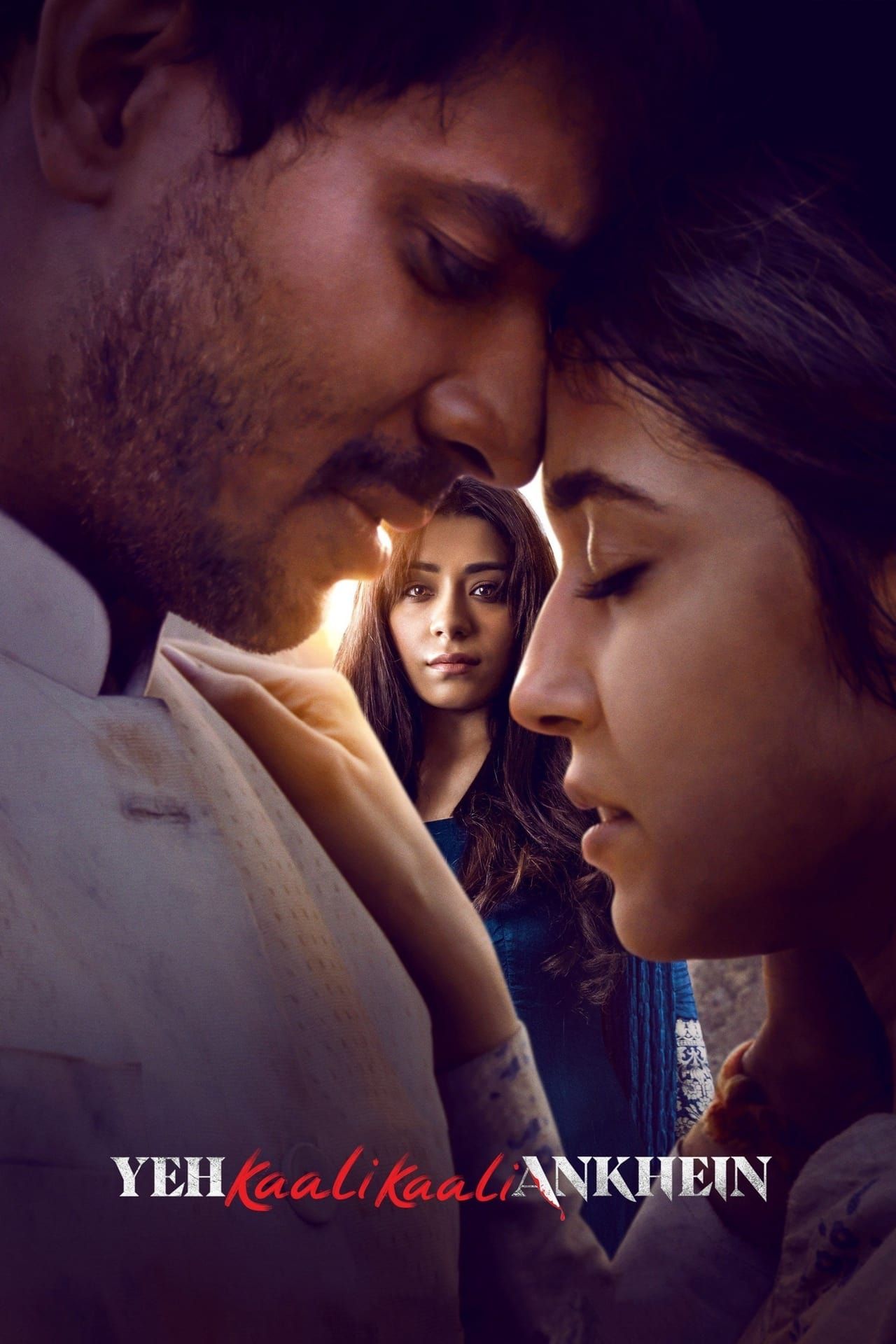
Netflix India has a weird relationship with crime thrillers. Sometimes they're too gritty, sometimes they're just plain boring, but then Yeh Kaali Kaali Ankhein Season 1 dropped and basically flipped the script on what a Bollywood-style noir should feel like. It wasn't just another show about gangsters in the heartland. Honestly, it felt more like a fever dream where a 90s Shah Rukh Khan movie crashed into a dark, psychological obsession story.
You’ve got Vikrant, played by Tahir Raj Bhasin. He’s just a regular guy. He wants a simple life, a boring job in Bhilai, and to marry Shikha, the girl he actually loves. But then enters Purva. She’s the daughter of a powerful politician, and she’s decided—completely unilaterally—that Vikrant belongs to her. It is terrifying.
The Power Dynamics That Made Season 1 So Stressful
What really makes the first season work is the sheer hopelessness of Vikrant’s situation. Usually, in these shows, the hero finds a gun and starts shooting his way out. Not here. Vikrant is trapped by bureaucracy, family ties, and the terrifying influence of Purva’s father, Akheraj Awasthi. Saurabh Shukla plays Akheraj with this sort of casual cruelty that makes your skin crawl. He doesn't need to scream. He just eats his breakfast while deciding who lives or dies.
The show plays with the "femme fatale" trope but reverses it. Purva isn't just a seductress; she’s a predator with the state machinery behind her. Shweta Tripathi Sharma, who plays Shikha, is the emotional anchor, but the show belongs to the toxic chemistry between Vikrant and Purva. It’s a dance of survival where every step Vikrant takes to escape just draws him deeper into a life of crime he never wanted.
People often compare this to Mirzapur or Pataal Lok, but that’s a mistake. Those shows are about power. This show? It's about obsession. It’s about how a person's soul slowly rots when they’re forced to choose between their morals and their life. By the time we get to the middle of the season, Vikrant isn't the "good guy" anymore. He’s a desperate animal. That shift is subtle, and Tahir Raj Bhasin handles it brilliantly.
Why the 90s Aesthetic Actually Matters
The title itself comes from the iconic song in Baazigar. That’s not just a gimmick. Director Siddharth Sengupta is clearly obsessed with the era of the "anti-hero." In the 90s, we watched SRK throw people off buildings and we kind of rooted for him because he was doing it for love or revenge. Yeh Kaali Kaali Ankhein Season 1 takes that nostalgia and curdles it. It asks: "What if that obsessive lover wasn't the hero, but the villain with a massive security detail?"
The soundtrack is a character of its own. It uses these sweeping, almost operatic scores that feel out of place in a small-town setting, which just adds to the surrealism. You're watching a kidnapping or a murder, and the music feels like a romantic ballad. It’s jarring. It’s supposed to be.
The Ending That Left Everyone Screaming at Their TVs
Let’s talk about that cliffhanger. No spoilers if you somehow haven't seen it, but the final act shifts the genre entirely. It goes from a psychological cat-and-mouse game to a full-blown heist-gone-wrong scenario. The stakes move from "will they get married?" to "will anyone survive the next ten minutes?"
The brilliance of the finale lies in Vikrant's realization. He thinks he’s finally the one pulling the strings. He thinks he’s become the monster to beat the monster. But the show reminds us—harshly—that in this world, there is always a bigger fish. The introduction of a certain contract killer and the botched kidnapping attempt created a narrative mess that only a second season could fix. It was a risky move. Usually, fans hate cliffhangers that big. But for this show, it felt earned because the escalation was so consistent.
Fact-Checking the Production: What Went Into the Making
If you look at the technical side, the cinematography by Murzy Pagdiwala is worth noting. They used a lot of tight, claustrophobic shots when Vikrant is in the Awasthi household, contrasting with the wide, open, yet somehow equally lonely landscapes of the coal mines. It visually represents his entrapment.
The series was filmed across various locations, including Madhya Pradesh and Himachal Pradesh, giving it a geographical texture that feels authentic. Unlike some "Bimaru belt" shows that look like they were filmed on a backlot in Mumbai, the dust here feels real. The heat feels real.
- The Scripting Process: It took nearly three years to finalize the script because the creators wanted to balance the dark humor with the genuine stakes.
- Casting Choices: Shweta Tripathi was actually one of the first people cast, as the directors needed someone who could portray vulnerability without appearing weak.
- The Viral Factor: The show didn't have a massive marketing budget. It grew through word-of-mouth on social media, specifically Twitter and Reddit, where fans started dissecting the ending almost immediately after the midnight release.
Addressing the Critics: Is it Too Over-the-Top?
Some critics argued that the show leans too heavily into melodrama. They aren't entirely wrong. There are moments where the plot armor for certain characters feels a bit thick. How many times can Vikrant narrowly escape a fatal mistake? Probably not as many as the show suggests.
However, that’s sort of the point of pulp fiction. It’s supposed to be heightened. It’s supposed to be "extra." If you go into Yeh Kaali Kaali Ankhein Season 1 expecting a gritty, realistic documentary on UP politics, you’re in the wrong place. If you go in expecting a Shakespearean tragedy dressed up in a leather jacket and smelling of gunpowder, you’re going to have a blast.
Actionable Steps for New Viewers and Rewatchers
If you are just starting or planning a rewatch before diving into the new episodes, keep an eye on the background details. The show uses color theory quite heavily. Purva is almost always associated with bold, aggressive colors—reds and deep blacks—while Shikha is often in pastels or whites. Vikrant’s wardrobe slowly transitions from bright, simple shirts to darker, more rugged attire as his innocence fades.
- Watch for the symbolism: The recurring motif of the "black eyes" isn't just about the song; it's about being watched. Notice how many scenes involve characters looking through glass, mirrors, or CCTV cameras.
- Pay attention to the side characters: Vikrant’s friend and his family members provide the stakes. If he fails, they don't just lose him; they lose everything. This adds a layer of pressure that isn't just about his own survival.
- Check the release timeline: Ensure you've caught the "recap" features on Netflix if it’s been a while, as the plot density is high and small betrayals in the early episodes have massive payoffs later.
The legacy of the first season is its willingness to be weird. It didn't try to be Sacred Games. It tried to be its own messy, violent, romantic self. That authenticity—even in its absurdity—is why we're still talking about it years later. It’s a masterclass in tension and one of the few times a "romantic" thriller actually felt thrilling.
To get the most out of the experience, watch it in the original Hindi with subtitles rather than the dubbed versions. The nuance in Saurabh Shukla’s dialect and Tahir’s increasingly frantic delivery is lost in translation. Once you finish, look up the fan theories regarding the "missing" money and the true motivations of the bridge scene; there are details in the dialogue that suggest certain characters knew more than they let on.



