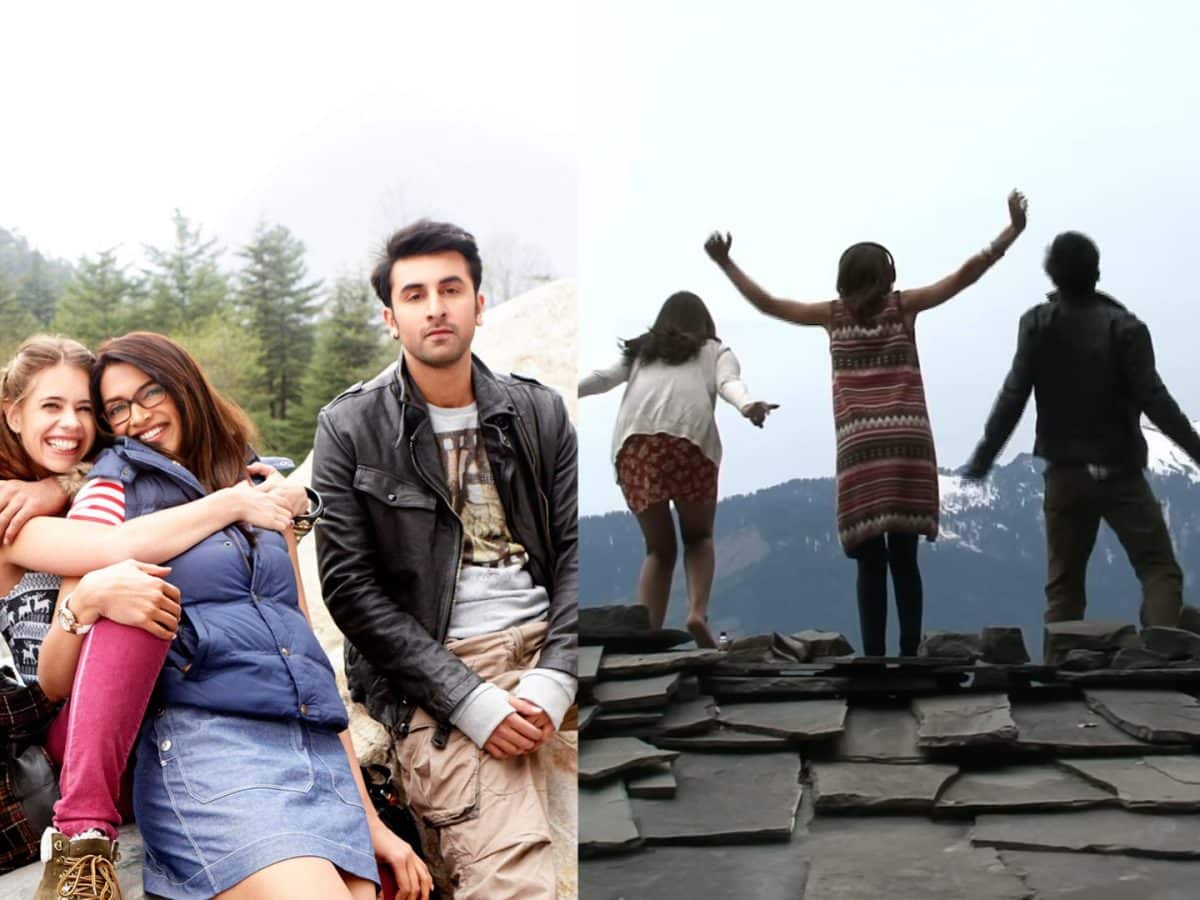
It has been over a decade since Ayan Mukerji released Yeh Jawaani Hai Deewani (YJHD) into the wild, and honestly, the Indian pop culture landscape hasn't been the same since. You’ve seen the reels. You've heard "Badtameez Dil" at every single wedding you’ve attended for the last ten years. But why does this specific movie—essentially a story about a guy who likes hiking and a girl who studies too hard—stick to our ribs like this?
It’s not just the nostalgia.
Movies about friendship are a dime a dozen in Bollywood. We have the classics like Dil Chahta Hai or the high-octane drama of Zindagi Na Milegi Dobara. Yet, Yeh Jawaani Hai Deewani occupies a different space. It’s the "comfort food" of cinema for a generation that was entering adulthood right as the world started moving way too fast.
The Bunny Problem: Is Kabir Thapar Actually a Hero?
Let’s talk about Bunny. Ranbir Kapoor plays Kabir Thapar with this effortless, infectious energy that makes you want to quit your job and buy a camera. But if you look closer, he’s kinda terrifying as a person. He is the embodiment of the "fear of missing out" long before FOMO was a common term in our vocabulary.
Bunny’s entire philosophy is summed up in that famous line: "Main udna chahta hoon, daudna chahta hoon, girna bhi chahta hoon... bus rukna nahi chahta." It sounds poetic. In reality, it’s a manifesto for avoidance.
Bunny runs. He runs from his father’s expectations, he runs from his best friend’s wedding, and he definitely runs from Naina. Most people watch this movie and see a travelogue, but it’s actually a character study on the cost of ambition. When Bunny finally comes home and realizes his father has passed away and his room has been repurposed, the movie stops being a fun rom-com. It becomes a heavy reflection on what we lose when we’re too busy winning.
Ranbir Kapoor brought a specific kind of vulnerability to the role that most actors would have missed. He didn’t play Bunny as a jerk; he played him as someone who was genuinely scared that if he stopped moving, he’d disappear.
Naina Talwar and the "Manic Pixie Dream Girl" Reversal
Then there’s Naina.
Deepika Padukone’s portrayal of Naina Talwar is arguably the emotional anchor that keeps the movie from drifting into "rich kids traveling" territory. Usually, in these movies, the girl is there to "fix" the guy. And while Naina does influence Bunny, she doesn't change her entire life for him.
She stays.
She builds a career. She learns to love her own company. When Bunny asks her to come with him at the end, she says no. That is a massive moment for Indian cinema. She acknowledges that her happiness is found in the "slow" moments—the daal-chawal for 50 years—while his is in the spice of the world.
The chemistry between Ranbir and Deepika was, of course, a massive talking point. Since they had a very public real-life history, every look and every line of dialogue felt weighted. When Naina tells him, "Yaadein mithai ke dibbe ki tarah hoti hain," it doesn't feel like a scripted line. It feels like a realization.
The Manali Trip vs. The Udaipur Wedding
The film is split into two distinct halves, and they feel like two different movies.
- The Trek: This is the fantasy. It’s the dream of the mountains, the freedom of youth, and the feeling that anything is possible. It’s vibrant and loud.
- The Wedding: This is the reality. The colors are deeper, the stakes are higher, and the friendships are fractured.
Aditi and Avi—played by Kalki Koechlin and Aditya Roy Kapur—are the real MVPs of the second half. While Bunny was off being a world-famous cinematographer, Aditi grew up. She realized that her unrequited love for Avi was a dead end. She chose a stable, kind man (Taran) and moved on.
Avi, on the other hand, is the tragic figure of Yeh Jawaani Hai Deewani. He represents the person who couldn't move on. He stayed in the same spot, opening a bar that failed, gambling away money, and resenting his best friend for leaving. It’s a messy, honest depiction of how friendships actually age. Not everyone stays on the same page.
Why the Music Still Hits (It’s Not Just Pritam)
Pritam’s soundtrack for this movie is a monster. It’s rare for an album to have zero skips, but YJHD manages it. From the Sufi-infused "Iktara" (which technically appeared in Wake Up Sid but fits this vibe so well) to the energetic "Dilliwaali Girlfriend," the music dictates the emotional tempo.
Amitabh Bhattacharya’s lyrics are the secret sauce. In "Kabira," the lyrics talk about a soul that refuses to settle. In "Subhanallah," it’s about the breathless feeling of first love.
But let’s be real: "Balam Pichkari" is a cultural phenomenon. It redefined the Holi song for the 21st century. It’s played at every party because it captures that specific, frantic joy of being young and unburdened.
The Cinematography of Aspiration
V. Manikandan, the cinematographer, turned Manali and Udaipur into characters themselves. The way the light hits the snow on the trek up to the peak makes the audience feel the cold. The gold-and-orange hues of the Udaipur palace during the wedding sequences created a blueprint for the "Big Fat Indian Wedding" aesthetic that we see on Instagram today.
Ayan Mukerji has a knack for capturing urban loneliness and the desire for something "more." He did it with Wake Up Sid, but with Yeh Jawaani Hai Deewani, he scaled it up for the masses. He managed to make a movie that felt indie and personal, yet had the scale of a Dharma blockbuster.
Misconceptions: It’s Not Just a Romance
A common critique of the film is that it’s "unrealistic." Critics argue that a cameraman wouldn't be able to afford that lifestyle or that the ending is too "happily ever after."
I’d argue they’re missing the point.
The movie is a heightened reality. It’s a fable about the transition from your 20s to your 30s. The ending isn't necessarily about Bunny and Naina getting married and living perfectly. It’s about Bunny finally choosing something over himself. He realizes that being alone at the top of the world isn't as great as sharing a mediocre moment with someone who knows your soul.
It’s about the compromise we all eventually have to make.
Actionable Insights: The YJHD Philosophy in 2026
If you're watching this movie today and feeling that itch to drop everything and travel, or if you're feeling guilty for staying put while others move "ahead," here is the takeaway:
- Audit your "FOMO": Bunny spent years chasing the next big thing only to realize he missed his father’s final years. Ambition is great, but figure out what you’re willing to trade for it.
- Friendships require maintenance: Avi and Bunny’s fallout happened because of a lack of communication, not a lack of love. Don't assume your "best friend" will always be there if you don't show up for them.
- The "Naina" approach works: You don’t have to be a nomad to be "cool." Finding joy in your routine, your work, and your local community is a valid way to live.
- Travel for the right reasons: Don't go to the mountains just because a movie told you to. Go because you actually want to see the view, not just the "view" through a camera lens.
Yeh Jawaani Hai Deewani remains relevant because it asks the question we all struggle with: Do I chase the world, or do I build a home? Most of us are still trying to find the balance between the two. And as long as people keep growing up and feeling that tug-of-war, this movie will keep trending.
To truly understand the legacy of the film, look at the travel industry in Himachal Pradesh. The "YJHD effect" is real. Spots in Manali where they filmed are now major tourist hubs. The movie didn't just tell a story; it created a lifestyle aspiration that defined a decade of Indian youth.
Whether you love it for the songs, the locations, or the chemistry, there’s no denying that it captured lightning in a bottle. It’s a reminder that while our youth is fleeting (Jawaani), our spirit can stay wild (Deewani) if we just learn when to stop running.



