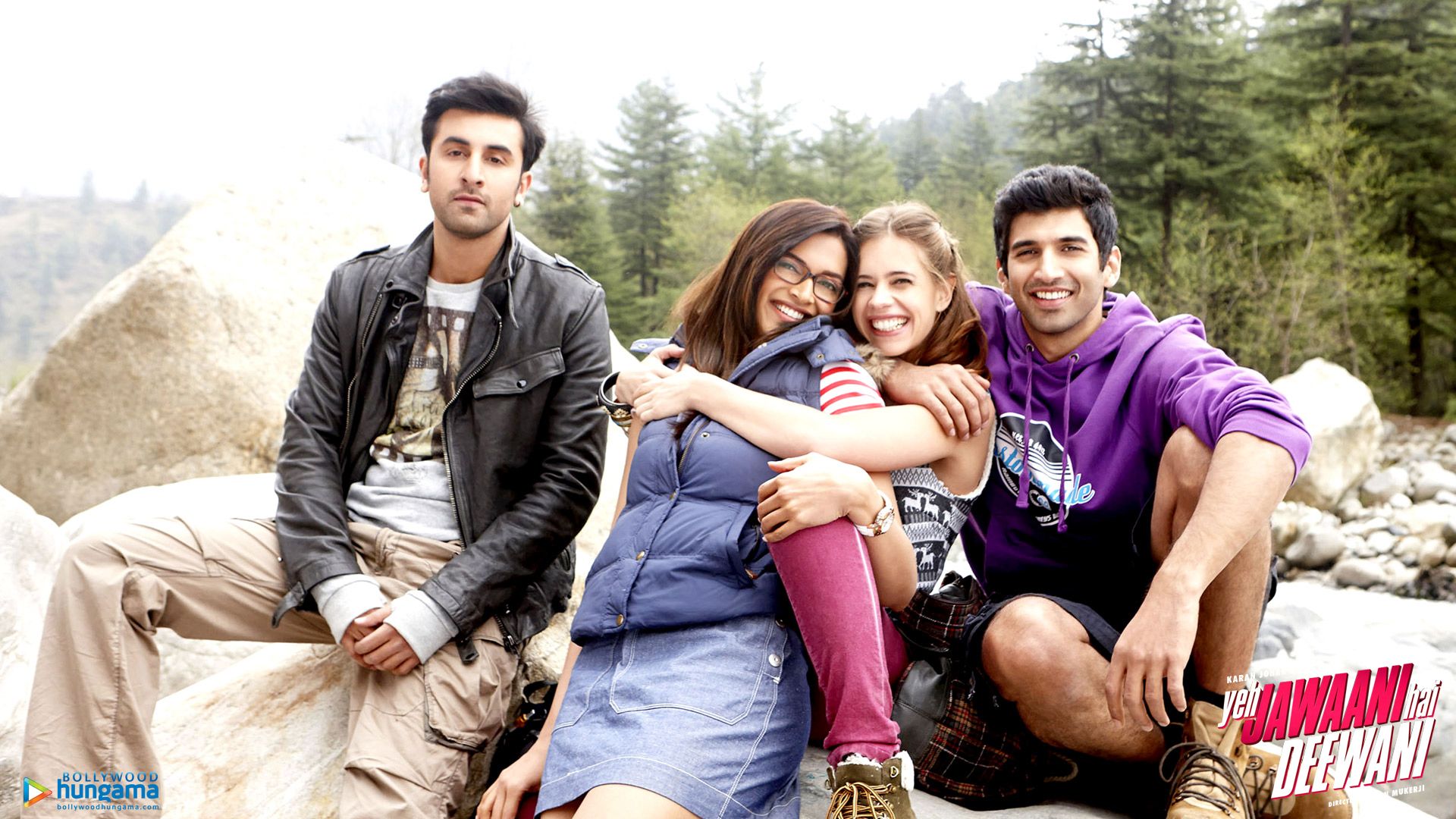
Let’s be honest. If you’re a millennial or a Gen Z kid in India, you’ve probably spent at least one night staring at a train ticket, wondering why your life doesn't look like a Dharma Productions set. We blame Ayan Mukerji. Specifically, we blame the yeh jawaani deewani movie.
Released back in 2013, this film didn't just break the box office; it fundamentally broke how we view friendships, weddings, and the concept of "finding yourself." It’s been over a decade, and we are still out here trying to find a "Bhuta Parvat" that doesn't actually exist on a map.
The Bunny Paradox: Is Kabir Thapar Actually a Red Flag?
For years, we worshipped Ranbir Kapoor’s Bunny. He was the poster child for the "wanderlust" movement before the word became a cringe-worthy Instagram bio staple. He wanted to fly, he wanted to run, he just didn't want to stop. But as we’ve collectively aged and re-watched the film on Netflix for the hundredth time, the internet has started to realize something.
Bunny was kinda selfish.
Think about it. He leaves his best friend Avi (played with heartbreaking realism by Aditya Roy Kapur) hanging for years. He misses his own father’s funeral because he’s too busy being a high-flying travel videographer in Paris. The movie paints his return as a grand romantic gesture, but in 2026, we’d probably call him out for his commitment issues and his "main character syndrome."
Yet, we still love him. Why? Because Bunny represents the part of us that is terrified of a 9-to-5 desk job. He is the personification of the FOMO we feel every time we see someone posting from a beach in Bali while we’re stuck in a Monday morning meeting.
The Naina Talwar Evolution
Then there’s Naina. Deepika Padukone basically redefined the "nerd-to-glam" trope, though let’s be real—she was just Deepika in glasses.
Naina’s journey from a shy medical student to a confident doctor is the emotional anchor of the yeh jawaani deewani movie. While Bunny is busy running away from things, Naina is the one who learns to be still. Her famous dialogue, "Jitna bhi try karo Bunny, life mein kuch na kuch toh chootega hi. Toh jahan hain, wahin ka maza lete hain," is arguably the most grounded advice ever given in a Bollywood rom-com. It’s the perfect counter-argument to Bunny’s frantic pace.
That Fake Mountain and Real Travel Trends
One of the funniest things about the film’s legacy is how it sparked a massive trekking boom in India. Suddenly, every college group wanted to go to Manali.
But here is the factual kicker: Bhuta Parvat isn't real. The production team actually shot those iconic trekking sequences around Jalori Pass and Hampta Pass in Himachal Pradesh. Some scenes were even filmed in the Kongdori area of Kashmir. If you go looking for the haunted mountain from the movie, you'll just end up confusing a local guide.
The "YJHD effect" on Indian tourism was massive.
- Manali saw a huge spike in young travelers wanting to recreate the Hadimba Temple scenes.
- Udaipur became the undisputed capital of destination weddings thanks to the lavish portrayal of Aditi's marriage at The Oberoi Udaivilas.
- Backpacking culture in India arguably owes its mainstream popularity to this film.
However, real trekkers will tell you that the movie got the "vibe" totally wrong. In the film, they’re running around in light jackets and fancy boots, drinking and dancing at high altitudes. In reality? You’d be struggling for air and worrying about altitude sickness. Don't even get me started on the "running away from a mob" scene—that's a quick way to get lost in the wilderness.
The Music That Refuses to Die
You cannot talk about this movie without talking about Pritam.
The soundtrack is a beast. "Badtameez Dil" is still the mandatory closing song at every Indian wedding. "Balam Pichkari" has legally replaced all other songs during Holi. But the soul of the film is "Kabira" and "Ilahi."
The music did something rare: it captured both the euphoria of youth and the quiet ache of growing up. When Arijit Singh’s voice hits in "Ilahi," you genuinely feel like you're walking through the streets of Paris, even if you’re actually just stuck in traffic in Bengaluru.
Why It Still Matters (The Nuance)
Look, the yeh jawaani deewani movie isn't a perfect film. It’s got clichés. It’s got the "hero returns for the girl at the last minute" trope. It’s got a very specific, privileged view of what "freedom" looks like—it’s easy to travel the world when you’re a talented videographer with a dream job.
But it works because of the chemistry. Ranbir and Deepika had just broken up in real life before filming, yet their on-screen spark was undeniable. It felt vulnerable.
The film also gave us one of the most realistic portrayals of friendship drifting apart. The scene where Bunny realizes he doesn't know anything about Avi’s life anymore? That hurts. It hits home for anyone who has moved to a different city and realized that "staying in touch" is a lot harder than it sounds.
Actionable Takeaways for Your Next Rewatch
If you’re planning to revisit this classic or take a trip inspired by it, keep these things in mind:
- Don't ignore Avi and Aditi: On the second watch, notice how their characters are actually the most relatable. They represent the people who stay behind, the people who grow up in the same town, and the people who have to deal with the "Bunnys" of the world.
- The Udaipur Itinerary: If you visit Udaipur, skip the expensive hotels and head to Gangaur Ghat or Chittorgarh Fort for the actual history, not just the movie sets.
- Real Trekking Prep: If you’re heading to Manali because of this movie, please buy actual hiking boots. Shorts and a leather jacket won't save you at 10,000 feet.
- Accept the "Chootega": Naina was right. You can't do everything. Stop trying to have the "perfect" trip and just enjoy the tea at the roadside stall you're currently standing at.
The yeh jawaani deewani movie remains a time capsule of a very specific era of Indian cinema—the bridge between old-school melodrama and new-age aspirational storytelling. It’s a reminder that while dreams are great, having someone to come home to is probably the bigger adventure.



