If you ask a group of people to define the "middle child" of the modern era, you'll probably hear a lot of confusion. Honestly, it’s kinda fitting for a group of people who spent their childhoods making their own grilled cheese sandwiches while their parents were still at the office.
We’re talking about Generation X. They’re the demographic bridge between the massive Baby Boomer wave and the digital-native Millennials. But if you’re trying to pin down the exact years for Gen X, you’ll find that the answer depends entirely on who you ask—and what they’re trying to sell you. In related updates, we also covered: The Miao Tree Of Life Is The Best Philosophy For Modern Burnout.
The Consensus: 1965 to 1980
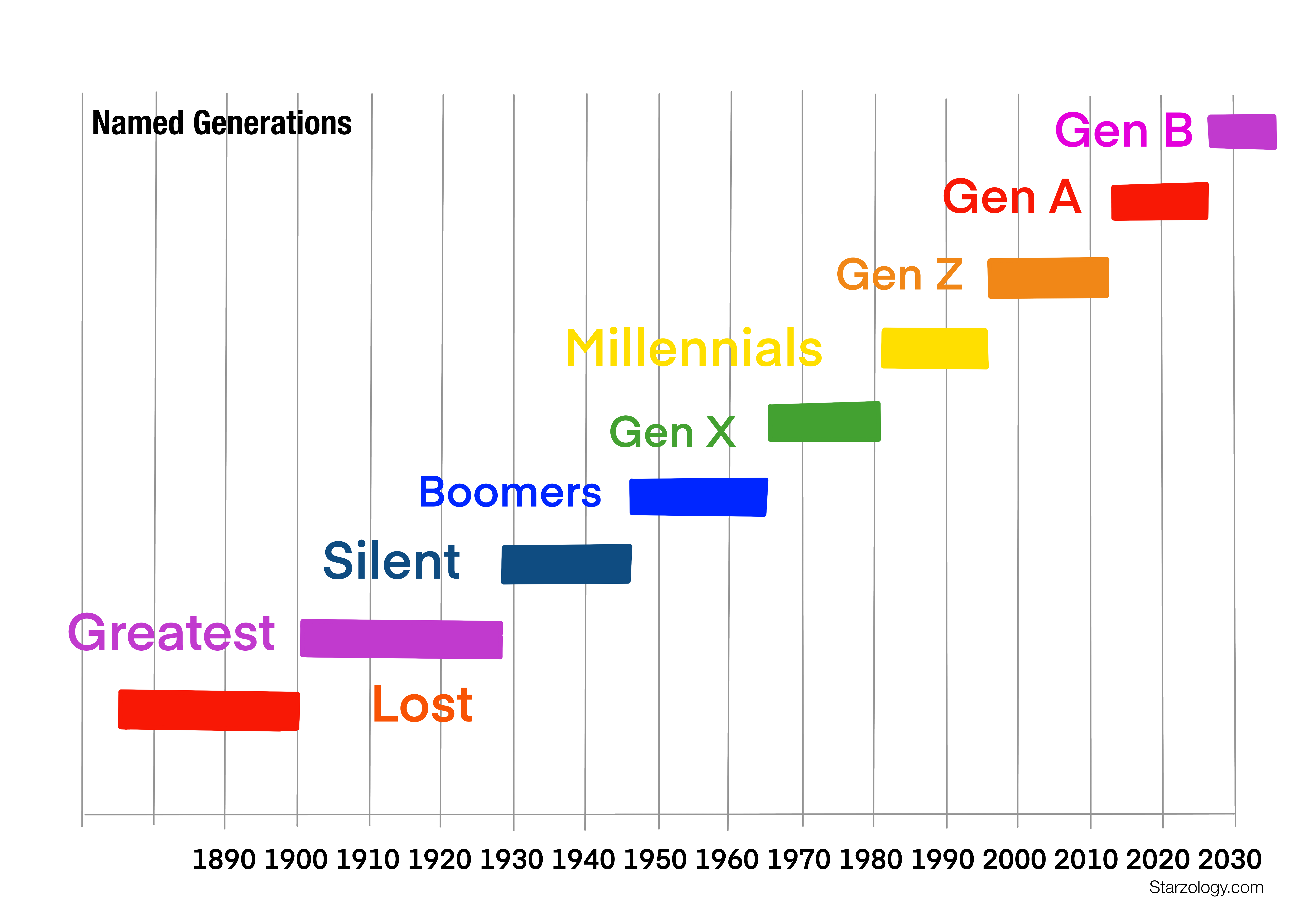
For most researchers, including the heavy hitters at the Pew Research Center, the official bracket for Generation X is 1965 to 1980.
Basically, if you were born in this 16-year window, you’re a Gen Xer. As of 2026, that makes the oldest members of this group 61 and the youngest 45. It’s a relatively small cohort—roughly 65 million people in the U.S.—sandwiched between two giants. Boomers and Millennials both boast populations north of 70 million. Vogue has analyzed this important topic in great detail.
But why 1965?
It wasn't just a random number pulled out of a hat. Demographers point to a sharp drop in birth rates that year. In 1964, the U.S. saw over 4 million births. In 1965, that number fell below the 4-million mark for the first time in over a decade. It was the literal end of the "boom."
The Cultural Tug-of-War
While Pew and the U.S. Census Bureau stick to the 1965–1980 range, other institutions see things a bit differently.
- The Social Security Administration often uses 1964 to 1979.
- Strauss and Howe, the historians who practically invented modern generational theory, argue for a wider lens: 1961 to 1981.
- Harvard’s Joint Center for Housing Studies has even pushed the boundary as far as 1984 to keep generational spans even at 20 years.
Why the Gen X Years Actually Matter
It’s easy to dismiss these dates as just "marketing fluff," but the years you were born dictate the "shared trauma" and triumphs you experienced.
Gen Xers are the original "Latchkey Kids." Because of a massive spike in divorce rates and the rise of dual-income households in the 70s and 80s, many of these kids came home to empty houses. They were the first generation to grow up with a microwave as their primary cooking tool and "Stranger Danger" as a daily PSA.
They also occupied a unique technological sweet spot. They remember the world before the internet—analog childhoods involving rotary phones and library card catalogs—but they were the early adopters who built the digital world. They are "digital immigrants" who speak the language like natives.
The "Xennial" Micro-Generation
If you were born in 1977, 1978, 1979, or 1980, you might feel like you don't quite fit the "slacker" cynical stereotype of Gen X, but you aren't quite a Millennial either.
You're likely an "Xennial." This is a "micro-generation" that experienced an analog childhood and a digital adulthood. You had a Landline phone in high school but a cell phone in college. You remember the Challenger disaster, but you also remember the Spice Girls.
The Current Reality: The Sandwich Generation
In 2026, the years for Gen X have translated into a specific, high-pressure life stage. This group is currently the "Sandwich Generation."
Many are simultaneously supporting adult children (who are struggling with the housing market) and caring for aging Boomer parents. According to data from the AARP, Gen Xers provide a massive chunk of unpaid caregiving in the United States.
They also hold the most credit card debt—averaging over $10,000—but they also have the highest average pre-tax income. They are the engine of the economy right now, even if the media still focuses on Gen Z’s TikTok trends or Boomer retirement.
Defining Traits Born From the Years
- Self-Reliance: You had to be. If the VCR broke, you figured out how to fix it (or at least stick a knife in it to get the tape out).
- Skepticism: Growing up during Watergate, the Energy Crisis, and the Cold War created a healthy distrust of "the man."
- Work-Life Balance: Gen X was the first to really push back against the "workaholic" culture of their parents. They saw their parents get laid off after 30 years and decided loyalty was a two-way street.
Actionable Insights for Gen Xers Today
If you fall within the 1965–1980 range, you’re likely in your peak earning years, but also your peak stress years. Here’s what experts suggest focusing on right now:
1. Aggressive Retirement Catch-up If you’re 50 or older, the IRS allows "catch-up contributions" to your 401(k) and IRA. Use them. Many Gen Xers are behind because they prioritized their kids' tuition.
2. Estate Planning for Parents Don't wait for a crisis. Have the "paperwork talk" with your Boomer parents now. Know where the wills, deeds, and power of attorney documents are kept.
3. Digital Boundaries You didn't grow up with a phone in your hand. Reclaim that. Gen X reports high levels of burnout from "always-on" work culture. Lean into that natural skepticism and turn off notifications after 6 PM.
4. Health Screenings The youngest Gen Xers are hitting the mid-40s; the oldest are in their early 60s. This is the "maintenance" era for the human body. Colonoscopies, mammograms, and heart health checks aren't optional anymore.
The years for Gen X define a group that is resilient, adaptable, and—despite the "forgotten" label—the glue holding the current social structure together. Whether you started in '65 or ended in '80, the shared experience of that specific slice of history created a generation that knows how to get things done without needing a participation trophy.



