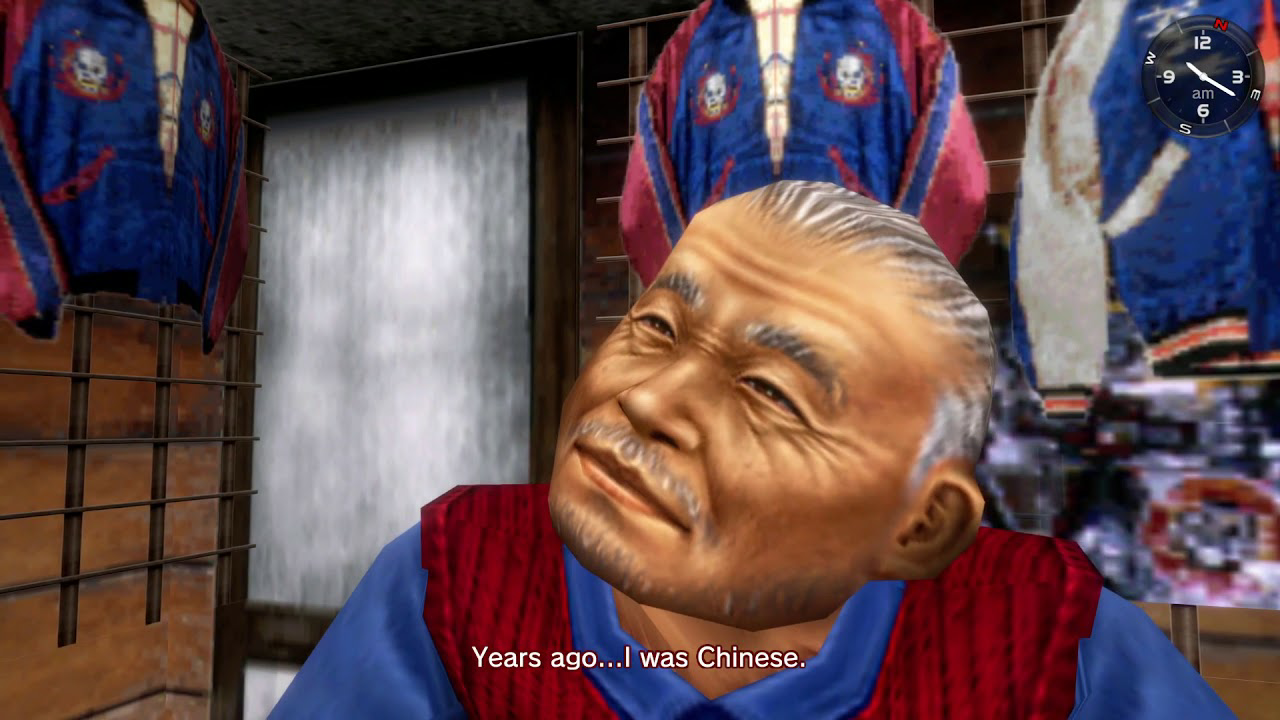
Identity is messy. It’s not a static line on a passport or a box you check at the doctor’s office. Honestly, when people say "years ago I was Chinese," they aren't usually talking about a change in DNA. They're talking about a shift in the soul. It's about that weird, sometimes painful transition where the culture you grew up in starts to feel like a coat that doesn't fit anymore. Or maybe it’s a coat you were forced to take off.
We see this a lot in the diaspora. People grow up immersed in the language, the food, and the expectations of a Chinese household, only to find themselves decades later feeling like a stranger to those very things. It happens.
The Fluency Fade
One of the biggest triggers for this feeling is the loss of language. It's brutal. You start as a kid who can argue with your grandmother in Mandarin or Cantonese, but then English (or Spanish, or French) takes over. By the time you’re thirty, you’re nodding along at dinner, catching maybe forty percent of the conversation. You’ve lost the nuance. You’ve lost the jokes.
When you say years ago I was Chinese, what you’re often mourning is that lost bridge. Language is the primary carrier of culture. Without it, the bridge collapses. You become an observer of your own heritage rather than a participant. Dr. Jean Phinney, a renowned psychologist who studied ethnic identity development, noted that "unexamined ethnic identity" often shifts as we encounter different social environments. For many, the "Chinese" part of their identity was a default setting that got overwritten by the demands of surviving in a Western educational or professional system.
The "Paper Son" and Historical Identity Shifts
Let’s get historical for a second. Sometimes this phrase isn't metaphorical. In the early 20th century, due to the Chinese Exclusion Act in the United States, many immigrants entered the country using false identities. They were "Paper Sons." They bought birth certificates of Chinese-American citizens to get past the harsh interrogations at Angel Island.
For these individuals, saying "years ago I was Chinese" might actually mean "years ago, I lived under a name and a lineage that wasn't mine so I could survive." The trauma of hiding your true self for decades creates a fractured sense of belonging. Even after the Confession Program of the 1950s, which allowed some to regularize their status, the psychological weight of that deception lingered.
Why the Feeling of Alienation Happens
It’s usually not one big event. It’s a thousand tiny paper cuts. It’s the realization that you don’t know how to cook the traditional dishes without a YouTube tutorial. It’s the feeling of being "too Asian" for your white friends but "too white" for your cousins in Shanghai. This is the "Perpetual Foreigner" syndrome working in reverse.
Sociologists call this "cultural attrition." You’re not trying to lose it. You just... do. Life gets busy. You marry someone from a different background. You move to a city where the nearest Asian grocery store is forty miles away. Slowly, the habits that defined your "Chineseness" erode. You look in the mirror and realize the version of yourself from years ago I was Chinese is a ghost.
- The Food Connection: Food is often the last thing to go. Even if you can't speak the language, you still crave the taste of home. But even that changes. You start liking "Americanized" versions of dishes, or you realize your palate has shifted toward different flavors entirely.
- The Family Rift: Sometimes, rejecting the identity is a survival mechanism. If your upbringing was tied to high-pressure expectations or "tiger parenting," distancing yourself from the culture can feel like a way to claim your own agency.
Reclaiming Without Performing
So, what do you do if you feel like that version of you is gone?
You don't have to perform. You don't have to go to language school at forty if you don't want to. Reclaiming identity is about honesty, not mimicry. If you feel like years ago I was Chinese and now you’re something else—something hybrid, something new—that’s okay.
Hybridity is a superpower. Scholars like Homi K. Bhabha talk about the "Third Space." It’s the space where two cultures meet and create something entirely original. You aren't "less than" because you aren't the same person you were twenty years ago. You’re just a more complex version.
Actionable Steps for Navigating Identity Shifts
If you’re struggling with this sense of lost identity, here is how to navigate the transition without spiraling into a mid-life crisis.
1. Audit your "Cultural Guilt." Stop apologizing for what you don't know. If you don't know the history of the Ming Dynasty or how to make perfect dumplings, so what? Guilt is a useless emotion for cultural connection. It creates a barrier of shame that actually prevents you from engaging with the parts of the culture you do enjoy.
2. Focus on "Micro-Inclusions." Don't try to reclaim everything at once. Pick one thing that actually resonates with you. Maybe it's calligraphy. Maybe it's just watching one film a month from a Chinese director. Tiny, authentic connections are better than grand, performative gestures.
3. Document the "Gap." Write down the stories you remember from when you felt "more" Chinese. Talk to your elders while they are still here. Don't interview them about history; ask them about their favorite smells, their regrets, or what they did on a rainy Tuesday in 1975. This preserves the humanity of the identity rather than just the "facts."
4. Find your "Third Space" community. Look for people who feel the same way. There are thousands of people in the diaspora who feel like they are "recovering" their identity. Finding a group where you can admit you feel like an outsider in your own culture is incredibly healing.
Identity isn't a museum piece. It’s a living, breathing thing. If you feel like years ago I was Chinese and today you are something different, don't view it as a loss. View it as an evolution. You are the sum of everywhere you’ve been and everyone you’ve been told you are.
Own the evolution. Start by forgiving yourself for the things you’ve forgotten. Focus on the things you still carry with you, no matter how small they seem. Whether it’s the way you hold a teacup or a specific superstition you can't quite shake, those are the threads that still connect you to the past. Use them to knit something new.



