Pack a parka for August and a T-shirt for January. Sounds like a joke, right? Honestly, if you’re planning a trip or a move based on "California sunshine" stereotypes, San Francisco is going to slap the sunglasses right off your face.
The yearly weather in San Francisco CA is basically a riddle wrapped in a hoodie. Most people expect the Beach Boys; they get a scene from a moody noir film. You’ve probably heard that Mark Twain quote about the coldest winter being a summer in San Francisco. He never actually said it, but the fact that everyone believes he did tells you everything you need to know about July in this city. For a closer look into this area, we recommend: this related article.
The Summer Myth and "Karl the Fog"
Summer in San Francisco is a total bait-and-switch. While the rest of the country is melting in June and July, we’re often huddled over clam chowder trying to stop shivering. This is all thanks to a massive, semi-permanent weather feature locals affectionately (and sometimes spitefully) named Karl the Fog.
Basically, the Central Valley gets screaming hot. That hot air rises, creating a vacuum that sucks the cold, damp air off the Pacific Ocean and right through the Golden Gate. It’s a natural air conditioner that doesn't have an "off" switch. To get more context on this topic, detailed coverage can also be found at AFAR.
- June Gloom: It’s real. Expect gray skies that don't break until 2 PM—if they break at all.
- The Wind Chill: It isn't just the fog; it’s the 20 mph gusts that whip around the skyscrapers.
- The "Sunset" Tax: If you’re in the Outer Sunset or Richmond districts, you might not see the sun for a week straight in July.
Why September is Actually the Best Month
If you want that postcard version of San Francisco, you have to wait until everyone else has gone back to school. September and October are what we call our "Indian Summer" (though many locals just call it the "real summer").
This is when the pressure gradient shifts. The inland heat dies down, the offshore winds kick in, and Karl finally takes a vacation. You’ll get those rare 75°F or 80°F days where people lose their minds and crowd into Dolores Park like they’ve never seen grass before. Honestly, it’s the only time of year you can safely leave the house without a "just in case" sweater.
Winter is Surprisingly Gentle
People freak out about winter, but San Francisco doesn't really do "cold" in the traditional sense. It just gets... damp.
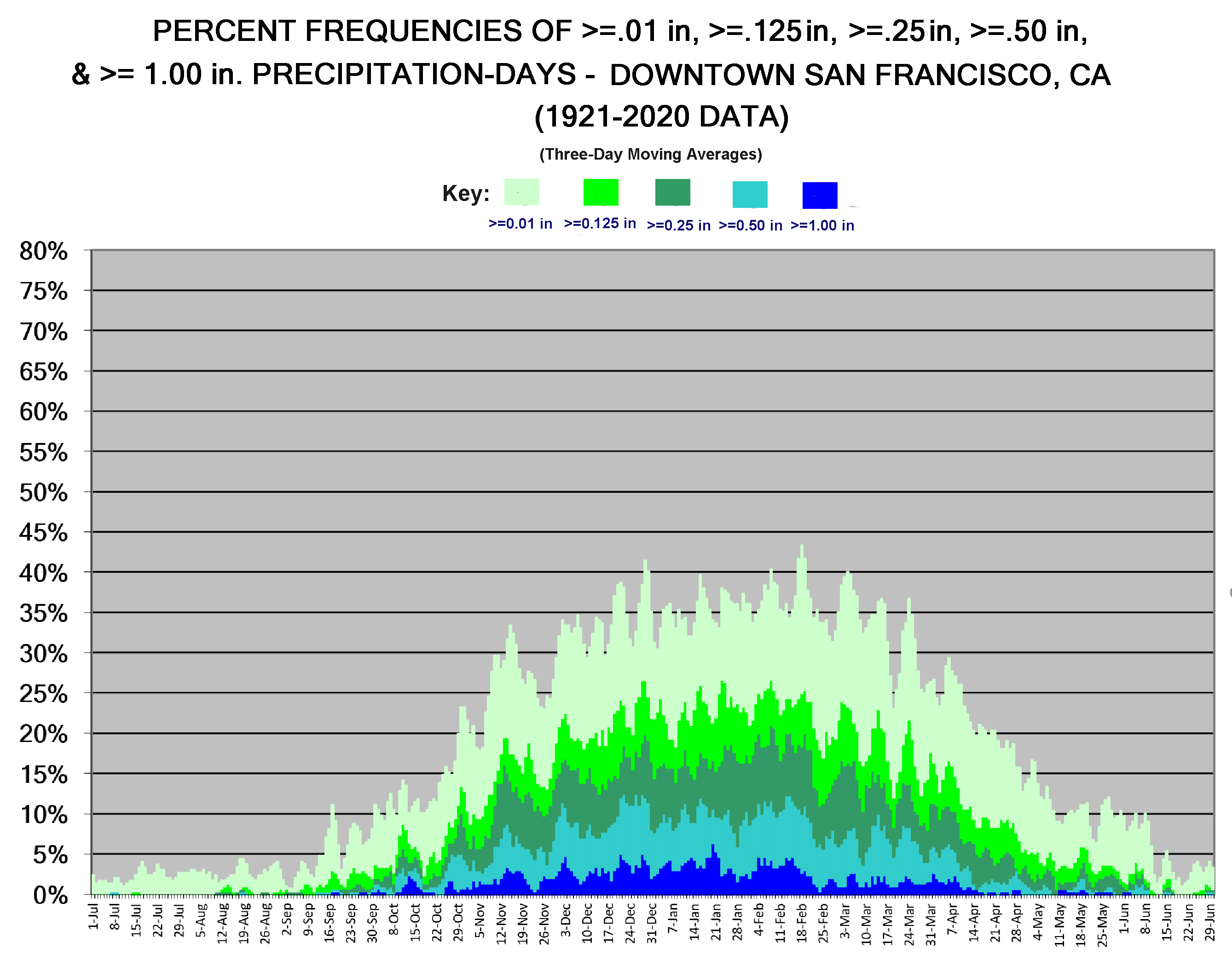
The yearly weather in San Francisco CA usually peaks in rainfall between December and February. We’re talking about atmospheric rivers—massive plumes of moisture from the Pacific that can dump inches of rain in a single afternoon. But here’s the kicker: when it isn't raining, winter days are often crisp, clear, and warmer than the foggy days in June.
| Month | Avg High | Avg Low | Vibe Check |
|---|---|---|---|
| January | 57°F | 46°F | Moody, clear, occasional downpour |
| April | 64°F | 50°F | Breezy, wildflowers in the Presidio |
| July | 67°F | 55°F | Gray, windy, hoodie weather |
| October | 71°F | 54°F | Absolute perfection |
The Microclimate Madness
You can't talk about San Francisco weather without mentioning the hills. The city is a 7x7 mile square, yet it has dozens of distinct microclimates.
I’ve seen it be 60°F and socked-in at Ocean Beach while it’s 75°F and sunny in the Mission District. The Twin Peaks and Mount Sutro act as a physical wall. They trap the fog on the west side, leaving the eastern neighborhoods (Noe Valley, the Mission, Potrero Hill) in what we call the "Sunbelt."
If you're house hunting or booking an Airbnb, this matters. Stay in the west if you like the moody, Pacific Northwest aesthetic. Stay in the east if you want to actually use your patio.
How to Actually Prepare
Don't be the tourist buying a $60 "I Heart SF" sweatshirt at Pier 39 because you showed up in shorts. You've got to dress like an onion.
- The Base: A t-shirt or light long-sleeve.
- The Mid: A flannel or a light sweater.
- The Shell: A windbreaker or a light down jacket (the "Patagonia vest" stereotype exists for a reason).
- The Feet: Forget the flip-flops. The hills are steep and the wind is cold.
Practical Next Steps for Your Visit
If you are planning a trip, check the National Weather Service (NWS) Bay Area forecast specifically for the "Marine Layer" report. Standard apps often average the city's temperature, which tells you nothing.
A "sunny" 65°F in the forecast usually means 55°F at the Golden Gate Bridge and 72°F in the Mission. Look at the wind speeds; anything over 15 mph is going to feel 10 degrees colder than the thermometer says. Plan your outdoor activities like hiking Land's End for the morning before the afternoon winds kick in, and save the sheltered museum visits for the foggy afternoons.
Check the local fog trackers on social media—they are surprisingly accurate for knowing if Karl is about to ruin your Bridge selfie. Stick to the eastern neighborhoods if you’re visiting in July, but if you’re coming in October, the whole city is your playground.