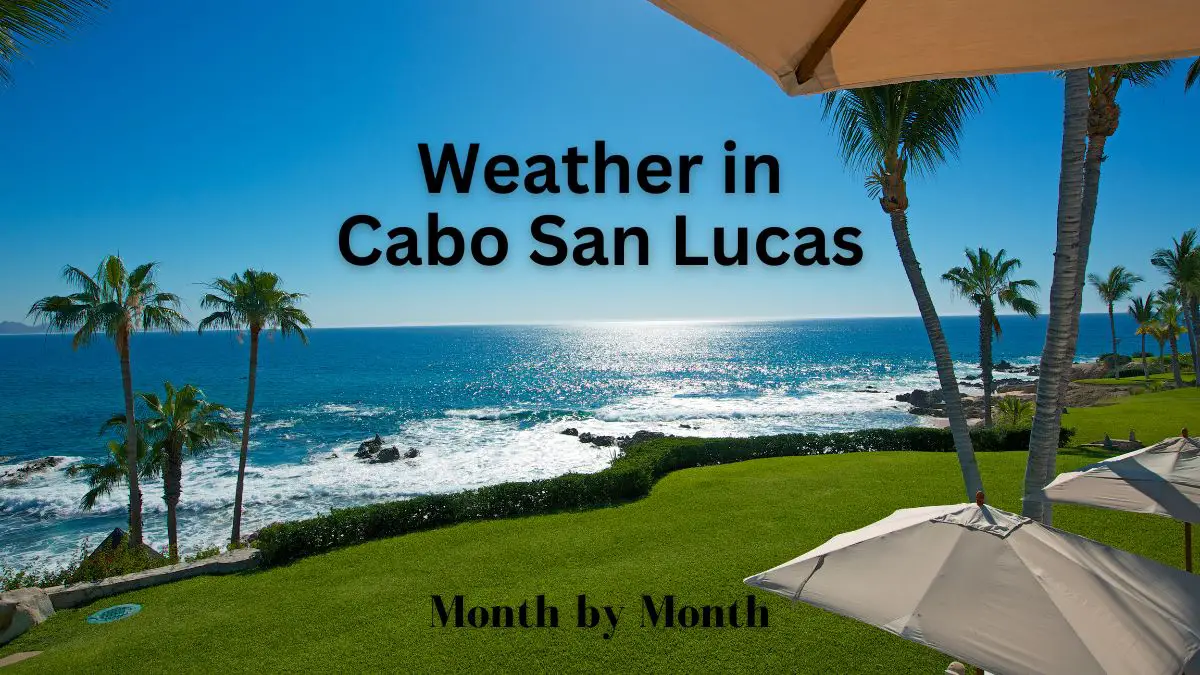
You've probably seen the postcards. Perfection. That jagged stone arch, El Arco, framed by a sky so blue it looks like it was painted by a bored art student who only had one crayon. People assume Cabo San Lucas is just "hot" and "sunny" 365 days a year.
Honestly? That's not quite right.
While Cabo sits at the tip of the Baja Peninsula—where the desert literally tumbles into the sea—the yearly weather in cabo san lucas is actually a game of two halves. You have the dry, breezy desert vibes for most of the year, and then there's a sweaty, humid, slightly chaotic window where the Pacific decides to remind everyone who's boss.
If you pack for "tropical Mexico" in January, you're going to be shivering in your fish tacos by 8:00 PM.
The High Season Chill (December to April)
This is when the private jets clog up the tarmac. Everyone is fleeing the snow.
January and February are technically the "coldest" months, but we’re talking about 79°F days. It's basically a perfect room temperature outside. However, the desert is a fickle beast. Once that sun dips behind the Pacific, the temperature drops off a cliff. It hits 60°F or even 55°F on some nights.
You need a hoodie. Seriously.
I’ve seen tourists walking downtown in January wearing nothing but a bikini and a look of deep regret. The wind—usually a northwest breeze—can be surprisingly stiff. This is also peak whale season. Humpbacks and Gray whales are everywhere, but if you’re out on a boat at 8:00 AM, that wind chill is no joke.
- January Highs: 79°F / Lows: 61°F
- Water Temp: Brisk (about 70°F). You’ll want a wetsuit for diving.
- Rain Chance: Basically zero.
By March and April, the "Spring Break" crowd arrives. The air warms up into the low 80s, and the nights stop being so biting. It’s arguably the most comfortable time of the year because the humidity is sitting at a crisp 40% to 50%. You can walk for miles and not break a sweat.
The Sweet Spot Nobody Talks About
May and June are the industry's best-kept secrets.
The winter crowds have cleared out. The hurricane threats haven't started yet. The weather hits this incredible equilibrium where it's 85°F to 90°F during the day, but it’s still "dry heat."
One weird thing about June? It’s often the windiest month. Those "Coromuel" winds can kick up some dust, but they also keep the heat from feeling oppressive. If you’re a surfer, this is your time. The south swells start hitting the Sea of Cortez side, and the water is finally warming up enough to ditch the neoprene.
When the Humidity Hits (July to September)
This is the part that catches people off guard.
By mid-July, the wind shifts. Instead of dry air from the Pacific, you get moist air from the Gulf of California. The yearly weather in cabo san lucas takes a hard turn toward "sauna."
August is the hottest month, with highs averaging 91°F but often spiking to 100°F. But it’s the humidity that does the heavy lifting. The "muggy" factor climbs to nearly 100% on some days. You step out of your air-conditioned hotel room and your sunglasses immediately fog up. It’s a total vibe shift.
The Hurricane Factor
September is the rainiest month. Usually, Cabo gets less than 10 inches of rain per year, but half of that can fall in a single afternoon if a tropical storm rolls through.
Historically, September 14th is a "cursed" date—both the Great Flood of 1939 and Hurricane Odile in 2014 hit right around then. Most storms stay out at sea, but when they do hit land, they hit hard.
Does this mean you shouldn't go?
Not necessarily. September is when the water is the warmest (84°F) and the visibility for diving at Cabo Pulmo is world-class. It’s also incredibly cheap. You just have to be okay with "brief but violent" rain and the possibility of your flight being delayed by a day.
The Great Reset (October and November)
October is the transition month. It’s still hot—usually 90°F—but the "stickiness" starts to evaporate by the third week.
This is the month of the big fishing tournaments, like the Bisbee’s Black & Blue. The marlin are biting, and the ocean is calm. By November, the air temperature settles into a gorgeous 84°F. It feels like the desert is finally breathing again.
November is arguably the "perfect" month. The hurricane risk has dropped to nearly zero, the water is still warm enough for swimming without a shiver, and the winter price hikes haven't fully kicked in yet.
Breaking Down the Water Temperatures
Don't let the sunshine fool you; the Pacific side of Cabo is always colder than the Sea of Cortez side.
| Time of Year | Water Feel | Activity Tip |
|---|---|---|
| Jan - March | 68°F - 72°F | Chilly. Use a 3mm wetsuit for snorkeling. |
| April - June | 72°F - 76°F | Refreshing. Perfect for paddleboarding. |
| July - Oct | 80°F - 84°F | Bathwater. Ideal for long scuba dives. |
| Nov - Dec | 75°F - 78°F | Pleasant. Still good for swimming. |
Actionable Tips for Your Trip
If you’re planning around the yearly weather in cabo san lucas, here is how to actually play it:
- Pack a light jacket for winter. Even if the forecast says 80°F, the desert wind at night will make it feel like 55°F.
- Avoid September if you hate humidity. If "moist" is your least favorite word, stay away from August and September. The heat index can make 95°F feel like 110°F.
- Book May or June for value. You get the best of both worlds—sunny, dry days and lower hotel rates before the summer families arrive.
- Get travel insurance in the fall. If you visit between August and October, make sure it covers "named storms." It’s rare to get a direct hit, but it’s worth the $50 for peace of mind.
- Check the Pacific vs. Cortez side. Resorts on the Pacific side (like those in Quivira) are often 5 to 10 degrees cooler than downtown Cabo because of the sea breeze.
Cabo isn't a "one size fits all" climate. It’s a desert-ocean hybrid that changes its personality every few months. Whether you want the crisp, cool whale-watching mornings of February or the steaming-hot marlin-fishing afternoons of October, just make sure you’re packing for the right version of Baja.