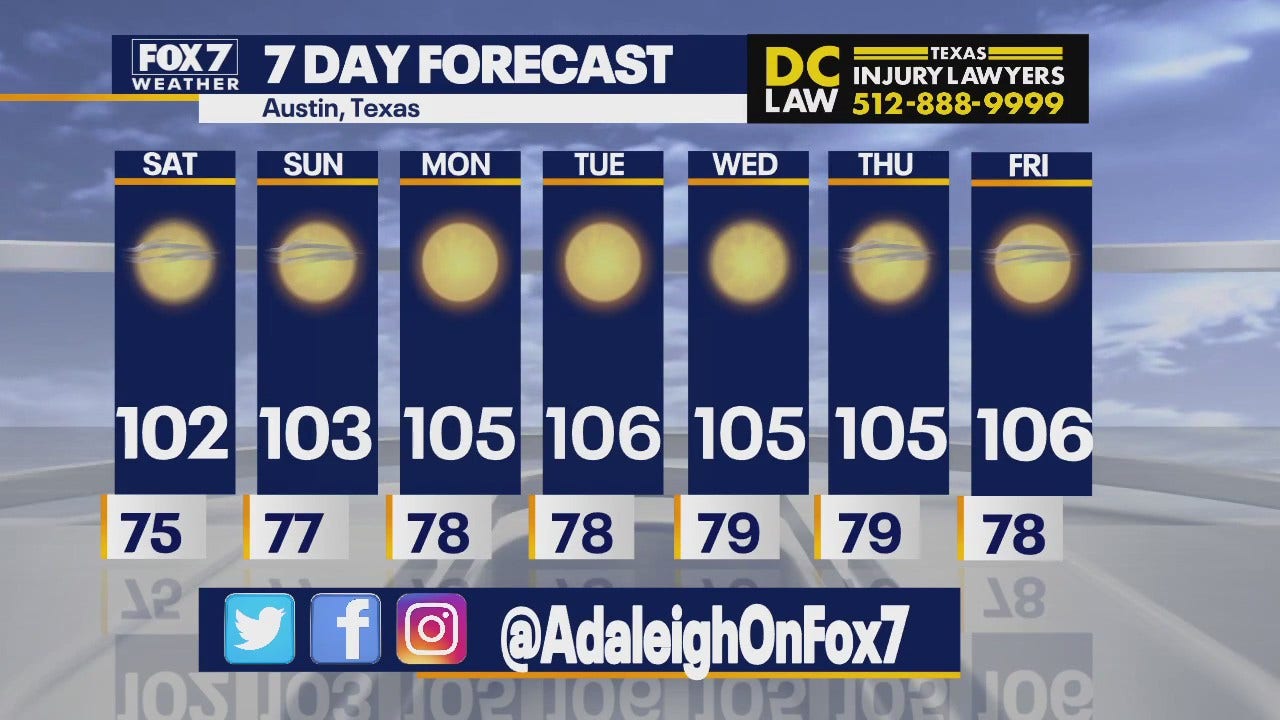
You’ve probably heard the rumors about Austin being a sunny paradise where the music never stops and the margaritas are always cold. That's mostly true. But if you’re planning a move or even just a long weekend, relying on "sunny and 70" as your default expectation is a fast track to being miserable. Austin weather is a fickle beast. It’s a place where you can experience a 40-degree temperature swing in six hours, and where "winter" is less of a season and more of a series of chaotic atmospheric mood swings.
Honestly, the yearly weather in Austin is defined more by its extremes than its averages.
While the chamber of commerce loves to tout those 300 days of sunshine, they often gloss over the "Flash Flood Alley" reality or the weeks in August where the air feels like a wet wool blanket. If you want to survive a year here without losing your mind—or your lawn—you need to look past the monthly spreadsheets.
The Triple-Digit Marathon: Summer in Central Texas
Let's not sugarcoat it. July and August in Austin are brutal. We aren’t talking about "it's a bit warm" weather; we are talking about a relentless, oppressive heat that reshapes your entire lifestyle. In 2023, the city suffered through a record-breaking 40-day streak of triple-digit temperatures.
Basically, you stop being an outdoor person between the hours of 10:00 AM and 8:00 PM.
The heat index is the real killer here. While the thermometer might say 102°F, the humidity rolling in from the Gulf of Mexico often pushes the "feels like" temperature toward 112°F. It’s a heavy, sticky heat. You’ll see locals scurrying from air-conditioned cars to air-conditioned buildings like they’re dodging sniper fire.
- Survival Tip: If you're visiting during this window, Barton Springs Pool is your only friend. The water stays a constant 68°F year-round, which feels like a literal life-saver when the pavement is hot enough to melt a flip-flop.
- HVAC Strain: This is also when Austin’s power grid and your home’s AC unit are pushed to the brink. It’s common for units to run 20 hours a day just to keep a house at 78°F.
The Cedar Fever Menace
When people ask about the worst part of Austin's yearly weather, they expect me to say the heat. They're wrong. It’s the pollen. Specifically, the Mountain Cedar (Ashe Juniper) trees that explode in a cloud of yellow dust every winter.
From December through February, while the rest of the country is worried about snow, Austinites are battling "Cedar Fever." It’s not actually a flu, but it feels like one. Your eyes itch, your throat burns, and you’ll find a fine layer of yellow powder on your car every morning. On high-pollen days, you can actually see the trees "smoking" as they release clouds of allergens into the wind.
It's weirdly apocalyptic.
If you have allergies, this is your primary season for misery. Most newcomers don't react to it their first year. It takes a season or two for your immune system to realize the cedar is an enemy, and then—wham—you're buying Flonase by the case.
Flash Flood Alley and the Spring Chaos
Spring in Austin (late March through May) is arguably the most beautiful time of the year. The bluebells and Indian paintbrushes blanket the highways, and the temperatures usually hover in the sweet spot of the 70s and 80s. But there's a catch.
Austin sits in a region meteorologists call "Flash Flood Alley."
Because the city sits on the edge of the Balcones Escarpment—where the flat coastal plains hit the rocky Hill Country—storm systems often stall out right over the city. The thin soil of the Hill Country can’t absorb water quickly, leading to terrifyingly fast rises in creek levels. May is statistically the wettest month, averaging over 5 inches of rain, often delivered in violent, electric thunderstorms.
You haven't lived in Austin until you've received a "Flash Flood Emergency" alert on your phone while the sky turns a bruised shade of green.
Severe Weather Risks
- Hail: It’s a legitimate threat. "Texas-sized" hail isn't a myth; golf-ball and baseball-sized stones can total a car in minutes.
- Tornadoes: While Austin isn't in the heart of Tornado Alley, we get our fair share of warnings every spring as cold fronts clash with warm Gulf air.
- Microbursts: 2025 saw several of these localized, high-intensity wind events that knocked out power for thousands.
The Winter Wildcard: From 80°F to Ice Storms
Winter is where the yearly weather in Austin gets truly bizarre. You can easily have a Christmas Day where you’re wearing shorts and grilling outside in 82-degree weather. Three days later? You might be huddling under blankets because an "Arctic Blast" or "Blue Norther" has dropped the temperature into the teens.
The real danger here isn't snow—it's ice.
Austin doesn't have the infrastructure to handle frozen precipitation. When an ice storm hits (like the major freezes of 2021 and 2023), the city effectively shuts down. Trees, heavy with unfallen leaves and weighted by ice, snap and take out power lines. Because the ground rarely stays frozen for long, the "freeze-thaw" cycle creates incredibly dangerous black ice on the many overpasses and flyovers that define Austin’s highways.
Honestly, if there's even a hint of ice in the forecast, just stay home. Nobody here knows how to drive in it, and the city's fleet of sand trucks is... let's just say, modest.
A Month-by-Month Cheat Sheet
If you’re trying to time a trip, here is the "no-nonsense" breakdown of what to actually expect:
January: Highs in the 60s, lows in the 40s. Gray skies, peak Cedar Fever, and the occasional terrifying freeze.
February: Highly unpredictable. It could be 80 degrees or there could be an ice storm that breaks the power grid.
March: The "Goldilocks" month. Perfect for SXSW, though the nights can still be crisp. This is when the wildflowers start peaking.
April: Windiest month of the year. Great patio weather, but keep an eye on the radar for those evening thunderstorms.
May: Lush and green, but the humidity starts to ramp up. It’s the wettest month, so always have a Plan B for outdoor events.
June: The "Summer Lite" phase. It's hot (90s), but the evenings are still somewhat tolerable.
July & August: The "Danger Zone." Highs consistently over 100°F. If you aren't in a pool, you’re inside. Do not hike the Greenbelt at noon; the EMS rescues are constant this time of year.
September: Emotional bait-and-switch. You think it’s fall because the calendar says so, but it’s often just as hot as August. The first "real" cold front usually doesn't arrive until the very end of the month.
October: Second best month of the year. The humidity finally breaks. It’s often rainy, but the "second spring" vibe is real.
November: Crisp, clear, and generally gorgeous. A great time for camping in the Hill Country before the cedar kicks in.
December: The transition. You’ll have a mix of cozy sweater days and weirdly humid 75-degree afternoons.
Actionable Takeaways for Living with Austin Weather
- Download a High-Quality Radar App: Don't rely on the default weather app. Use something like RadarScope or follow local experts like the KVUE or KXAN weather teams. In Flash Flood Alley, knowing exactly when the line of storms will hit is a safety requirement.
- Invest in a "Smart" Thermostat: With electricity prices spiking during the summer and the grid occasionally struggling, being able to manage your load remotely is a win for your wallet and the city.
- Don't Plant Until Mid-March: Newcomers often get fooled by a warm February and plant their gardens, only to have a late-season frost kill everything. Wait for the "Easter Freeze" to pass.
- Car Maintenance is Non-Negotiable: The Texas sun eats car batteries and wiper blades. Replace your battery every 3 years regardless of how it feels, and check your tire pressure when those 40-degree temperature drops happen in the fall.
- Respect the "Turn Around, Don't Drown" Signs: Most flood-related deaths in Austin happen when people think their SUV can handle a foot of moving water over a low-water crossing. It can’t.
Austin's climate is a study in contradictions. It’s a place where you’ll need a heavy parka and a swimsuit in the same week. If you can handle the August heat and the January pollen, the "perfect" days in October and April make the whole chaotic cycle worth it.