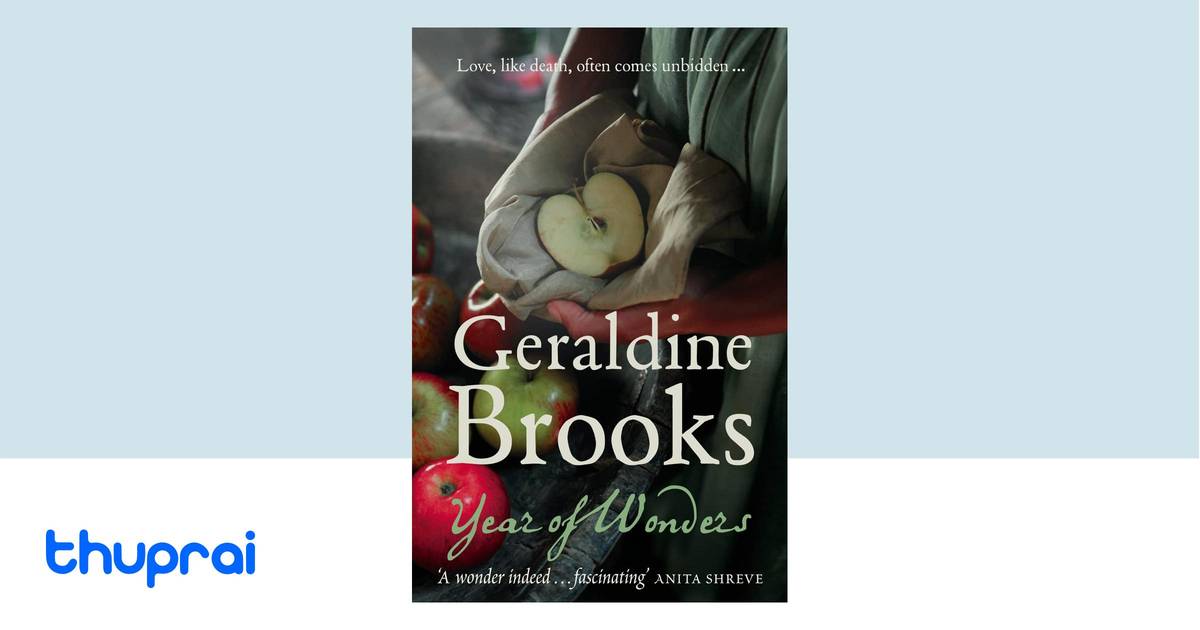
History is usually messy. It's rarely the clean, noble sacrifice we see in textbooks. When Geraldine Brooks sat down to write her debut novel, she took a tiny, almost forgotten footnote from 1666 and turned it into something that still makes readers lose sleep twenty-five years later.
Year of Wonders isn't just a book about the plague. Honestly, if it were just about boils and "God’s wrath," it wouldn't have the staying power it does. It’s a story about how a community basically disintegrates when the world stops making sense.
People often talk about the village of Eyam as this beacon of saintly sacrifice. You’ve probably heard the pitch: a brave little town in Derbyshire chooses to wall itself off to save the rest of England. It sounds heroic. In the hands of Brooks, though, that heroism is caked in mud, blood, and the kind of grief that actually breaks a person's brain.
The Real Story Behind the Fiction
Brooks is a journalist by trade. You can tell. She found the inspiration for the book while living in London and stumbling across the history of Eyam, the real-life "Plague Village."
The facts are pretty much as she describes them. A tailor receives a box of cloth from London. The cloth is damp. It’s infested with fleas. These aren't just any fleas; they’re carrying Yersinia pestis. Within days, the tailor is dead. Within months, the village is a graveyard.
In the real history, the rector William Mompesson—who becomes Michael Mompellion in the novel—persuaded the town to stay put. He didn't want the infection spreading to the larger towns like Sheffield. They agreed. They stayed. And they died in droves.
Why Anna Frith Isn't Your Typical Heroine
Most historical fiction gives us a protagonist who feels like a modern person wearing a corset. Anna Frith starts out differently. She’s an 18-year-old widow. She’s a housemaid. She’s uneducated, largely timid, and deeply shaped by the suffocating Puritanism of her time.
What Brooks does so well is track Anna's "unfolding." As the plague strips away the village’s social structures, it also strips away Anna’s limitations.
- She becomes a midwife.
- She learns to use herbs and "physic."
- She questions why a "loving God" would watch a toddler die in agony.
There's this one scene where Anna describes the smell of the plague—a mix of rotting apples and something much worse. It's tactile. It's gross. It makes you realize that for these people, the "wonders" weren't miracles; they were the strange, horrific things human beings do when they’re cornered.
The Controversy of the Ending
If you search for reviews of Year of Wonders, you’ll find a massive divide. People love the first 250 pages. They think the ending is, well, kind of a mess.
Without spoiling too much for those who haven't finished, the book takes a sharp left turn in the final act. It shifts from a grounded, gritty historical drama into something that feels almost like a different genre.
Critics like those at Kirkus Reviews called it "over-the-top melodramatics." Some readers feel the sudden move to North Africa and the shift in Anna’s character is a bit of "contemporary wish fulfillment."
Basically, it's hard to believe a 17th-century housemaid could achieve that level of autonomy so fast. But maybe that’s the point. Brooks was showing that the old world had to be completely burnt to the ground for a woman like Anna to exist.
What the Book Gets Right About Human Nature
We all lived through 2020. Reading Year of Wonders now hits different. Brooks captures the exact moment when "we're all in this together" turns into "it's your fault."
She shows us the lynch mobs. She shows us the profiteers, like Anna’s own father, Josiah Bont, who starts charging exorbitant fees to bury the dead.
"Dark and light, dark and light... that was how I had been taught to view the world." — Anna Frith
💡 You might also like: The Brutal History of China’s Fanaticism and the Obsession with Consuming the Idol
That quote is the heart of the book. The plague proves that the world isn't a binary. The "good" people do terrible things. The "sinners," like the Gowdie women who are accused of witchcraft, are often the only ones actually trying to help.
A Note on Historical Accuracy
While Brooks did her homework, she took liberties. The real Mompesson did send his children away before the quarantine, which the book judges quite harshly.
Also, the tension between the Anglican "new" church and the old Puritan ways was even more complicated than the novel suggests. But for a piece of fiction, it’s remarkably solid. It uses the 1666 setting not as a costume, but as a pressure cooker.
Actionable Takeaways for Your Next Read
If you're picking up Year of Wonders for the first time or revisiting it, keep these things in mind to get the most out of the experience:
- Watch the transition of the "Year": Pay attention to the title. It comes from John Dryden’s poem Annus Mirabilis. The "wonders" aren't just the horrors; they are the scientific and personal breakthroughs that happen in the middle of a catastrophe.
- Look for the Science vs. Religion conflict: The book is set right at the dawn of the Enlightenment. Notice how the characters who rely on observation (science) fare compared to those who rely only on flagellation or charms.
- Research the real Eyam: If you can, look up photos of the "boundary stones" where neighbors left food for the villagers. Seeing the physical evidence of the quarantine makes the story feel much more urgent.
- Don't skip the Epilogue: Even if you've heard it's controversial, read it. It’s essential for understanding Brooks’ perspective on female agency, even if it feels a bit jarring.
To truly understand the impact of the novel, compare the fictional Michael Mompellion with the historical letters of William Mompesson. You’ll find that while the book is fiction, the "bone-deep" exhaustion and the questioning of faith were very, very real for the survivors of 1666.



