He was just a guy who wanted to grieve in peace. Then some punk kid stole his car and killed his dog.
It sounds like the plot of a generic B-movie you'd find in the bargain bin at a gas station, right? But when Keanu Reeves growled yeah i'm thinking im back while tied to a chair in a dark basement, something shifted. It wasn't just a character beat. It was a meta-commentary on a movie star’s resurrection and the birth of a multi-billion dollar franchise that basically saved the mid-budget action genre from extinction.
Honestly, we don't talk enough about how risky John Wick was in 2014. Reeves hadn't had a massive hit in years. The directors, Chad Stahelski and David Leitch, were stunt coordinators, not "prestige" filmmakers. People expected a direct-to-video flop. They got a masterpiece instead.
The Moment the World Met the Boogeyman
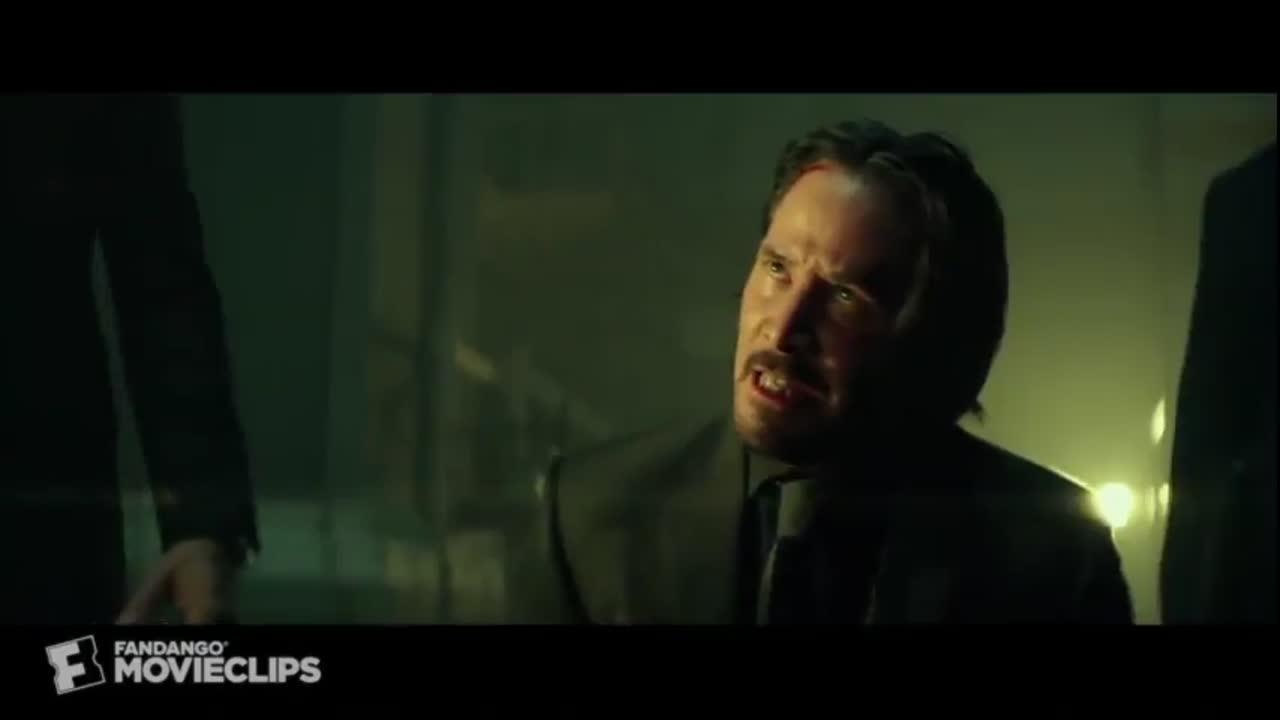
The scene is iconic. John is captured. Viggo Tarasov, played with a perfect mix of terror and respect by Michael Nyqvist, is trying to talk sense into him. He’s explaining that life is full of loss. He's trying to justify his son's idiocy.
John is silent for most of it. Then he snaps.
The delivery of yeah i'm thinking im back isn't a hero's triumphant roar. It’s a confession. It’s the sound of a man realizing he can't be the "civilized" version of himself anymore. Reeves plays it with this raw, vibrating rage that makes you actually believe he could kill a room full of people with a pencil.
That line serves as the pivot point for the entire series. Before that moment, John is a victim. After that moment, he is the storm. It’s the definitive "point of no return" that screenwriters always talk about but rarely execute this cleanly.
Why it resonated beyond the screen
You have to remember what action movies looked like in the early 2010s. Everything was "shaky cam." You couldn't see the fights because the editors were cutting every 0.5 seconds to hide the fact that the actors couldn't actually move.
John Wick changed that. Stahelski used long takes. He used wide shots. He treated the action like a dance—"Gun Fu," as they called it. When John says he's back, the movie backs it up with technical proficiency that put every other blockbuster to shame.
It felt real. Or as real as a movie about an international society of elite assassins can feel.
The Meta-Narrative of Keanu Reeves
There is a reason this line specifically went viral and stayed in the cultural zeitgeist for over a decade. It wasn't just John Wick talking. It was Keanu.
Reeves had a rough run leading up to 2014. Projects like 47 Ronin were expensive misses. Critics were starting to write him off as a relic of the Matrix era. When he screams those words, the audience felt the weight of his real-life career trajectory. It was the ultimate comeback story.
He didn't just come back; he redefined what an aging action star could be. Suddenly, every studio wanted their own John Wick. We started seeing "geriaction" movies everywhere, but none of them had the soul of the original.
The World Building Most People Miss
A lot of folks think the "Baba Yaga" stuff is just cool flavor text. It’s more than that. The script by Derek Kolstad uses the yeah i'm thinking im back moment to bridge the gap between the myth and the man.
Up until that scene, we’ve only heard stories. The gold coins. The Continental. The impossible task. But in that basement, the myth becomes a reality.
I think the genius of the line is its simplicity. It’s five words. It doesn’t over-explain. It doesn’t use "movie speak." It’s just a guy acknowledging his nature. It’s visceral.
Breaking Down the Performance
Watch Keanu's face during that monologue. He’s not doing "cool guy" acting. He’s crying. He’s angry. He’s mourning his wife and his dog simultaneously.
Most action stars try to look stoic when they’re threatened. Reeves looks like he’s having a nervous breakdown that just happens to result in high-level tactical efficiency. That vulnerability is why we root for him. If he were just a killing machine, we wouldn’t care. But because he’s a man who lost his last link to humanity, every punch he throws feels earned.
The pacing of the scene is masterful:
- Viggo’s monologue sets the stakes.
- The silence creates tension.
- The explosion of dialogue ("People keep asking if I'm back...") builds the crescendo.
- The final line drops the hammer.
It’s a masterclass in tension and release.
How This Quote Influenced Modern Pop Culture
You see the fingerprints of this moment in everything from Nobody to Sisu. It created a template: the "retired legend" who is pushed too far.
But it also birthed a meme culture that Keanu himself seems to find hilarious. "Yeah, I'm thinking I'm back" became the shorthand for anyone returning to a hobby, a job, or a public platform after a hiatus. It’s the ultimate "I’m not done yet" energy.
The sequels—Chapter 2, 3, and 4—all had to live up to the promise of that one line. They succeeded by escalating the stakes, but they never quite recaptured the raw, lightning-in-a-bottle feel of that first admission of return.
The Realistic Impact on the Industry
Let’s talk numbers and influence. Before John Wick, R-rated action was considered a niche market. Studios wanted PG-13 for the wider audience.
Wick proved that if the choreography is good enough and the character is compelling enough, people will show up for the hard stuff. It led to a resurgence of stunt-heavy, practical-effect-driven cinema. We owe the current state of high-quality stunt work to the success of this film.
Stahelski and Leitch went on to influence Atomic Blonde, Deadpool 2, and Bullet Train. The "87eleven" style of filmmaking is now the gold standard. All because of a guy who was "thinking he's back."
Misconceptions About the Line
A common mistake people make is thinking this was the first time John killed anyone in the movie. It wasn't. He’d already cleared his house of a hit squad.
But that wasn't him being "back." That was him defending himself.
Being "back" meant re-entering the world he’d worked so hard to leave. It meant accepting the gold coins. It meant following the rules of High Table. It was a choice, not a reaction. That distinction is everything.
Another misconception is that the line was improvised. While Keanu brings a lot of his own energy to his roles, the structure of that monologue was carefully crafted to ensure the payoff landed. It had to be the emotional climax of the second act.
How to Apply the "Wick" Mentality to Your Own Comeback
If you’re looking to make a return in your own field—whether it’s career, fitness, or a creative project—there’s actually some weirdly good advice buried in this cinematic moment.
- Own the transition. Don't slip back in quietly. Acknowledge that you're changing gears.
- Focus on the "why." John didn't come back for the money. He came back for the principle. Your motivation dictates your endurance.
- Master the basics. Wick’s "Gun Fu" is just extreme proficiency in basic movements. In any field, the "expert" is just someone who does the fundamentals better than everyone else.
- Accept the cost. John knew that coming back meant he might never leave again. Every choice has a price.
Final Practical Steps for Fans and Creators
If you’re a filmmaker or writer, study the "Back" monologue. Look at how it uses silence. Look at how it uses the antagonist to build up the protagonist’s legend.
If you’re just a fan, go watch the first movie again, but specifically pay attention to the sound design during that scene. The way the background noise cuts out when Keanu starts speaking is brilliant. It forces you to lean in.
To truly understand the impact:
- Watch the "Impossible Task" story told by Viggo earlier in the film.
- Compare John's posture in the beginning (slumped, grieving) to his posture after the "I'm back" line (upright, predatory).
- Notice how the color palette shifts from cold blues to warm, fiery oranges once the vendetta officially begins.
John Wick’s return wasn’t just about revenge. It was about identity. Sometimes, you have to embrace the part of yourself you tried to bury just to survive the present.
The "Boogeyman" didn't just return to the screen; he reminded us why we go to the movies in the first place. We want to see someone decide, with absolute certainty, that they are no longer the prey.



