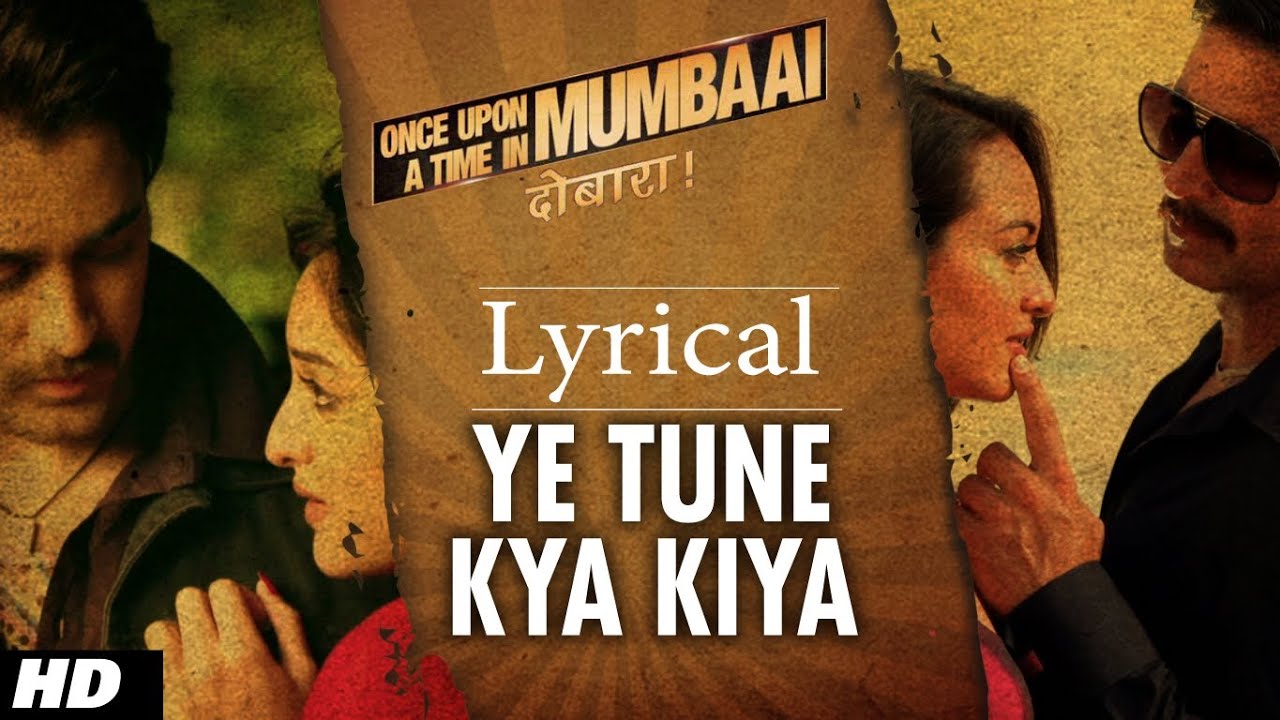
Some songs just stick. You know the ones. You’re driving, or maybe sitting in a quiet room, and that specific harmonium strain kicks in, immediately pulling you into a very specific kind of melancholy. We’re talking about the Ye Tune Kya Kiya lyrics from the 2013 flick Once Upon a Time in Mumbaai Dobara. It isn’t just a "Bollywood song." Honestly, it’s a mood. It’s a desperate, sprawling, slightly toxic, and deeply poetic confession of a man who is completely losing his grip on his own heart.
Javed Bashir’s voice is the secret sauce here. He sounds like he’s bleeding through the microphone. While the movie itself received mixed reviews—to put it lightly—the soundtrack, and this song specifically, carved out a permanent home in the Indian playback hall of fame. If you’ve ever found yourself humming "Ishq woh bala hai," you know exactly what I mean.
The Raw Poetry Behind Ye Tune Kya Kiya Lyrics
Rajat Arora didn't just write words; he wrote a psychological profile of obsession. Usually, Bollywood love songs are about "moonlight" and "starlight," but the Ye Tune Kya Kiya lyrics take a much darker, more grounded turn. It starts with a realization. A "what have you done to me?" moment. It’s about that terrifying shift when you realize you no longer belong to yourself.
The opening lines set the stage: Zameen pe na sahi, toh aasmaan mein aa mil... (If not on earth, then meet me in the sky...)
It's dramatic. It’s heavy. But it works because it taps into that universal feeling of "I will find you anywhere." The song uses the concept of Ishq (love) as a bala (a calamity or an evil spirit). That’s a bold choice. It frames love not as a gift, but as something you survive. This nuance is why people keep searching for the lyrics a decade later. They aren't looking for a romantic ballad; they’re looking for a way to articulate the chaos of being deeply, perhaps unwisely, in love.
Why Javed Bashir Was the Only Choice
Think about it. Could a polished, pop-style singer have handled this? Probably not. Bashir brings a Sufi-rock texture that feels ancient yet modern. Pritam, the composer, has a knack for picking the right voice for the right emotion, and here, he hit the jackpot. Bashir’s vocal runs—those intricate taans—mirror the frantic nature of the lyrics. When he sings "Duniya de rasta, magar tu musafir," he isn't just hitting notes. He’s telling you that the world is just a path, but the person you love is the traveler who makes that path matter.
It’s raw. It’s messy.
Breaking Down the Hook
The hook—Ye tune kya kiya—is basically a rhetorical question. It’s the sound of someone looking in the mirror and not recognizing themselves anymore. In the context of the film, it represents Shoaib (Akshay Kumar’s character), a powerful gangster who is suddenly rendered powerless by his feelings for Jasmine.
But even outside the film’s plot, these lyrics resonate.
People use this song for everything from heartbreak reels to late-night introspective playlists. The genius lies in the simplicity of the question. You’ve changed my world, you’ve ruined my peace, you’ve given me life—what have you done?
The Structure of Obsession in the Verse
If you look closely at the second verse, the imagery shifts toward the spiritual.
Be-thikaana thha, thikaana mil gaya... (I was homeless, and I found a home...)
This is where the song pivots from "I’m in trouble" to "I am complete." It’s that dangerous phase of love where the other person becomes your entire geography. The lyrics mention Sajda (prostration in prayer), which is a common trope in Urdu-heavy Bollywood songs, but here it feels earned. It doesn't feel like a filler word. It feels like a surrender.
Many listeners often confuse the words in the fast-paced middle section. They hear "Ishq" and "Junoon," but the subtle play on "Kafir" and "Musafir" is where the real depth is. It suggests that love is a religion, and being outside of it makes you an exile.
The Pritam Factor
We have to give credit to the man behind the melody. Pritam is often criticized for his "inspirations," but his ability to craft a hook that stays in your brain for ten years is undeniable. In this track, he uses a blend of traditional Indian instruments with a steady, driving beat that keeps the song from becoming too slow or "ghazal-like." It keeps the energy of a thriller, which fits the 1980s Mumbai underworld setting of the movie perfectly.
The production is layered. You have the heavy percussion, the haunting flute, and the persistent harmonium. It creates a wall of sound that supports Bashir’s powerhouse vocals without drowning him out.
Common Misconceptions About the Lyrics
A lot of people think this is a sad song. Honestly? It’s not. It’s an intense song. There’s a difference. Sadness is passive. This song is active. It’s a declaration.
Another common mistake is the spelling and meaning of certain Urdu words within the Ye Tune Kya Kiya lyrics. For instance:
- Bala: Many think it means "strength" because it sounds like "Bal," but it actually means a calamity or a curse.
- Thikaana: It’s not just a house; it’s a sense of belonging or a destination.
- Aafat: Again, people often use this as slang for "trouble," but in the song, it’s used to describe the overwhelming nature of the beloved’s beauty or presence.
How to Truly Experience This Song
If you’re just reading the lyrics on a screen, you’re getting half the story. To get the full effect, you need to understand the Kaifiyat—the state of mind.
- Listen with Headphones: The panning of the instruments is deliberate.
- Watch the Performance: Even if you aren't a fan of the film, Akshay Kumar’s restrained intensity in the music video adds a layer of "menace meets vulnerability" that defines the track.
- Understand the Urdu: Spend five minutes looking up the deeper meanings of the words. It changes the song from a catchy tune to a poetic masterpiece.
The song doesn't end; it just fades out, leaving you with that lingering question. Ye tune kya kiya? It’s a reminder that sometimes, the best art doesn't give you answers. It just asks the right questions in a way that makes you feel less alone in your own chaos. Whether you’re a die-hard Bollywood fan or just someone who stumbled upon the track on a random Spotify mix, the staying power of these lyrics is a testament to the fact that when poetry and melody align perfectly, time doesn't matter.
The song is timeless because the feeling is timeless.
Actionable Next Steps for Fans
To truly appreciate the depth of this musical era, your next move should be to explore the wider discography of Rajat Arora and Javed Bashir. Bashir’s work in Bhaag Milkha Bhaag (specifically "Mera Yaar") offers a similar vocal intensity that complements this track. Additionally, if you're trying to learn the Ye Tune Kya Kiya lyrics for a performance, focus on the "Murkiyan" (vocal flickers) between the lines—that’s where the emotion is hidden. Finally, look into the 1970s and 80s "Underworld Pop" genre in Bollywood; it’s a specific vibe that blends retro synthesizers with classical Indian soul, and this song is arguably the peak of that revival.



