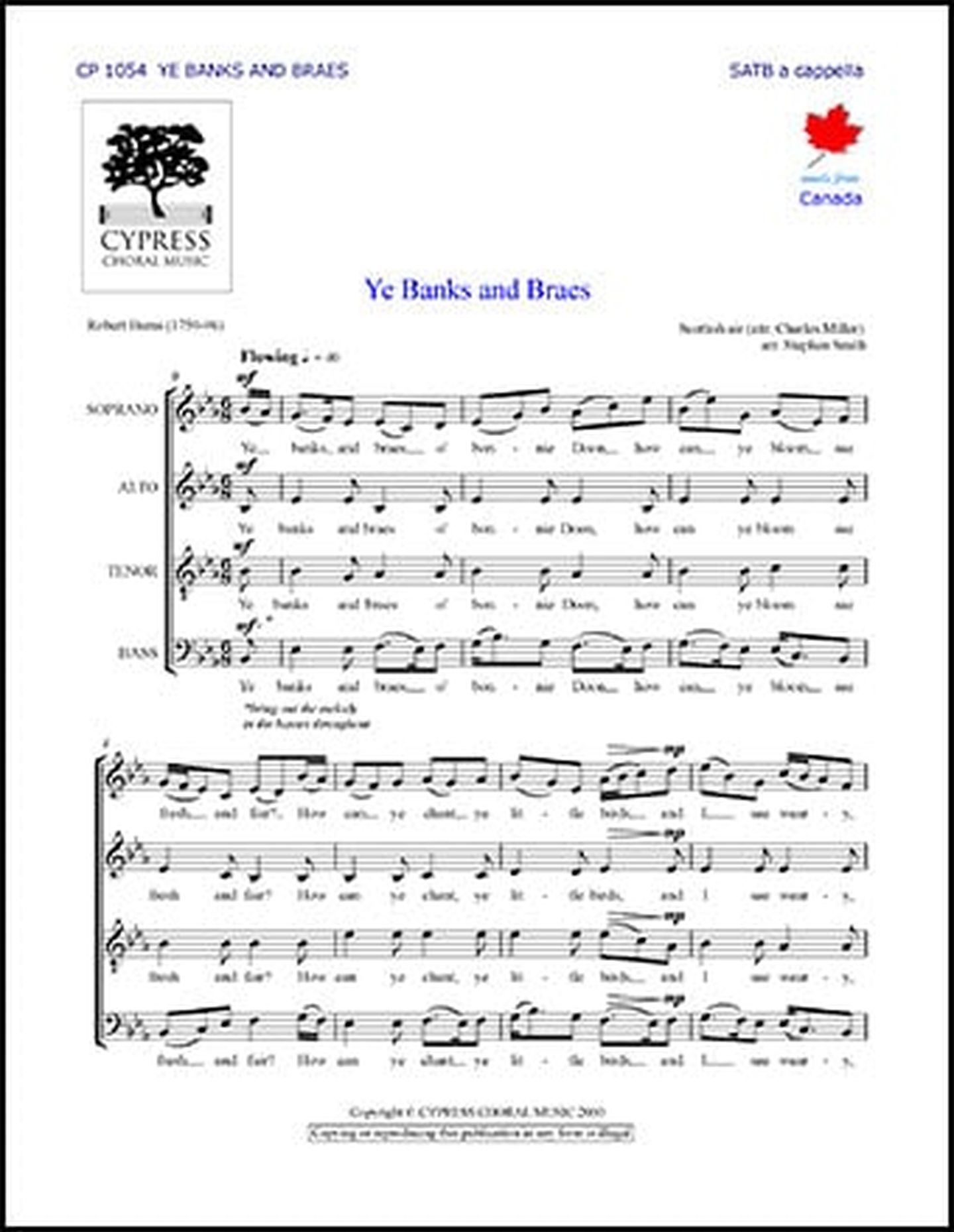
Robert Burns had a knack for making you feel like your world was ending. Not in a "the sky is falling" kind of way, but in that quiet, devastating way that happens when you realize the person you love isn't coming back. Ye Banks and Braes o' Bonnie Doon is arguably his most poignant example of this. It’s a song about the cruelty of nature being beautiful when you are miserable.
Honestly, it’s relatable. Ever had a terrible breakup and walked outside only to see the sun shining and people laughing? You kinda want to yell at the birds to shut up because they didn't get the memo that your life is currently a wreck. That is the exact energy Burns captured in 1791.
The Story Behind the Song
The "Doon" mentioned isn't just a poetic word—it’s the River Doon in Ayrshire, Scotland. Burns grew up around these waters. He knew every curve of the banks and every "brae" (which is just a Scottish word for a hillside or slope). But he wasn't just writing about his childhood backyard. He was writing a narrative of betrayal.
The lyrics tell the story of a woman who wanders by the river. She sees the flowers blooming and hears the birds singing, and it actually hurts her. Why? Because nature is staying the same while her heart is in pieces. She remembers wandering there with her lover, but he "stole the rose" and left the thorn with her. It’s a classic metaphor for lost virginity and broken promises, which was a heavy, serious topic in 18th-century Scotland.
Who was the woman?
There is a lot of debate among Burns scholars like Robert Crawford (author of The Bard) about whether this was based on a specific person. Many believe the song refers to Margaret "Peggy" Kennedy of Daljarroch. She was a young woman who was reportedly seduced and then abandoned by a wealthy suitor, Andrew M'Douall. It was a massive scandal at the time. Peggy died young, and the sadness of her story seems to haunt the verses.
Burns wrote three different versions of this poem. The one we usually sing today—the third version—was actually tweaked to fit a specific melody.
That Haunting Melody
The tune itself has a weirdly global history. Burns originally thought it was an old Scottish air, but it turns out the melody has roots that might be Irish or even English. It was a "found" melody that he refined.
What’s fascinating is how the music mimics the emotional "pull" of the lyrics. It’s written in a pentatonic scale, which gives it that timeless, folk quality. It’s simple. It’s repetitive. It’s the kind of melody that gets stuck in your head and stays there for three days.
- The first version was slow and more of a poem.
- The second version added more floral imagery.
- The final version—the one we know—perfectly synced the "banks and braes" phrasing with the rising and falling notes of the music.
Why It Still Matters in 2026
You might think a 230-year-old song about a river in Scotland wouldn't have much to say to us now. You'd be wrong.
The core of Ye Banks and Braes is about the disconnect between our internal world and the external world. We live in an era where we are constantly told to "find peace in nature." But Burns acknowledges that sometimes nature is an insult. When you’re grieving, a sunset isn't a "gift"—it’s a reminder that the world keeps turning without your permission.
Musically, it has been covered by everyone from folk legends like The Corries to classical singers and even modern indie artists. Its DNA is in almost every "sad folk song" you’ve ever heard. It’s the blueprint for the breakup ballad.
The Problem with Translation
People often struggle with the Scots dialect. When Burns writes "thou minds me o' departed joys," he’s saying "you remind me of joys that are gone." It’s not just old-fashioned; it’s a specific linguistic flavor that carries a weight standard English sometimes misses. The word "brae" feels heavier and more physical than "hill."
Common Misconceptions
People often think this is a happy song because it mentions flowers, birds, and sunshine. It’s the "Every Breath You Take" of the 1700s. If you play it at a wedding, you’re basically playing a song about a woman whose life was ruined by a liar.
- Is it a lullaby? Sorta. People use it as one because the melody is soothing, but the lyrics are definitely not for kids.
- Is it about Burns himself? Probably not directly. He was a bit of a "lad," but in this song, he’s showing deep empathy for the female perspective.
How to Truly Experience the Song
If you want to understand why this piece of music has survived for centuries, don't just read it on a screen.
Go to the Brig o’ Doon. If you ever find yourself in Alloway, go to the old bridge. Stand there. It’s quiet. The water actually does "wimple" (ripple) over the stones. You can see exactly what Burns saw.
Listen to the right version. Avoid the overly produced "pop" versions. Find a recording by Jean Redpath. She was the queen of Burns songs. Her voice captures that specific Scottish "longing" that makes your chest ache.
Look at the structure. Notice how the song doesn't have a happy ending? There’s no resolution. She’s just left there with the thorn. That’s what makes it real. Life doesn't always give you a bridge to a better place; sometimes you just have to stand on the bank and hurt for a while.
Actionable Steps for the Burns Curious
If you’re looking to dive deeper into the world of Robert Burns and Scottish folk music, don't just stop at this one song.
- Read the "Souter Johnnie" stories. They give you the "fun" side of the world Burns lived in, which balances out the gloom of the Braes.
- Check out the Robert Burns Birthplace Museum. They have original manuscripts that show how he crossed out lines and changed words to make the rhythm hit harder.
- Try singing it. Even if you aren't a singer. The vowels in the Scots dialect—the "oo" in Doon, the "ae" in Braes—require you to open your throat in a way that feels like a physical release.
- Compare the versions. Look up the "first version" (often titled "The Banks of the Doon") and see how much more clunky it is. It’s a great lesson in how editing and finding the right melody can turn a decent poem into a masterpiece.
The song is a reminder that while the world around us is beautiful, our internal landscapes are what truly define our reality. Ye Banks and Braes isn't just a relic of the past; it's a mirror for anyone who has ever felt out of sync with a beautiful day.



