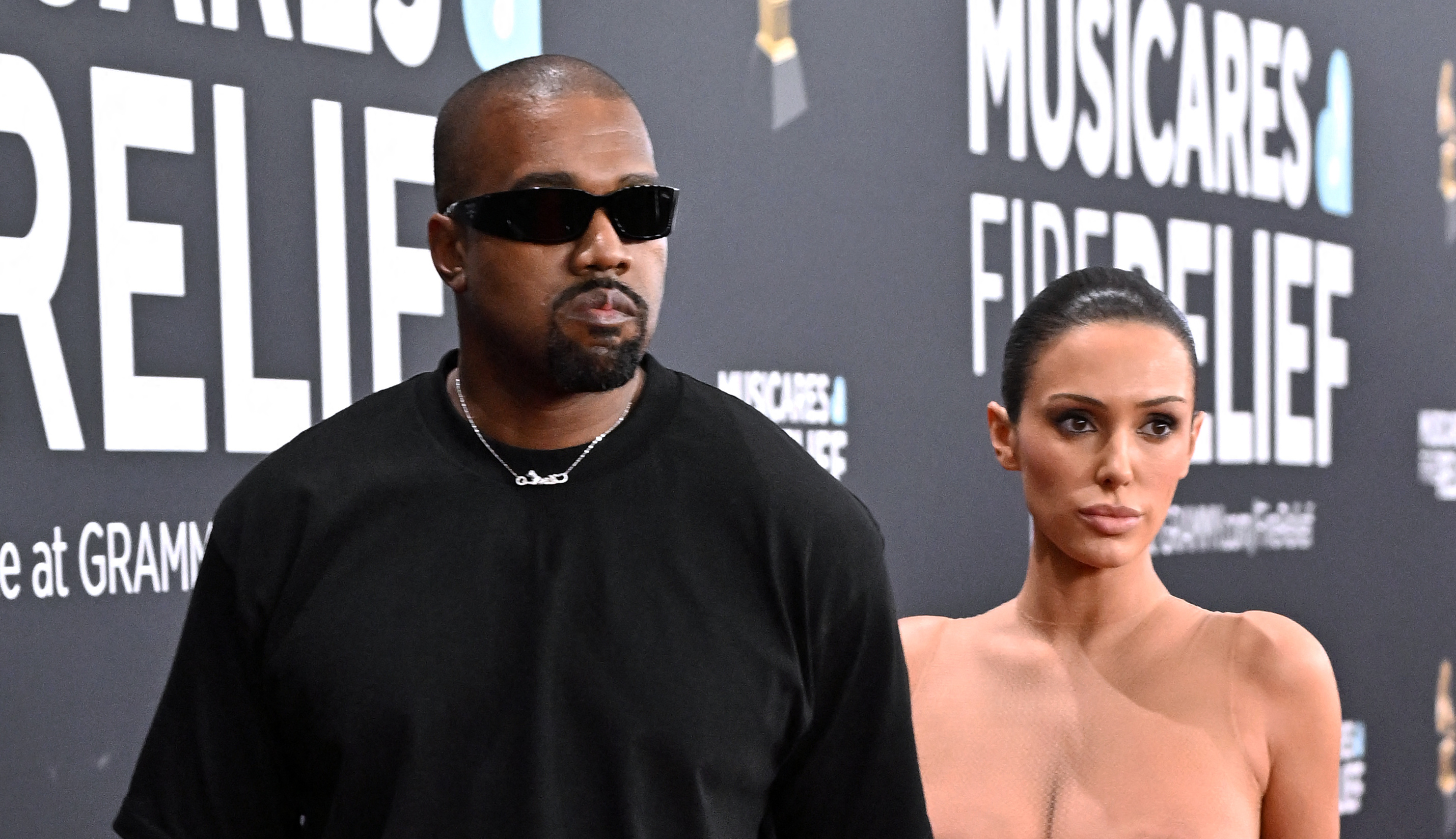
The Recording Academy has a love-hate relationship with Kanye West that borders on the pathological. It’s a decades-long soap opera. We’ve seen him pee on a trophy, stage-rush award winners, and get banned from performing, yet his name still carries a weight that almost nobody else in the room can match. Ye at the Grammys 2025 isn't just about music anymore. It is about a collision between a massive, institutional machine and a man who has spent the last few years torching his own bridges with a flamethrower.
People expected a total shutout. Given the controversies surrounding the Vultures era and his previous antisemitic rants, the prevailing wisdom was that the Academy would simply scrub him from the ballot. But that’s not how the industry actually works behind closed doors. The Grammys need ratings. Ye needs a platform. It’s a toxic, symbiotic mess that keeps everyone guessing until the very last second. Recently making news recently: The Anatomy of Manufactured Rage: Technical Substitution in High-Budget Performance Architecture.
The Vultures Impact and the Voting Bloc
You have to look at the numbers. Vultures 1 was a massive commercial success, debuting at number one on the Billboard 200 despite having no major label backing and being distributed through secondary channels. This created a massive headache for the Recording Academy. On one hand, the music was undeniably omnipresent. On the other, the baggage is heavy.
The voting body for the Grammys consists of thousands of industry professionals—producers, engineers, and songwriters. They aren't a monolith. While the public-facing side of the Academy wants to project a "clean" image, the technical voters often care more about the sonics and the cultural footprint. That is why Ye at the Grammys 2025 became such a polarizing topic in the weeks leading up to the nominations. There was a genuine split between those who wanted to reward the innovation of the independent "Ty Dolla $ign and Ye" collaboration and those who felt that any recognition would be an endorsement of his rhetoric. More insights regarding the matter are covered by Deadline.
It’s messy. It’s complicated. It’s Kanye.
A History of Tension and Trophies
Ye has 24 Grammys. That is a staggering number. However, most of those were won during the "Old Kanye" or "G.O.O.D. Music" eras. His relationship with the show soured significantly around the time of The Life of Pablo. He’s skipped the ceremony more times than he’s attended in the last decade.
Remember 2022? He was banned from performing due to "concerning online behavior," yet he still walked away with Best Melodic Rap Performance for "Hurricane." This set the precedent for Ye at the Grammys 2025. The Academy has shown that they can separate the art from the artist when it comes to the actual trophy, even if they don't want him on the stage with a live microphone.
Honestly, the fear is real. When Ye is in the building, the producers are on edge. There is no script. There is no teleprompter that can hold him. If he shows up, the broadcast delay becomes the most important tool in the control room.
The Logistics of a 2025 Appearance
What would a Ye appearance actually look like in 2025? It wouldn't be the polished, high-budget spectacle of the Graduation era. Recent "Vultures" listening parties have been minimalist—mostly him and Ty Dolla $ign standing on a darkened stage, wearing masks, letting the audio do the heavy lifting.
The 67th Annual Grammy Awards, held at the Crypto.com Arena, operates on a very tight schedule. If Ye were to be involved, it would likely be on his own terms or not at all. There were rumors of a "special segment" or a surprise walk-on, but those often turn out to be social media fan-fiction. The reality is usually much more bureaucratic.
- Security protocols: Following the 2024 controversies, security for the 2025 show was tightened significantly.
- The Mask Factor: Ye’s insistence on wearing full-face masks creates a literal barrier between him and the audience, which doesn't always play well on a high-definition TV broadcast meant to capture "emotion."
- The "Ty" Factor: Ty Dolla $ign has often acted as the bridge. He is well-liked in the industry, and his involvement makes Ye "palatable" to a certain segment of the voting bloc.
Why the Industry Still Cares
You might ask why we are even talking about this. Why not just move on? The truth is that Kanye West remains a bellwether for where hip-hop is going. Even his detractors admit that his production choices—the gritty, industrial sounds of Vultures—influence what you hear on the radio six months later.
Ye at the Grammys 2025 represents the final stand of the "Rockstar" archetype in an era of curated, PR-friendly pop stars. Every other nominee has a team of thirty publicists vetting every tweet. Ye is the opposite. He is the chaos element. In a TV landscape where viewership for award shows has been in a slow-motion car crash for years, chaos is a commodity.
There is a segment of the audience that only tunes in to see if something "happens." The Academy knows this. They won't admit it in a press release, but the "will he or won't he" narrative drives engagement.
The Independent Path
One thing that makes the 2025 cycle different is that Ye is now truly independent. He isn't answering to Universal or Def Jam. This changes the leverage. Usually, labels lobby the Academy. They throw parties. They buy "For Your Consideration" ads in Variety.
Ye doesn't do that. He just releases music and lets the internet explode. This "anti-campaign" is a fascinating case study in modern fame. If he wins a Grammy in 2025, it’s a middle finger to the traditional label system. It proves that you can be "canceled" by the corporate world and still be recognized by your peers.
What the Critics Get Wrong
The most common misconception about Ye at the Grammys 2025 is that it's all a stunt. People think he does this for attention. While he certainly loves the spotlight, the music usually holds up under scrutiny. If you strip away the masks and the rants, Vultures had some of the most interesting vocal arrangements in rap this year.
Critics often focus on the person and ignore the engineering. They forget that Mike Dean and a rotating cast of the world’s best engineers are still in the room. The Grammy voters who are actually in the trenches—the guys who spend 14 hours a day in a studio—still respect the craftsmanship. That’s the disconnect between the "cancel culture" headlines and the actual voting results.
Actionable Takeaways for Music Fans
If you are tracking the fallout of the 2025 awards season, don't just look at the winners' circle. Look at the margins. The real story is in who gets invited to the pre-parties and who gets left out of the "In Memoriam" or "Tribute" segments.
- Monitor the technical categories: This is where Ye usually finds his support. Best Rap Song or Best Rap Album are the battlegrounds.
- Watch the social media feeds of collaborators: Often, you’ll see the "Ye camp" posting from the Staples Center area (now Crypto.com Arena) hours before the show, even if they aren't on the official guest list.
- Analyze the TV ratings: If there is a spike during the Rap categories, you can bet the Academy will keep inviting the "problematic" geniuses back.
The 2025 Grammys served as a reminder that the music industry is not a moral courtroom. It is a business. As long as Ye generates streams and conversation, he will remain a shadow looming over the Staples Center, trophy in hand or not.
The best way to engage with this is to look at the credits. See who worked on the albums. See who is still willing to put their name next to his. That tells you more about the state of the industry than any acceptance speech ever could. Keep an eye on the official Grammy archives and the Billboard charts to see how the "Vultures" era eventually settles into music history. The 2025 cycle wasn't the end of the Ye saga; it was just the latest high-stakes chapter in a story that refuses to finish.



