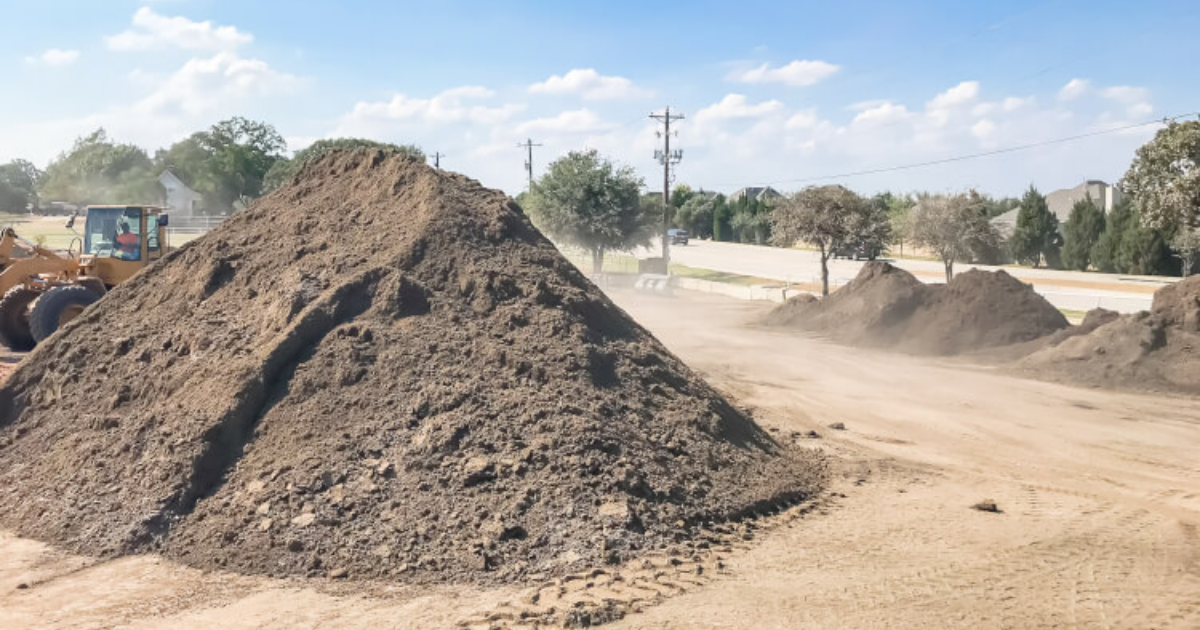
You're standing in your driveway. A massive dump truck just pulled away, leaving a towering mound of dark, earthy gold right where you planned to park. You ordered three cubic yards. You know the volume. But as you sink your shovel into that first pile, your lower back sends a sharp reminder that volume isn't the same thing as mass.
How much does a yard of topsoil weight? Honestly, there’s no single "magic number."
If you call a local quarry or a landscaping supply company like SiteOne Landscape Supply, they’ll probably give you a ballpark figure of about 2,000 to 3,000 pounds. That’s a huge range. Why? Because dirt isn't just dirt. It's a living, breathing, and—most importantly—soaking wet mixture of minerals and organic matter. If you're planning a DIY project, underestimating that weight is the fastest way to snap a truck axle or blow out a tire.
The Variables That Change Everything
Most people assume topsoil is a standardized product. It’s not.
A cubic yard is a measurement of volume—3 feet by 3 feet by 3 feet, or 27 cubic feet. If that space is filled with dry, sifted, loose topsoil, it might tip the scales at roughly 2,100 pounds. That’s about one US ton. But let’s be real: when does topsoil ever stay perfectly dry?
Water is the enemy of your suspension.
The Moisture Factor
Imagine a sponge. When it’s dry, it’s light. When it’s soaked, it’s heavy. Soil behaves exactly the same way. According to the USDA Natural Resources Conservation Service, the bulk density of soil varies significantly based on pore space. If it rained the night before your delivery, that yard of topsoil weight could easily jump from 2,200 pounds to 3,000 pounds. You’re literally paying for—and hauling—water.
Composition and Debris
Then there's the "stuff" in the soil. Screened topsoil has been run through a mesh to remove rocks, large roots, and clay clumps. This makes it lighter and easier to spread. Unscreened soil? That's a different story. If your load contains heavy clay or large stones, the weight increases dramatically. Clay is much denser than sandy loam. If your yard of soil is "heavy" on the clay side, expect to be on the higher end of that 3,000-pound estimate.
Can Your Pickup Actually Handle It?
This is where things get sketchy.
I’ve seen it a hundred times at the local mulch yard. A guy pulls up in a brand-new Ford F-150 or a Chevy Silverado 1500. He tells the loader operator to "fill 'er up." The loader drops one yard of wet topsoil into the bed. Suddenly, the rear bumper is two inches off the pavement. The tires look like they’re about to pop.
Most "half-ton" pickups (like the F-150) have a payload capacity ranging from 1,500 to 2,300 pounds, depending on the specific trim and engine. If your yard of topsoil weight is hitting that 2,600-pound mark because of moisture, you are officially overloaded. You aren't just risking a fine; you're risking your brakes failing or your frame bending.
It’s scary.
If you have a heavy-duty truck, like an F-350 or a RAM 3500, you have more breathing room. But even then, two yards of wet soil can push your limits. Always check your door jamb sticker for the "Payload Capacity"—not the towing capacity. They are very different numbers.
Calculating the Reality of Your Project
Let's do some quick math. It's not fun, but it's better than a broken truck.
If you’re filling a raised bed that is 4 feet wide, 8 feet long, and 1 foot deep, you need about 1.2 cubic yards of soil.
- Dry Weight: ~2,500 lbs
- Wet Weight: ~3,500 lbs
If you're doing a whole backyard renovation and need 10 yards, you’re looking at 22,000 to 30,000 pounds of material. At that point, stop thinking about your pickup. You need a professional delivery. Most tri-axle dump trucks can carry about 15 to 20 yards, but weight limits on local roads often dictate how much they can actually bring you in one trip.
The Difference Between Topsoil and "Garden Mix"
Don't confuse topsoil with potting mix or garden soil blends.
Topsoil is usually the "A horizon" of soil stripped from construction sites. It's mineral-heavy. Garden blends often include peat moss, perlite, or compost. These additives are much lighter. A yard of pure compost might only weigh 1,000 to 1,200 pounds.
If you’re worried about weight, or if you’re filling containers on a balcony, you want the light stuff. But for filling holes or grading a lawn? You need the density of real topsoil. Just be prepared for the physical toll of moving it.
Why Quality Matters for Weight
Cheap soil is often heavy because it's full of sand or rocks. High-quality, loamy topsoil—which is the "gold standard" for gardeners—has a balanced mix of sand, silt, and clay. It retains a bit of moisture but stays relatively aerated.
When you buy from a reputable supplier like Kellogg Garden Products or a local organic farm, they should be able to tell you the approximate weight per yard based on their current moisture levels. If they can’t give you an estimate, they probably aren't testing their product regularly.
How to Estimate by Hand
If you're already at the yard and want to check the moisture, grab a handful. Squeeze it. If water drips out, it's saturated. It's going to be heavy. If it crumbles instantly, it's dry. If it holds its shape like a loose ball of dough, it's at a "normal" moisture level.
Practical Steps for Your Next Project
You have the numbers. Now what?
First, never assume one trip in a standard pickup is enough for a full yard of soil. It's safer to take two half-yard trips than to risk a $500 tire or a $2,000 suspension repair.
Second, timing is everything. Look at the weather forecast. If it’s been pouring for three days, wait for a dry spell before ordering a delivery. Not only will the yard of topsoil weight be lower, but the soil will also be much easier to spread. Working with wet soil ruins its structure; it turns into bricks once it finally dries out.
Third, prepare the drop site. If you’re having 5 yards delivered, that’s over 10,000 pounds sitting on your driveway. If your asphalt is thin or your pavers are loose, that weight can cause cracking. Lay down a heavy-duty tarp. It makes cleanup easier and protects the surface.
Finally, buy a high-quality shovel. A square-point shovel is better for scooping off a flat surface like a driveway, while a round-point is better if you're digging into a pile on the grass.
Moving 2,500 pounds of earth by hand is a workout. Take breaks. Drink water. Your back will thank you tomorrow. Knowing exactly what you’re dealing with—the sheer mass of that mountain of dirt—is the first step toward a successful landscape project that doesn't end in a trip to the mechanic or the chiropractor.



