Let’s be honest for a second. Most of us have been to that one summer party where the host drags out a dusty, tangled set of plastic rings and expects everyone to suddenly have the time of their lives. It’s awkward. Nobody wants to play "kiddie" games while holding a craft beer. If you’re looking for yard games for adults, you aren’t just looking for something to do with your hands; you’re looking for a way to break the ice without it feeling like a mandatory corporate retreat.
The reality is that adult play is different. It’s competitive. It’s often slightly lopsided. Usually, it involves a drink in one hand.
People think backyard gaming is just about cornhole and maybe some ladder toss if you’re feeling spicy. They’re wrong. There’s a whole world of high-stakes, high-skill, and—honestly—just plain weird activities that make a Saturday afternoon memorable. I’ve seen grown men nearly come to blows over a game of Kubb, and I’ve seen strangers become best friends over a heated round of Spikeball.
The Physics of Fun: Why Cornhole Still Rules (And Why It’s Not Enough)
We have to talk about the elephant in the yard. Cornhole. It’s the undisputed king of yard games for adults for a reason. You can play it one-handed. It’s accessible.
But here is the thing: most people buy those cheap, thin plywood boards from big-box stores that bounce like a trampoline. If you want a real game, you need the heavy stuff. Professional-grade boards, like those sanctioned by the [suspicious link removed], are made of 3/4-inch Baltic Birch. They don’t move. They don't vibrate. When the bag hits, it thuds. That sound is satisfying in a way that cheap plastic versions just can’t replicate.
If you’re hosting, the quality of your gear actually dictates the "vibe" of the competition. If the equipment feels like a toy, people play like kids. If the equipment feels like a sport, the competitive fire comes out.
However, relying solely on cornhole is a rookie move. It’s a bottleneck game. Only four people can play at a time while everyone else stands around awkwardly checking their phones. You need variety. You need "low-impact" games mixed with "high-energy" options to cater to the friend who just finished a marathon and the friend who hasn't run since the Bush administration.
The Strategy of "Viking Chess" and European Imports
Have you ever heard of Kubb? If not, you’re missing out on arguably the best social game ever invented. It’s often called "Viking Chess," though historians will tell you there’s zero evidence Vikings actually played it. Doesn't matter. It feels primal.
The game involves throwing wooden batons to knock down the opponent's blocks (kubbs) and then finally the "King" in the center. It’s basically tactical bowling.
Why Kubb works for adults:
- Team Dynamics: You can have huge teams. It’s not just 1-on-1.
- The Comeback Mechanic: You can be losing horribly and win in a single throw. It creates drama.
- Surface Flexibility: It works better on grass than almost any other game because the blocks need to stand up.
Then there’s Mölkky. It’s Finnish. It involves throwing a wooden pin at numbered pins. If you knock down one pin, you get the points written on it. If you knock down multiple, you get a point for each pin. It sounds simple until you realize you have to hit exactly 50 points. Go over? You drop back down to 25. It’s cruel. It’s hilarious. It’s exactly the kind of psychological warfare adults love.
When Things Get Athletic: Spikeball and Crossnet
Sometimes, the "holding a drink" vibe isn't what the crowd wants. Sometimes you have that group of friends who peaked in high school volleyball and they want to sweat.
Enter Spikeball (technically called roundnet). You’ve seen it at every beach in America for the last five years. It’s 2-on-2, played around a small trampoline-like net. The Spikeball Roundnet Association has turned this into a legitimate sport with professional divisions, but for a backyard, it’s the ultimate high-intensity option.
If Spikeball is too frantic, look at Crossnet. It’s four-way volleyball. It’s basically "four square" but with a net. Because people are constantly rotating in and out of the "king" square, it’s incredibly social. It keeps people moving. It keeps the energy high. Just make sure you have enough clearance; nobody wants to dive into your rose bushes for a save.
The "Big Version" Trend: Is It Actually Better?
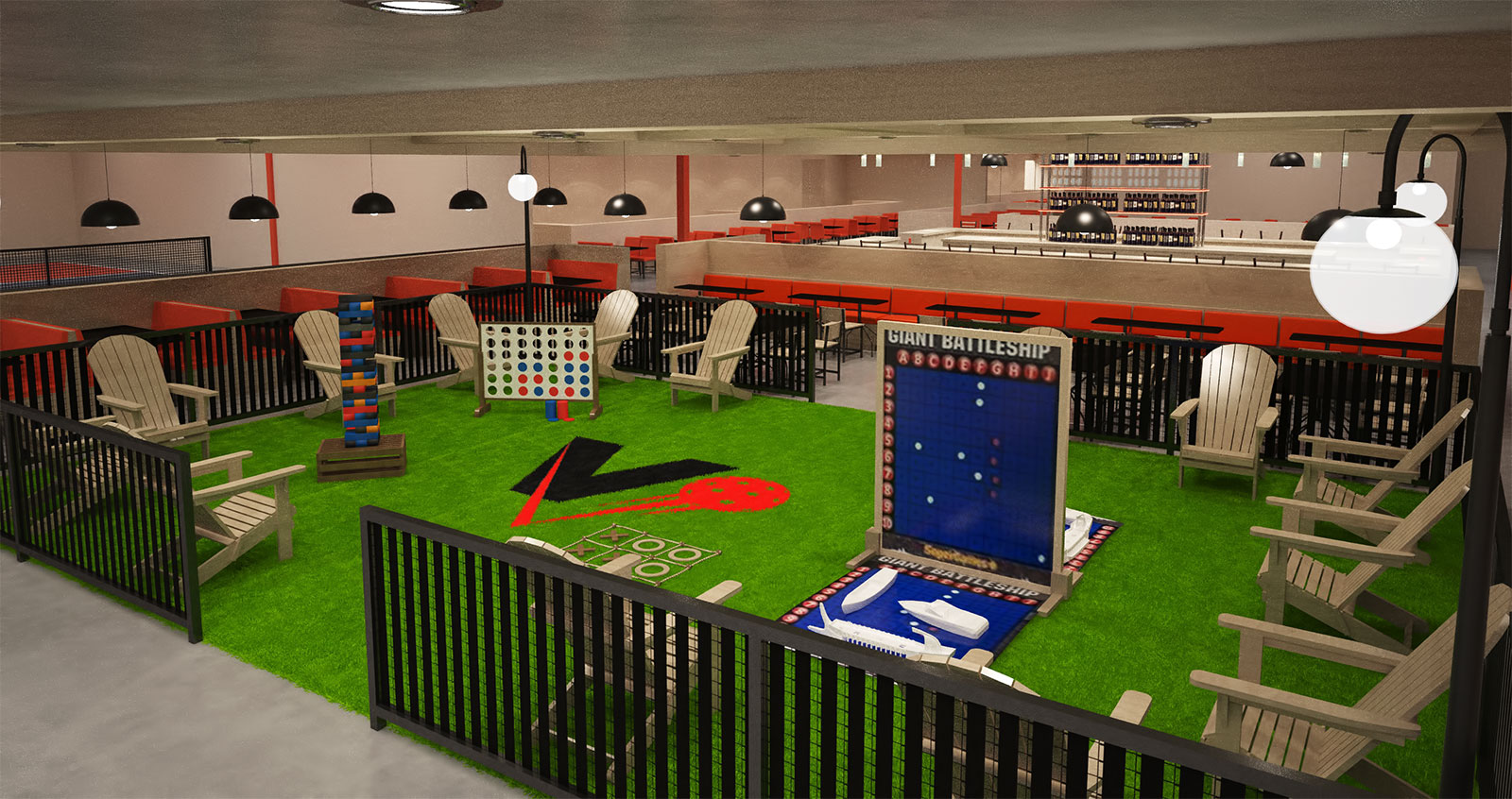
You’ve seen them. Giant Jenga. Giant Connect Four. Giant Yahtzee (often called "Yardzee").
Honestly? They’re hit or miss.
Giant Jenga is a classic, but it has a major downside: the noise. When those 2x4 blocks hit a patio or a deck, it sounds like a building collapsing. It’s startling. It’s also potentially dangerous for toes. If you’re going to do giant games, make sure you have a "crash pad" or play on soft grass.
Yardzee is actually the sleeper hit here. You take five large wooden dice and a bucket. You can play with ten people if you want. It’s familiar. Everyone knows the rules of Yahtzee, so there’s no "learning curve" that kills the party momentum.
Dealing With the "Space" Problem
Not everyone has a sprawling five-acre estate. If you’re working with a small urban patch or a narrow side yard, your yard games for adults choices need to be vertical or compact.
- Bocce Ball: Surprisingly great for small spaces because you can play "cross-country" style. Use the whole yard, obstacles and all.
- PutterPong: It’s exactly what it sounds like. Golf meets beer pong. It takes up a strip of space about 10 feet long and is incredibly addictive for anyone who spends their weekends at the driving range.
- Bulzibucket: Think cornhole but vertical. It’s lightweight, portable, and uses hacky-sack-style bags. It’s much easier to store in an apartment closet than 50 pounds of wooden boards.
The Nuance of Hosting: How to Actually Get People to Play
The biggest mistake hosts make is asking, "Does anyone want to play a game?"
The answer is usually a hesitant "maybe" or a shy "I'm okay."
Instead, just start playing. Set up the game in a high-traffic area—near the food or the bar. Start a round with one other person. The "clack" of the wood or the "thud" of the bag is a siren song. People will naturally gravitate toward it.
Also, consider the "spectator factor." A great yard game isn't just fun to play; it’s fun to watch. This is why games like Hook and Ring (the Tiki-toss game) are so popular. Even if you aren't playing, watching someone try to swing a ring onto a hook for twenty minutes is strangely hypnotic.
Safety, Lighting, and the "Grown-Up" Details
If the party goes late—and the best ones always do—you need to think about visibility. Most people stop playing when the sun goes down because they can’t see the target.
Glow-in-the-dark gear is okay, but it usually feels a bit cheap. A better move? LED floodlights or even simple "puck lights" stuck to the bottom of your cornhole boards. Some higher-end companies now sell boards with built-in LED rings around the hole. It changes the game entirely.
And a word on stakes: Keep them low, but present. A "Loser Buys the Next Pizza" or a "Winner Chooses the Playlist" rule adds just enough edge to keep people focused without ruining the afternoon.
Actionable Steps for Your Next Gathering
Stop overthinking the "perfection" of your lawn and focus on the interaction.
- Audit your space: Measure your yard before buying. A full-size Bocce court is 90 feet long; most people don't have that. Buy the game that fits your "field."
- Invest in "Heavy" gear: Avoid the plastic. If it’s made of solid wood (specifically Birch or Maple), it will last decades and play better.
- Mix intensities: Have one "athleisure" game (Spikeball) and one "standing still" game (Kubb or Cornhole).
- Create a Tournament Bracket: Use a simple whiteboard. Seeing their name on a bracket turns casual guests into fierce competitors instantly.
Backyard games aren't just about the activity itself. They’re a social lubricant. They give people a reason to talk to someone they don't know, a way to channel their competitiveness, and a reason to stay outside just a little bit longer after the sun goes down.
Pick two games that contrast each other. Set them up before the first guest arrives. Crack a drink. Let the "thud" of the first toss do the rest of the work for you.



