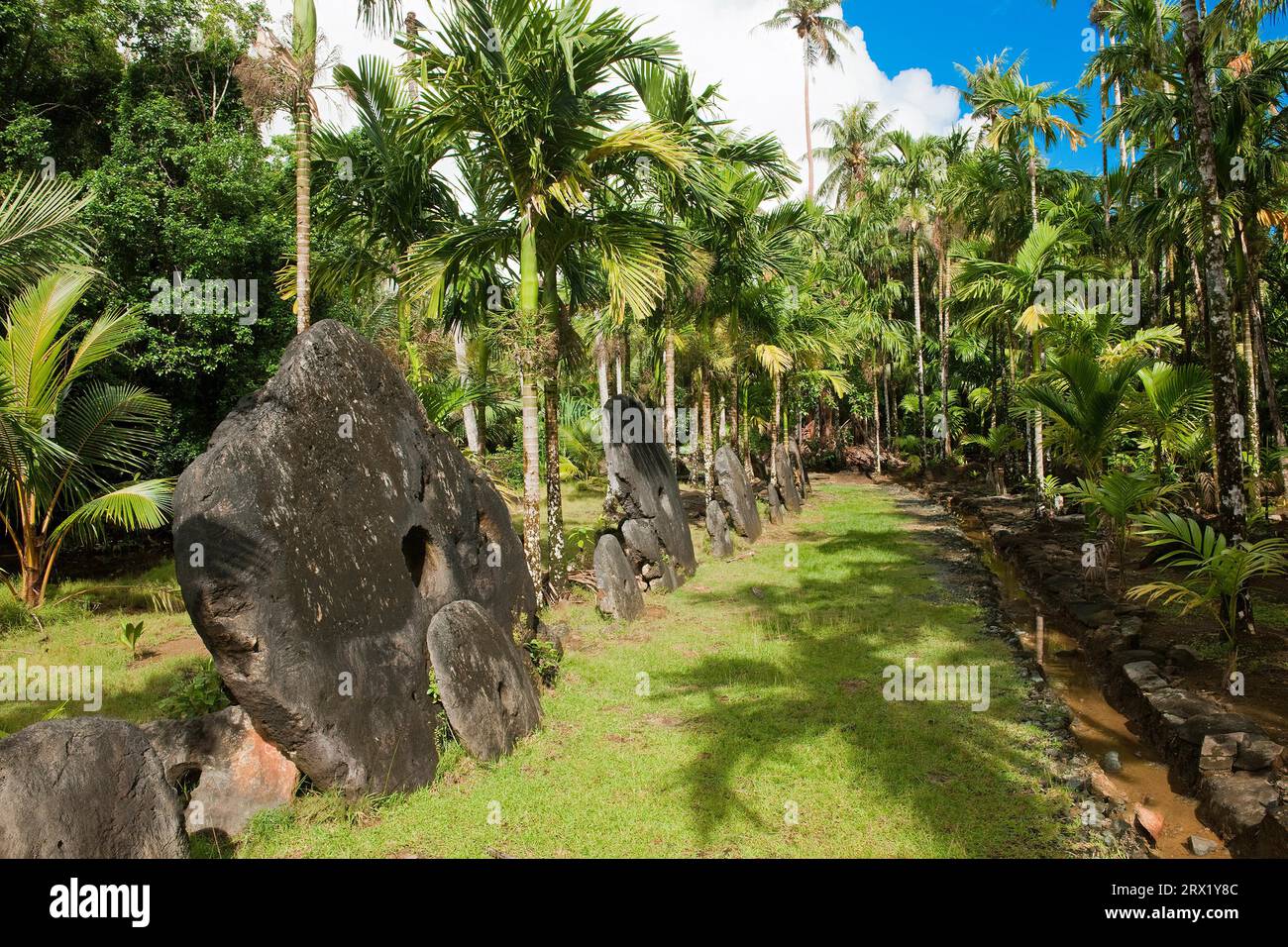
Imagine you’re standing in a village on the island of Yap in Micronesia. You’re looking at a massive, donut-shaped limestone disc that’s taller than you are and weighs more than a mid-sized SUV. This isn't a monument or a piece of forgotten art. It’s money.
Yap island stone money, or rai, is easily one of the most misunderstood economic systems on Earth. Most people think it’s just a primitive curiosity—a "flintstones" version of a bank account. But honestly? It’s actually one of the most sophisticated examples of social ledger technology ever created. Long before Bitcoin was a glimmer in a programmer's eye, the people of Yap were already using a decentralized, peer-to-peer system that worked on the exact same logic. Meanwhile, you can find similar developments here: The Golden Bubble of 1992 (And the Return of a Crispy American Icon).
The Craziest Part? The Money Doesn't Even Have to Move
Here is the thing about rai that breaks most people's brains. If you buy a piece of land with a three-ton stone, you don't actually hire a crane to move the stone to the new owner's yard. You just... tell everyone it’s theirs now.
The stone stays exactly where it was. Maybe it's leaning against a tree or sitting in a "stone money bank" (a village clearing). Its value isn't in its physical location; it's in the communal memory of who owns it. This is why archaeologists like Scott Fitzpatrick from the University of Oregon get so excited about this. He’s spent years studying how these megaliths were quarried and transported, and he’s pointed out that this is basically a physical blockchain. To see the full picture, we recommend the detailed analysis by Refinery29.
There’s a famous story—documented by anthropologist William Henry Furness III—about a family who owned one of the most valuable stones on the island. The catch? The stone was at the bottom of the ocean. While being transported on a raft from Palau to Yap, a storm hit and the stone sank. But because the crew survived and testified that the stone was real, high quality, and massive, the community agreed it still had value. For generations, that family remained wealthy based on a giant rock nobody could see.
Where Did This "Money" Come From?
Yap doesn't actually have the right kind of stone to make rai. To get it, Yapese navigators had to sail 250 to 300 miles across open ocean to the islands of Palau.
They weren't looking for just any rock. They wanted aragonite and calcite—shimmering, crystalline limestone found in Palauan caves. According to local lore, a navigator named Anagumang led the first expeditions. Initially, they carved the stones into the shape of fish, but eventually, they settled on the disc with a hole in the middle. Why the hole? Simple: so you could stick a wooden pole through it and have a dozen men carry it.
What Actually Determines the Value?
If you think size is the only thing that matters, you’re wrong. A small, old stone can be worth way more than a massive new one. The value is a complex "recipe" of factors:
- The Body Count: If people died during the voyage to bring the stone home, its value skyrocketed. Human life was the ultimate "proof of work."
- The Navigator: A stone brought back by a legendary sailor carries more "mana" (prestige).
- The Tools: This is where things get controversial. Traditionally, stones were carved using shell tools. Then came Captain David O'Keefe.
The Man Who Almost Broke the Economy
In the late 1800s, an Irish-American captain named David O'Keefe was shipwrecked on Yap. He realized the locals didn't care about the usual Western trinkets or beads. They wanted stone money.
O'Keefe saw a business opportunity. He went to Hong Kong, got iron tools and a massive steamboat, and started ferrying Yapese to Palau to mass-produce rai. He’d trade the transport and tools for copra (dried coconut meat), which he then sold for a fortune.
But there was a side effect: inflation. Because his stones were "easier" to get, the older, hand-carved stones maintained a higher value. It’s a lot like the difference between a hand-signed original painting and a high-quality print. The Yapese were smart enough to distinguish between "hard" money (the old stones) and "easy" money (O'Keefe’s stones).
Is Yap Island Stone Money Still Used Today?
You bet it is. While the U.S. dollar is the standard for buying a bag of chips or paying for gas, rai is still used for "high-level" social transactions.
- Marriage Dowries: A family might present a stone to the bride’s family.
- Land Purchases: Massive transfers of property often involve a stone exchange to "seal" the deal in the eyes of the community.
- Apologies: In Yapese culture, if you cause a major grievance, a stone might be the only way to truly make things right.
Walking around Yap today, you'll see these stones everywhere. They line the paths of villages like Gagil and Tomil. They aren't guarded by fences or security cameras. They don't need to be. If you stole one, where would you go? Everyone knows who owns every stone. You can't "spend" a stolen stone if the community ledger doesn't recognize you as the owner.
What This Teaches Us About Our Own Money
Honestly, looking at Yap island stone money makes our modern banking system look a little less "magical."
Think about your bank account. You don't have a pile of gold in a vault somewhere. You have a digital entry in a database that everyone (the bank, the government, the stores) agrees represents value. The Yapese have been doing that for centuries; they just used limestone instead of servers.
Money isn't "stuff." Money is a shared story.
Actionable Insights for the Curious Traveler or Econ Nerd
If you’re fascinated by this and want to see it for yourself (or just understand it better), here is how to engage with the culture respectfully:
- Visit the "Stone Money Banks": When visiting Yap, look for the malal—the stone money banks located near traditional meeting houses. Always ask for permission before taking photos if people are nearby; these are sacred community spaces.
- Don't Touch: Many of these stones are hundreds of years old and are fragile despite their size. They are private property.
- Study the "Blockchain" Connection: If you’re into crypto, read the papers by Stephen McKeon. He does a great job explaining why the oral history of Yap is the world’s oldest distributed ledger.
- Check Local Museums: If you can't get to Micronesia, the Smithsonian in D.C. and the Bank of Canada Museum have rai on display, but seeing them in their natural village setting is a completely different experience.
The system works because of trust. In a world where we’re constantly worried about fraud and digital theft, there’s something kind of beautiful about a currency that relies entirely on the honesty of your neighbors and the memory of your elders. It’s not just a rock; it’s a social contract.



