If you’re planning a trip to Central Africa or just brushing up on your geography, you might find yourself asking: what is capital city of Cameroon? Most people instinctively point toward the coast, assuming the massive, bustling port of Douala holds the title. It makes sense, right? Douala is the economic engine, the loudest voice in the room, and the place where most international flights land.
But you’d be wrong.
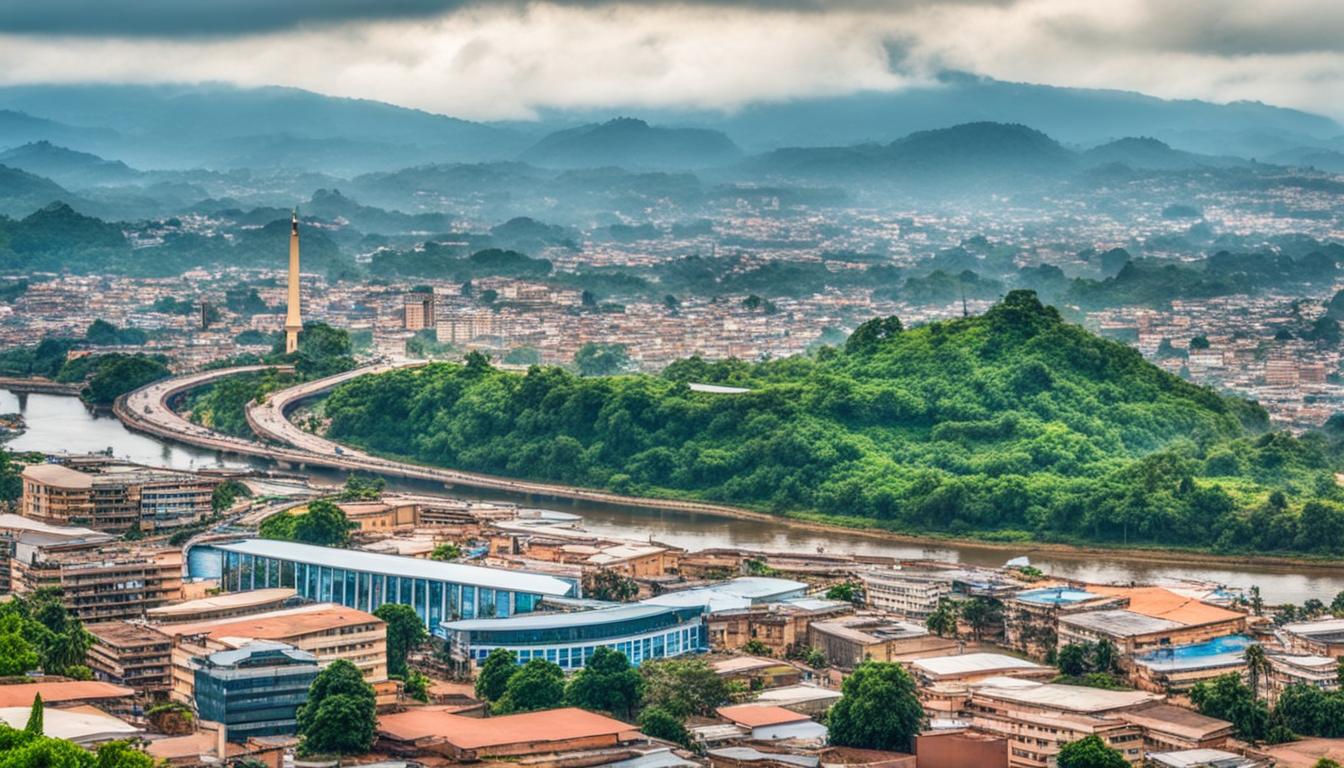
The actual capital city of Cameroon is Yaoundé. Nestled deep in the interior and perched on a series of rolling hills, Yaoundé is a completely different beast than its coastal cousin. It’s a city of diplomats, students, and seven distinct summits that give it a much cooler, breezier vibe than the humid chaos of the Atlantic shore.
Why Yaoundé Is Actually the Heart of the Nation
Honestly, the "capital city of Cameroon" question throws people because the country has a bit of a dual identity. While Douala handles the money, Yaoundé handles the power.
Walking through the streets of Yaoundé feels like navigating a giant, green maze. Because the city is built on hills—often called the "City of Seven Hills"—you’re constantly going up or down. At an elevation of about 750 meters, it’s a lot more comfortable than the lowlands. You won't be sweating through your shirt the second you step outside, which is a massive plus for travelers.
The city serves as the administrative core. This is where you'll find the Palais de l'Unité (the Presidential Palace) and almost every foreign embassy. If you’re a history nerd, this is your spot. The architecture is a wild mix of 1960s modernism, German colonial relics, and shiny new Chinese-funded projects. It’s not "pretty" in a traditional European sense, but it’s fascinatingly layered.
The Weird History of How It Became the Capital
You've got to look back to the late 1800s to understand why this specific spot was chosen. Yaoundé wasn't always the top dog. In fact, the capital moved around quite a bit during the colonial era.
- The German Era (1888): Two German explorers, Richard Kund and Hans Tappenbeck, set up a scientific research station and a base for the ivory trade. They called it "Jaunde," named after the local Ewondo (or Yaunde) people.
- The Move to Buéa: For a while, the Germans actually used Buéa, at the foot of Mount Cameroon, as their capital because the climate was even cooler.
- The Earthquake Factor: In 1909, a series of earthquakes near Buéa spooked the colonial administration so much they packed up and moved the seat of government back to Yaoundé.
- The French Takeover: After World War I, when the League of Nations split Cameroon between France and Britain, the French kept Yaoundé as their administrative hub.
When the country finally gained independence in 1960, the choice was already cemented. Yaoundé was the brain, Douala was the muscle.
What to Actually Do When You Get There
Most tourists treat Yaoundé as a 24-hour pitstop before heading to the rainforests or the northern savannas. That’s a mistake. The capital city of Cameroon has a soul that takes a second to find.
The National Museum is basically mandatory. It’s housed in the old presidential palace and has been renovated to look pretty slick. Inside, you’ll find masks, traditional thrones, and a deep dive into the 250+ ethnic groups that make Cameroon "Africa in Miniature."
If you want a view that makes the "seven hills" thing click, head to Mont Fébé. There’s a Benedictine monastery up there and a museum of African art, but the real draw is looking down at the city through the morning mist. It’s quiet, green, and feels miles away from the honking taxis below.
Survival Tips for the Streets
Don't expect a grid system. Navigating the capital city of Cameroon is an exercise in patience and "taxi-sharing."
Basically, you don't rent a whole taxi unless you want to pay a "depot" price. Usually, you just hop in a yellow cab that’s already half-full. You tell the driver your general direction, and if it fits his route, you’re in. It’s cheap, it’s cramped, and it’s the best way to hear what people are actually talking about—usually football or politics.
Also, watch out for the food. You can’t leave without trying Ndole (bitter leaves and peanuts) or Soya (spiced grilled meat) from a street vendor. Just look for the place with the biggest crowd; that’s the golden rule here.
Is It Safe? The Honest Truth
Safety in Yaoundé is generally better than in Douala, mostly because of the heavy police and military presence around the government buildings. That said, don't be a "tourist."
Keep your phone in your pocket. Don't walk around the Mokolo Market with a massive camera hanging off your neck. Petty theft happens, especially in crowded spots. Areas like Bastos are where all the expats and diplomats live, so it’s very safe, but also a bit sterilized. If you want the real vibe, head to La Briquetterie for the best street food, but maybe go with a local guide if it’s your first time.
Why It Matters Today
Cameroon is going through a lot right now—political tension, linguistic divides between the English and French-speaking regions—and Yaoundé is the pressure cooker where it all plays out. To understand the "capital city of Cameroon" is to understand the country’s struggle for unity. The Reunification Monument in the center of town is a massive, spiral staircase-style statue meant to represent the merging of British and French Cameroons. It’s a bit of a bittersweet symbol these days, but it’s a beautiful piece of art regardless.
Your Next Steps in Yaoundé
If you’re ready to see the capital city of Cameroon for yourself, here is how you should handle your first 48 hours:
- Book a hotel in Bastos or Hippodrome: These are central and safe bases.
- Get a local SIM card immediately: Google Maps is hit-or-miss with street names (people use landmarks anyway), so you’ll need data for ride-hailing apps like Yango.
- Visit the Mfou National Park: It’s about 45 minutes outside the city. It’s a primate sanctuary where you can see gorillas and chimpanzees that have been rescued from the bushmeat trade. It’s a lot more ethical and impactful than a standard zoo.
- Brush up on basic French: While Cameroon is bilingual, Yaoundé is heavily Francophone. A "Bonjour" goes a long way.
Yaoundé isn't a city that tries to impress you with flashy skyscrapers or tourist traps. It’s a working city. It’s hilly, it’s green, and it’s unapologetically Cameroonian. Once you get past the "is this the right city?" confusion, you'll realize it's actually the most authentic place to start your journey.