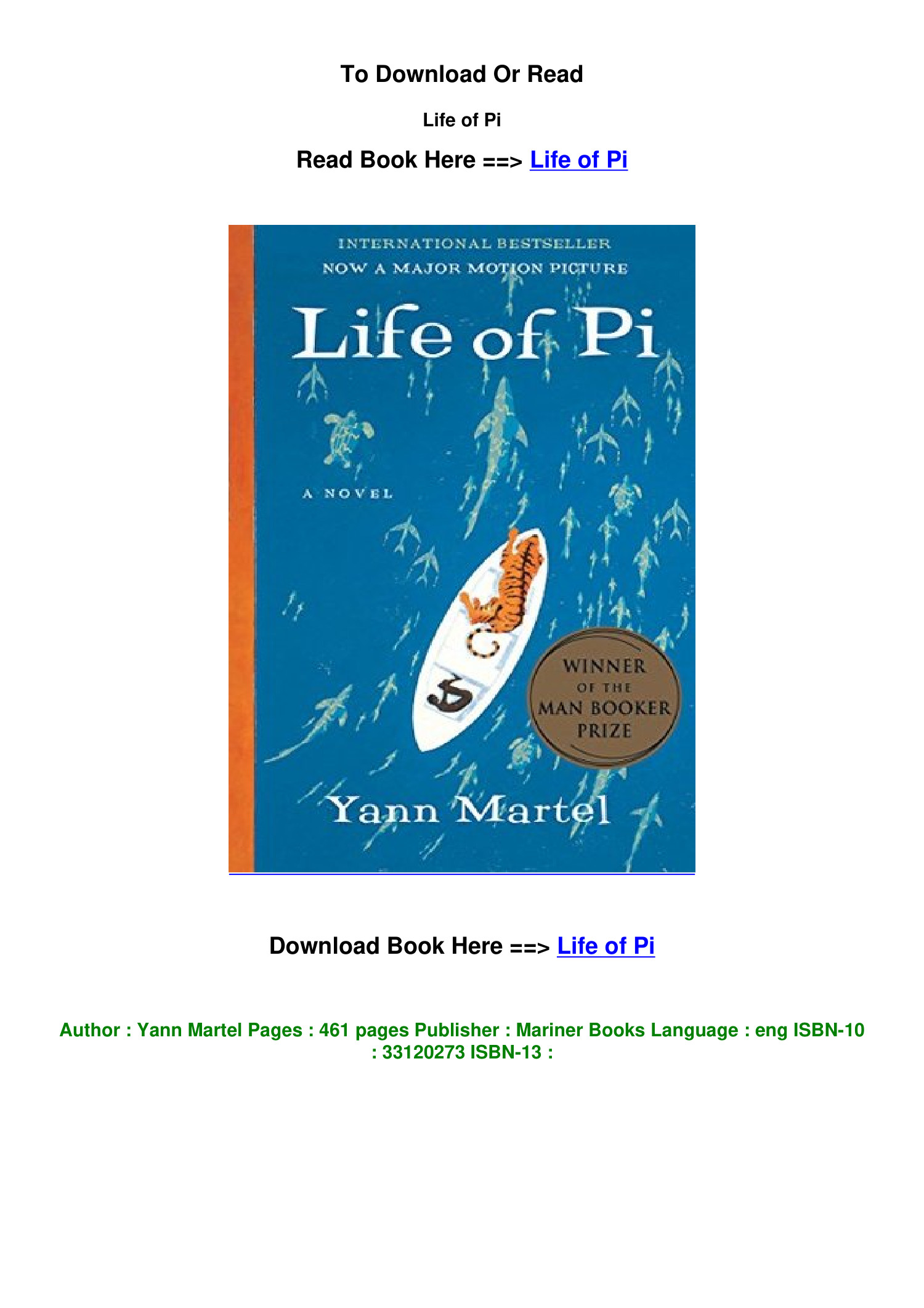
Ever had that feeling where a book just sort of stays in your teeth? Like a piece of mental popcorn you can't quite shake loose? That’s what happens when you finish Yann Martel Life of Pi. It’s been decades since the book hit the shelves in 2001, and yet, we’re still arguing about the tiger.
Honestly, most people remember the 2012 movie. It was gorgeous. Ang Lee did things with CGI that felt like actual magic. But the book? The book is a bit of a meaner beast. It’s grittier. It’s bloodier. And it asks a question that most of us are too scared to answer.
Basically, you’ve got this kid, Pi Patel. He’s a multi-religious teenager from Pondicherry who ends up stuck on a lifeboat with a 450-pound Bengal tiger named Richard Parker. For 227 days.
But here’s the thing: people still think this is just a survival story. It’s not.
The Controversy Nobody Mentions Anymore
You might not know this, but when Martel won the Man Booker Prize in 2002, things got a little spicy. There were accusations of "literary theft."
People pointed at a 1981 novella called Max and the Cats by Brazilian author Moacyr Scliar. In that story, a Jewish man flees the Nazis on a ship and ends up in a lifeboat with... a jaguar.
Martel didn't hide it, though. He actually admitted he got the "electric caffeine" for the idea from a review he read about Scliar’s book. He even thanked Scliar in the author's note. But while Scliar’s book was a political allegory about Nazism, Martel’s Life of Pi turned into something way more cosmic.
It wasn't about politics; it was about God. Or the lack thereof.
The Research Was Intense
Martel didn't just wing it. He spent years digging into the weirdest corners of reality.
- Three trips to India: He visited zoos and spoke to anyone who would listen.
- Zoology and Psychology: He studied how animals actually think to make the tiger feel real.
- The survival manuals: He read accounts of real shipwrecks to know exactly how a human body breaks down after months at sea.
Why the Ending Still Breaks Our Brains
The "twist" at the end of Yann Martel Life of Pi is where everyone loses their minds. After Pi finally reaches the coast of Mexico, these Japanese officials from the Ministry of Transport come to interview him. They don't believe the story.
They don't believe the carnivorous island. They don't believe the meerkats. And they definitely don't believe a teenager shared a boat with a tiger without becoming lunch.
So, Pi gives them a second story.
In this version, there are no animals. The zebra is a broken-legged sailor. The orangutan is Pi’s mother. The hyena is a cruel French cook. And Richard Parker?
Richard Parker is Pi.
In this "human" version, the cook kills the sailor and Pi’s mother. Then Pi kills the cook. It’s dark. It’s depressing. It’s probably the truth.
What Most People Get Wrong
Most readers think the book is a puzzle to be "solved." They want to know which story actually happened. But Martel isn't interested in that.
The Japanese officials admit they prefer the story with the animals. Pi responds with: "And so it goes with God."
The point isn't about what's "true" in a factual, boring sense. It's about which story makes life worth living. If the outcome is the same—the ship sank, the family died, Pi survived—then why choose the story that has no soul?
The Differences Between the Page and the Screen
If you’ve only seen the movie, you’re missing some of the best (and most disturbing) parts of Yann Martel Life of Pi.
- The Blind Sailor: In the book, Pi actually meets another survivor in another lifeboat. They’re both blind from malnutrition. It’s a terrifying, surreal sequence where they talk about food. Then the guy tries to kill and eat Pi, and Richard Parker kills him first. It’s way too dark for a PG movie, so Ang Lee cut it.
- The Training: In the film, Pi sorta gives up on training the tiger and they just become "friends" through exhaustion. In the book, it’s a constant, brutal power struggle. Pi uses his father's zoo knowledge to "break" the tiger using a whistle and seasickness as a punishment.
- The Love Interest: The movie adds a girl named Anandi. She doesn't exist in the book. Like, at all. It was just a way to give Pi more of a reason to feel sad about leaving India.
Is Life of Pi Actually a True Story?
Short answer: No. Long answer: Sorta.
The narrator in the "Author’s Note" claims he met a man named Francis Adirubasamy who told him, "I have a story that will make you believe in God." This makes the book feel like a biography.
But it’s a meta-fictional trick. Yann Martel is a Canadian guy born in Spain. He isn't Indian. He isn't Pi. He used that narrative device to make the reader feel like a part of the investigation.
Actionable Takeaways for Your Next Read
If you’re going back to Yann Martel Life of Pi or reading it for the first time, keep these things in mind:
- Look for the mirrors. Every animal in the first story has a human counterpart in the second. If you track the behavior of the hyena, you'll see the cook's cruelty long before the "twist" is revealed.
- Pay attention to the 227 days. Why that number? Divide 22 (the number of chapters in the first section) by 7. You get 3.14. Pi. The kid literally named himself after a mathematical constant that never ends.
- Don't look for a "win." The ending isn't supposed to feel good. It’s supposed to feel like a choice.
Ultimately, the book isn't about a tiger. It's about the stories we tell ourselves so we don't have to look at the shadows we cast. Whether you believe the tiger or the cook says more about you than it does about the book.
To truly grasp the impact of the novel, reread the "Author's Note" after you finish the final page. You'll notice that the entire structure of the book—the three parts, the varying perspectives, and the clinical report at the end—is designed to force you into the shoes of the Japanese investigators. Your choice of which story to believe is the final "test" Martel sets for his audience. If you find yourself leaning toward the animal story despite its impossibility, you've experienced exactly what Martel meant by the "better story." Use this lens to examine other "unbelievable" narratives in your own life, and you'll find that we often choose the version that offers meaning over the one that only offers facts.



