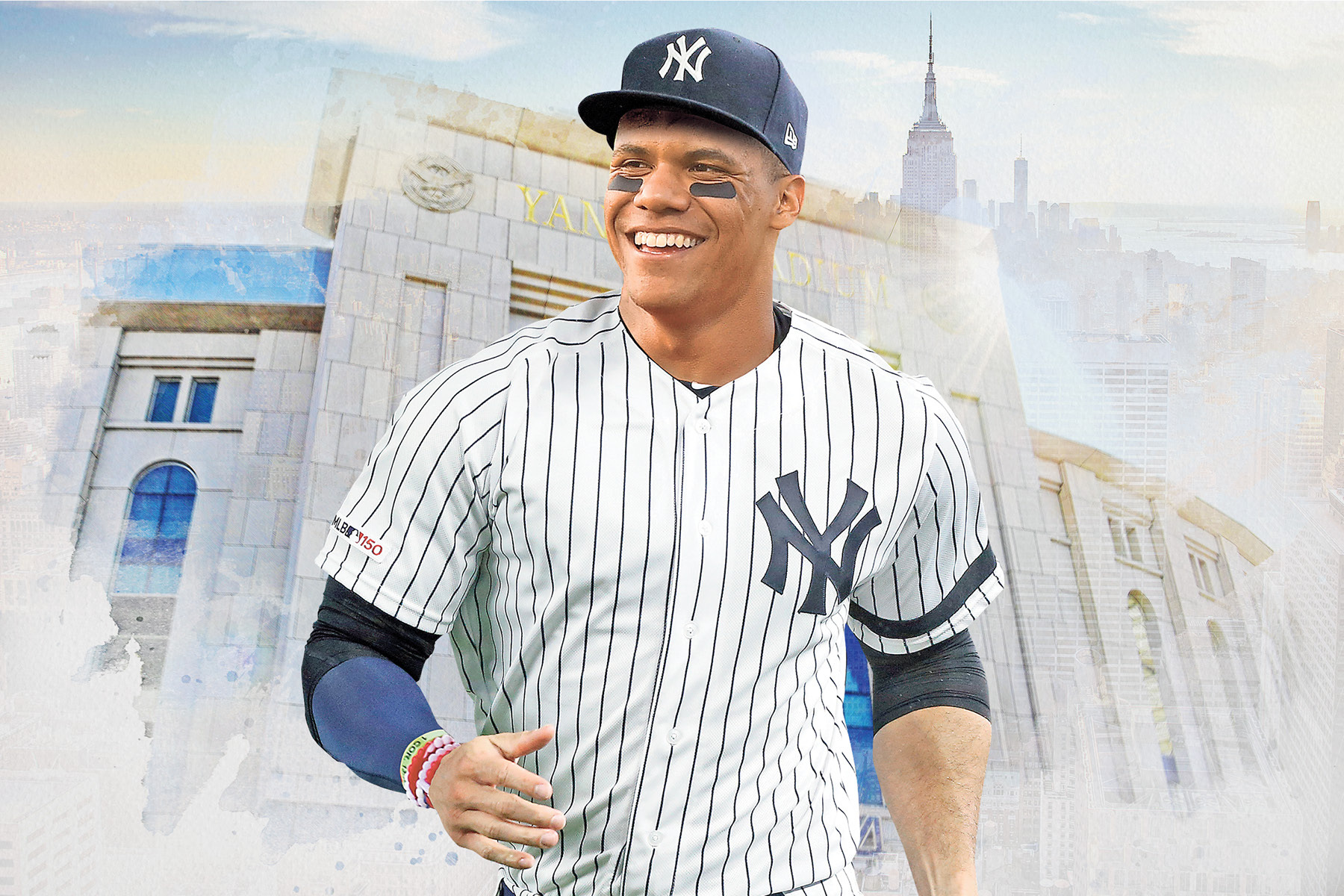
Honestly, if you look back at the winter of 2023, the vibes around the Bronx were pretty dire. The Yankees had just slogged through a 82-80 season. It was their worst finish since the early 90s, and the fan base was basically on the verge of a mutiny. Then, Brian Cashman pulled the trigger. The Yankees trade for Soto wasn’t just a transaction; it was a total emergency bypass for a dying offense.
When the news broke during the Winter Meetings in Nashville, it felt like one of those "wait, is this real?" moments. New York sent a massive package—five players, mostly pitching—to San Diego for one guaranteed year of Juan Soto and defensive specialist Trent Grisham. People called it a rental. Critics said they gave up way too much depth. But man, were they wrong?
The Price Tag Nobody Wants to Talk About
To get a generational talent like Soto, you've gotta pay. Most folks remember Michael King being the centerpiece, but the Padres really dug deep into the Yankees' farm system. They didn't just want arm talent; they wanted volume.
Here is exactly what the Yankees sent out:
- Michael King: A guy who had finally proven he could be a top-tier starter.
- Drew Thorpe: Their top pitching prospect at the time, a changeup specialist who ended up being a key piece in San Diego's later trade for Dylan Cease.
- Jhony Brito and Randy Vásquez: Two young, versatile arms that provided the Padres with the cheap innings they desperately needed after their TV deal collapsed.
- Kyle Higashioka: The veteran backup catcher who was a favorite of Gerrit Cole.
It was a lot of pitching to surrender. For a team that usually struggles to stay healthy, giving up four live arms in one go was a massive gamble. But the Yankees didn't care. They needed a lefty bat that could actually take a walk and protect Aaron Judge. They needed a guy who wouldn't blink under the lights of a Tuesday night in the Bronx.
Why the "Short Porch" Argument was a Myth
There’s this common misconception that the Yankees trade for Soto was purely about him hitting cheap home runs into the right-field seats. You know, the 314-foot "Yankee Stadium Specials."
Actually, the analytics tell a weirdly different story. During his 2024 season in pinstripes, Soto didn’t really rely on the short porch at all. He’s an all-fields hitter. In fact, some researchers pointed out that his expected home run total was actually lower at Yankee Stadium than it would have been at several other parks because the deep left-center gap swallowed up his opposite-field power. He didn't need the porch. He just needed the stage.
The 2024 Impact: By the Numbers
Soto didn't just fit in; he ignited the place. Pairing him with Aaron Judge created arguably the most terrifying 2-3 punch in baseball history. We aren't talking about "good for 2024" stats. We are talking about historic production.
Looking at his final 2024 regular-season line with the Yankees: He batted .288, which is solid, but the .419 on-base percentage is what changed everything. He walked 129 times. Think about that. Every time he stepped up, he was essentially a coin flip to end up on base. He crushed 41 home runs and drove in 109 RBIs. Most importantly, he scored 128 runs, mostly because Judge was hitting behind him.
The chemistry was undeniable. You'd see them in the dugout constantly talking hitting. Soto brought a "shuffle" and a swagger that the Yankees had lacked for a decade. He made the Yankees fun again, which—honestly—is worth more than the WAR (Wins Above Replacement) he provided.
The 2025 Free Agency Fallout
Now, here is where it gets sticky. Because the trade was for a player with only one year of control, the Yankees basically spent their entire 2024 season auditioning for Soto’s future. The plan was always: get him in the building, show him the pinstripes, let him feel the "Bleacher Creature" love, and hope he signs a $500 million+ contract.
But the 2025 offseason changed the landscape. As we saw, the crosstown New York Mets and Steve Cohen didn't exactly sit on their hands. The risk of the Yankees trade for Soto was always that it might end up being a legendary one-night stand.
What People Get Wrong About the Leverage
Some fans think the Yankees "lost" the trade if Soto left in free agency. That's a bad take. Even if he only stayed for 2024, he led them back to relevance. He gave them a window they didn't have. You don't trade for Juan Soto to win a spreadsheet; you do it to win a pennant.
Actionable Insights for the Future
If you’re a fan or an analyst looking at how this trade continues to ripple through MLB, keep an eye on these specific threads:
- Watch the Pitching Development: Keep tabs on Michael King and the prospects San Diego got. If King becomes a perennial Cy Young contender, the "cost" of the trade goes up in hindsight.
- The "Judge Protection" Effect: Notice how Aaron Judge’s numbers fluctuate when he doesn't have a high-OBP lefty like Soto hitting in front of him. The lineup protection was real and measurable.
- Luxury Tax Strategy: The Yankees took on Soto’s $31 million salary for 2024, which pushed them deep into the highest tax brackets. This affects their ability to sign depth pieces even now in 2026.
Basically, the deal was a masterclass in aggressive "win-now" management. It showed that the Yankees were still willing to burn the boats to get the best player available. Whether he stays for a decade or moves on, the 2024 season proved that the Yankees trade for Soto was the jolt of electricity the franchise desperately needed.
To stay ahead of how this affects the current roster, you should monitor the innings pitched by the remaining Yankee starters. The depth they traded away hasn't fully been replaced, and the stress on the current rotation is the direct "hidden cost" of that blockbuster night in Nashville.