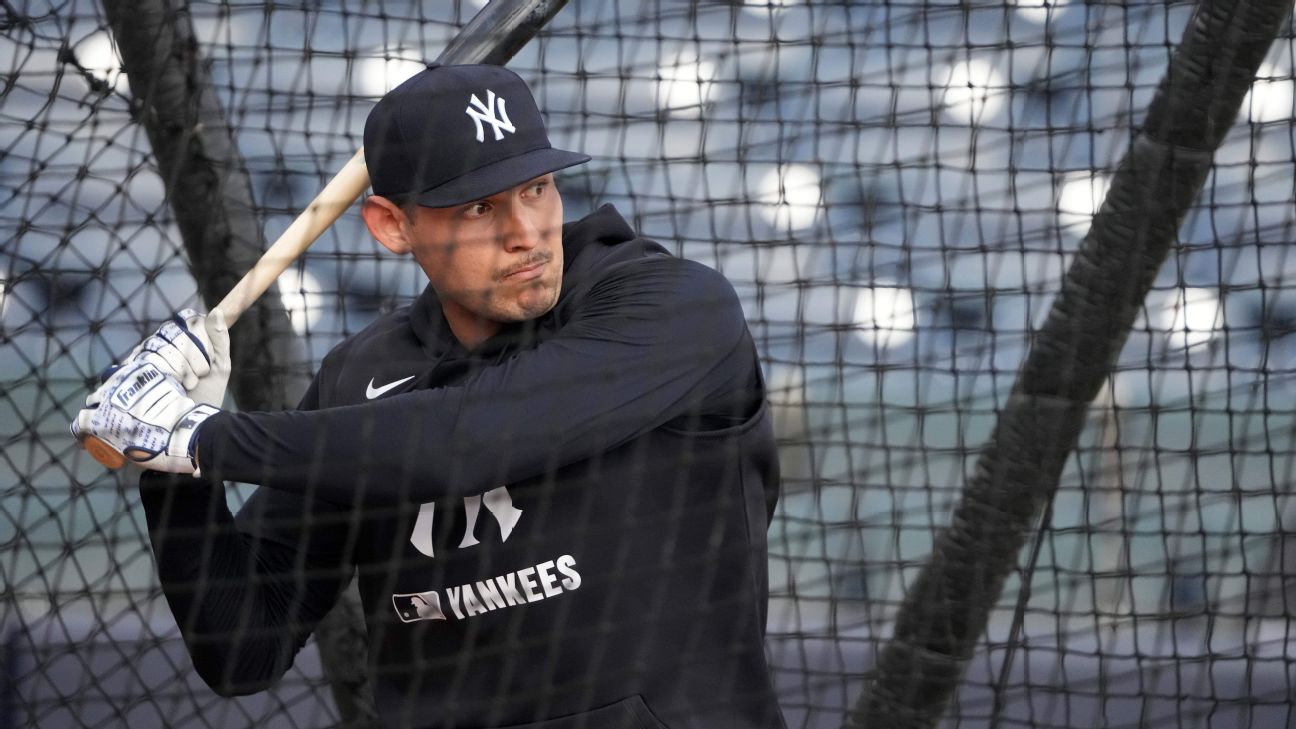
Baseball is a weird game. One day you’re a former sixth-overall pick with "can’t-miss" power, and the next, you’re the human equivalent of a chess pawn being shuffled across the AL East for "international bonus pool money." That’s the reality for Alex Jackson.
Most casual fans probably missed it when the New York Yankees moved on from Jackson. It wasn't a blockbuster. No sirens. No "breaking news" banners on the 6 PM local news. But for the Yankees, it was a cold, calculated bit of roster management that tells us exactly how they feel about their catching depth heading into 2026.
The Trade That Actually Happened
Let’s get the facts straight. The Yankees didn't just wake up and decide to dump Jackson. He was originally brought into the organization during that late 2024 swap with the Cincinnati Reds—the one where the Yankees sent fan-favorite Jose Trevino packing. At the time, Jackson was basically a "throw-in" alongside reliever Fernando Cruz.
Fast forward to July 2025. The Baltimore Orioles were in a full-blown catching crisis. Gary Sánchez, Maverick Handley, and even Adley Rutschman were all banged up. The O's needed a warm body who could catch a 98-mph heater without blinking.
The Yankees saw an opening. They traded Alex Jackson to the Orioles in exchange for $250,000 in international signing bonus pool allocation and a player to be named later (PTBNL).
It was a classic "sell high" on a guy who wasn't even on the 40-man roster.
Why Did the Yankees Let Him Go?
Honestly? Because Alex Jackson strikes out. A lot.
We’re talking about a guy who once hit .122 for the Rays. You can have all the raw power in the world—and Jackson does, he’s got legitimate light-tower power—but it doesn't matter if you can't touch a four-seamer. During his 2024 stint in Tampa, he hit a miserable .077 against fastballs. You just can’t survive in the Bronx with those numbers.
The Yankees’ catching room is currently crowded with younger, more versatile options:
- Austin Wells: The clear-cut starter who proved he can handle the lights.
- Ben Rice: A lefty bat they love who can play first or catch.
- J.C. Escarra: A name gaining some serious traction as a depth piece.
When you have that kind of left-handed power at the position, a right-handed "three-true-outcomes" backup like Jackson becomes redundant. Basically, the Yankees preferred the cash to spend on international teenagers over a 29-year-old backstop who might hit .150.
The Baltimore Resurgence (Sorta)
Here is the part that might make Brian Cashman look twice: Jackson actually wasn't terrible for Baltimore.
After the Yankees trade, Jackson suited up for the Orioles and put together a respectable .220/.290/.473 slash line across 91 plate appearances in 2025. He even swatted 5 home runs. For a backup catcher, those are "keep your job" numbers.
But as is the case with Jackson’s career, the stay was short. By November 2025, the Orioles—now healthy—didn't have room for him. They flipped him to the Minnesota Twins for an infielder named Payton Eeles.
Where He Is Now: January 2026 Update
If you’re looking for Alex Jackson today, he’s in the Land of 10,000 Lakes. On January 8, 2026, Jackson and the Twins settled on a one-year, $1.35 million contract to avoid arbitration. He’s slated to be the primary backup to Ryan Jeffers in Minnesota.
It’s funny how the league works. The Yankees traded him for "pool money," the Orioles used him as a band-aid, and now he’s making over a million dollars to sit behind the plate in the AL Central.
The Actionable Takeaway for Fans
So, what does this tell us about the Yankees' strategy?
First, stop expecting them to hold onto veteran "projects." If a guy isn't providing immediate defensive value or elite on-base skills, he's trade bait. The Yankees are prioritizing flexibility. By trading Jackson for international money, they essentially traded a backup catcher for a higher chance at signing the next star prospect out of the Dominican Republic or Venezuela.
If you're a Yankees fan, don't sweat the loss. The team is betting on Austin Wells’ development and the versatility of Ben Rice. The Alex Jackson era in Pinstripes was over before it really started, and frankly, that was always the plan.
Keep an eye on that international signing period. That's where the real "value" of the Alex Jackson trade will eventually show up. If the Yankees land a top-ranked shortstop prospect this summer, you can thank a backup catcher who spent most of his time in Triple-A Scranton.
Watch the waiver wires. The Yankees are likely to add another veteran "non-roster invitee" before Spring Training starts in February, but don't expect it to be a big name. They want cheap, disposable depth—exactly what Jackson was.