You think about the New York Yankees and your mind immediately goes to the icons. Ruth. Gehrig. Mantle. Jeter. It’s always the center fielders or the shortstops getting the glory, right? But honestly, if you look at the dirt between first and second, that’s where some of the most fascinating—and frankly, weirdest—stories in pinstripe history actually happened.
The Yankees second baseman history isn't just a list of guys who turned double plays. It’s a century-long saga of Hall of Famers, World Series MVPs on losing teams, and even a guy who literally forgot how to throw the ball to first base.
The Era of "Poosh 'Em Up" Tony
Before the 1920s, second base was kinda just... there. Then came Tony Lazzeri in 1926. He wasn't just a filler for the "Murderers' Row" lineup; the guy was a legit powerhouse. Imagine hitting 60 home runs and driving in 222 RBIs in the Pacific Coast League before even getting to the Bronx. That’s what he did in 1925.
When he joined the Yanks, he brought that same energy. On May 24, 1936, Lazzeri did something that still sounds fake: he drove in 11 runs in a single game. Eleven. He hit two grand slams that day against the Athletics. People called him "Poosh 'Em Up Tony" because that’s exactly what he did to runners on base. He finished his Yankee career with 1,157 RBIs, which is a number most modern second basemen couldn't reach in their wildest dreams.
"Flash" Gordon and the MVP Controversy
After Lazzeri, the torch went to Joe Gordon. They called him "Flash" because he was basically a gymnast at second base. He was the first American League second baseman to ever hit 20 home runs in a season, and he did it four times for the Yankees.
But here’s the thing most people get wrong about Gordon: his 1942 MVP win. Ted Williams won the Triple Crown that year. He hit .356 with 36 homers. He was objectively better. Yet, Gordon won the MVP because the writers loved his defense and the fact that the Yankees won the pennant. It’s probably the most debated MVP vote in the history of the sport. Gordon was incredible—a nine-time All-Star—but he’s forever linked to that one "robbery" of Ted Williams.
The World Series Hero Who Lost
We have to talk about Bobby Richardson. If you’re a trivia nut, you already know the big one. In 1960, the Yankees lost the World Series to the Pittsburgh Pirates (thanks to Bill Mazeroski’s walk-off). Even though the Yankees lost, Richardson was named the World Series MVP.
He’s still the only player from a losing team to ever win it.
He had 12 RBIs in that seven-game series. For a guy who hit 34 home runs in his entire career, that kind of postseason explosion was unheard of. Richardson was the quintessential "Yankee Way" player—slick glove, short swing, and always delivered when the lights were brightest. He famously caught the final out of the 1962 World Series, a screaming line drive off the bat of Willie McCovey that would have won the game for the Giants.
Willie Randolph and the Longest Tenure
If you want to talk about longevity, you start and end with Willie Randolph. He played 13 seasons in the Bronx (1976–1988). That’s more games at second base than anyone else in team history.
Randolph wasn’t flashy. He didn't hit for much power, but he had an eye like a hawk. He walked over 1,000 times as a Yankee. He was the stabilizing force during the "Bronx Zoo" years when George Steinbrenner, Billy Martin, and Reggie Jackson were constantly at each other's throats. Basically, Willie was the adult in the room. He leads all Yankees second basemen in runs, hits, and stolen bases.
The Knoblauch "Yips" and the Soriano Surge
The late 90s were... complicated. The Yankees traded for Chuck Knoblauch in 1998, thinking they were getting a "fundamentally sound" star. And for a while, they were. He was a key part of that 114-win team.
Then the yips happened.
Suddenly, the guy who had won a Gold Glove couldn't make the routine throw to first. He famously hit Keith Olbermann's mother in the stands with an errant throw. It was painful to watch. Eventually, the Yankees moved him to left field, which paved the way for Alfonso Soriano.
Soriano was the polar opposite of Randolph. He was a free swinger with terrifying power. In 2002, he nearly had a 40/40 season, finishing with 39 homers and 41 steals. He was a shooting star—bright, loud, and gone too soon after being traded for Alex Rodriguez.
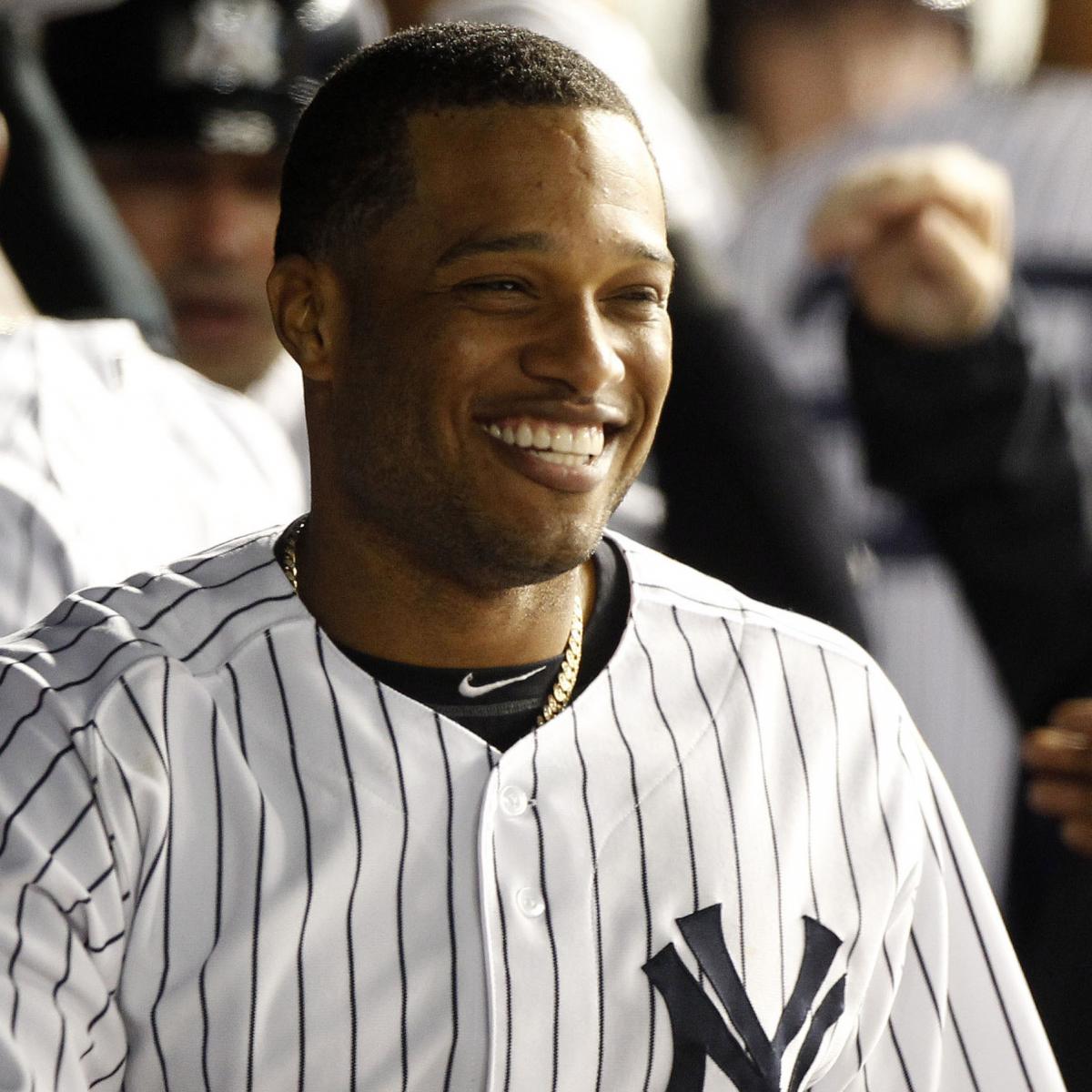
Robinson Canó: The Natural
Then came Robbie. Honestly, from 2005 to 2013, it looked like Canó was playing a different game. Everything looked effortless. He’d turn a double play with a sidearm flick that looked like he was just tossing a piece of trash into a bin.
Canó leads all Yankees second basemen in:
- Batting Average (.309)
- Home Runs (204)
- Doubles (375)
- Slugging Percentage (.504)
The way he left for Seattle still stings for a lot of fans, and the subsequent PED suspensions definitely muddied his legacy. But on pure talent? He’s probably the best to ever do it at that position for New York.
Gleyber Torres and the Current State
Lately, the position has been a bit of a rollercoaster. Gleyber Torres arrived in 2018 like a phenom, hitting 38 home runs in 2019. Then he struggled with a move to shortstop, came back to second, and has spent the last few years being one of the most polarizing players on the roster.
One day he’s a line-drive machine; the next, he’s making a head-scratching base-running error. But even with the ups and downs, he’s already high up on the franchise home run list for middle infielders.
Actionable Insights for Fans and Collectors
If you’re looking to dive deeper into Yankees second baseman history, here’s what you actually need to do:
- Watch the 1962 World Series Game 7 Ending: If you haven't seen Richardson's catch of the McCovey liner, find it on YouTube. It’s the definition of "clutch defense."
- Check the WAR Leaders: If you value modern stats, look at the fWAR (Fielding Independent Wins Above Replacement) for Willie Randolph. He’s often overlooked because he didn't have "counting stats" like 3,000 hits, but his 51.4 fWAR as a Yankee is staggering.
- Visit Monument Park: When you're at the stadium, don't just look at the big plaques. Find Willie Randolph’s plaque (added in 2015). It’s a reminder that steady consistency is just as valuable as a 40-home run season.
- Study the 1942 MVP Race: Go to Baseball-Reference and compare Joe Gordon's stats to Ted Williams'. It's the best way to understand how much the "value" of a player has changed in the eyes of voters over the last 80 years.
The history of the keystone in the Bronx is a mix of Hall of Fame greatness and bizarre statistical anomalies. From Lazzeri’s 11-RBI game to Richardson’s "losing" MVP, the position has always been about more than just standing in the middle of the diamond. It's about the guys who held the dynasty together.