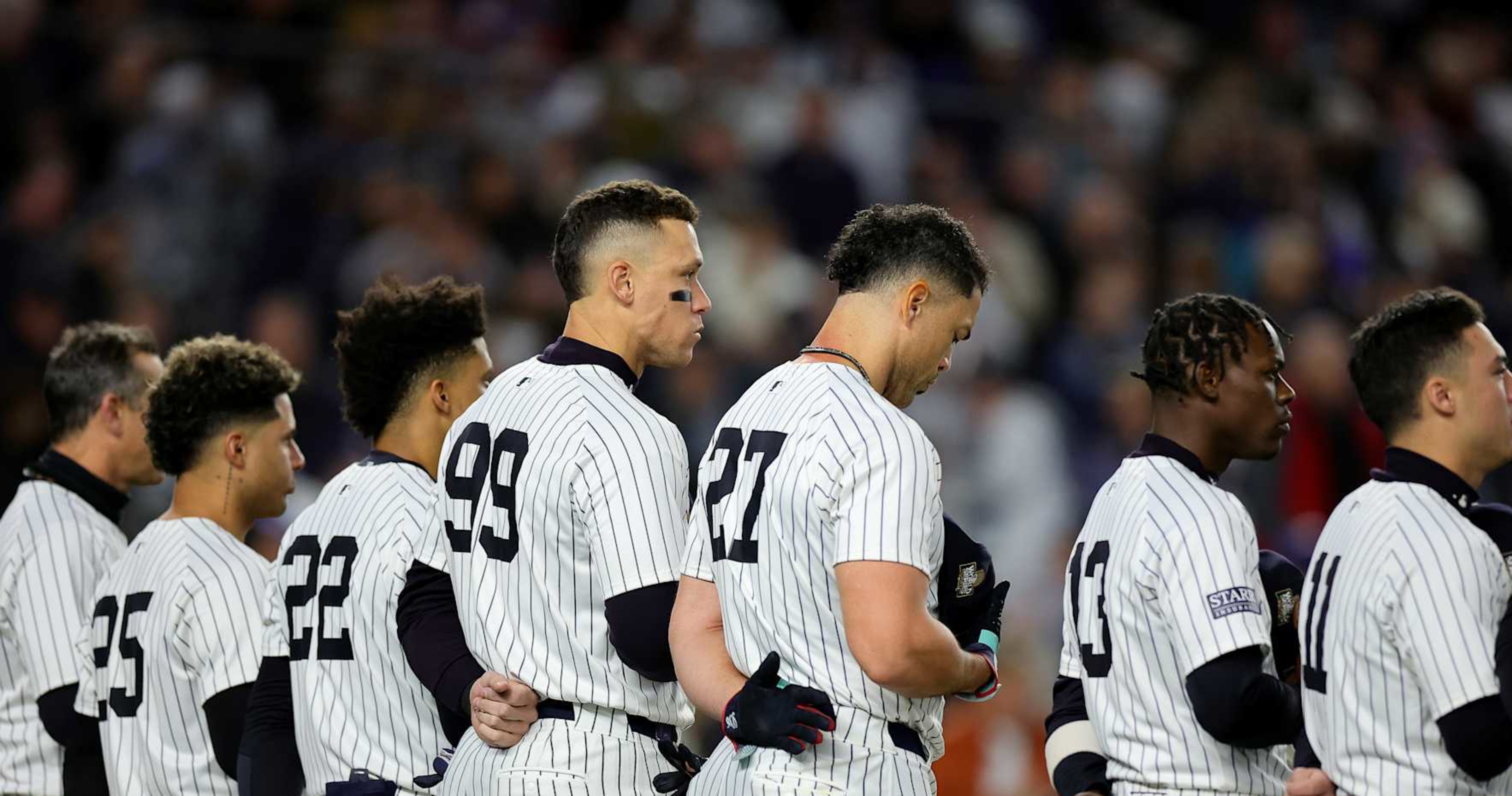
If you’ve ever wondered why the Steinbrenner family doesn't just write a blank check for every superstar on the market, look no further than the 2024 season. It was a year of massive swings—both on the field and in the bank account. Honestly, the term "yankees salary cap 2024" is a bit of a misnomer because MLB doesn't have a hard cap like the NFL. Instead, they have the Competitive Balance Tax (CBT), a beast that New York has been wrestling with for decades.
In 2024, that beast bit back to the tune of $62,512,111.
That’s the actual penalty the Yankees had to pay just for the "privilege" of having a roster that cost over $300 million. When you’re at that level of spending, you aren't just paying players; you're paying a massive surcharge to the league that gets redistributed to smaller-market teams. It's kinda wild when you think about Hal Steinbrenner essentially subsidizing the payrolls of divisional rivals.
The Brutal Math of the 2024 Luxury Tax
The base threshold for the CBT in 2024 was set at $237 million. For most teams, that’s plenty of breathing room. For the Yankees, it’s a hurdle they cleared before spring training even really got moving.
Because the Yankees have been repeat offenders—surpassing the threshold for three or more consecutive years—they don't just pay a flat rate. They get hit with the highest possible penalties. We’re talking about a 50% tax on every dollar spent over that initial $237 million mark. But wait, it actually gets worse.
Surcharges and "The Cohen Tax"
MLB uses a tiered system. Once you go $60 million or more over the base threshold, you hit what people call the "Steve Cohen" tier. In 2024, the Yankees' final tax payroll landed at approximately **$316.19 million**.
This put them deep into the surcharge territory. At the highest level, they were paying a 60% surcharge on top of the base 50% penalty for those top dollars. Basically, for every extra million dollars they spent on a mid-season trade or a late free-agent signing, it was actually costing the front office over $2 million.
Who Took the Biggest Slice of the Pie?
You can't talk about the yankees salary cap 2024 without looking at the individual checks. It’s a top-heavy roster, and that’s by design. The strategy has always been to pair generational superstars with "cheap" homegrown talent.
- Aaron Judge: $40,000,000
- Gerrit Cole: $36,000,000
- Giancarlo Stanton: $32,000,000
- Juan Soto: $31,000,000
These four guys alone accounted for nearly $140 million of the tax payroll. To put that in perspective, there were several MLB teams whose entire 26-man rosters cost less than those four Yankees stars combined.
The Juan Soto trade was the ultimate "all-in" move for 2024. His $31 million salary was a record for a player in their final year of arbitration. While he was worth every penny on the field, that $31 million salary actually cost the Yankees closer to **$60 million** when you factor in the tax penalties associated with his slot on the roster.
The "Dead Money" Problem
One thing fans often forget is that the yankees salary cap 2024 includes money paid to people who aren't even in the dugout. In 2024, the Yankees were still carrying the ghost of Aaron Hicks' contract (about $9.26 million for tax purposes) and even a chunk of Josh Donaldson's buyout.
When you're trying to stay under a budget, having $15 million in "dead money" is like trying to win a race while wearing a weighted vest. It limits the ability to add depth at the trade deadline, which is why we saw the Yankees being relatively surgical with moves for players like Jazz Chisholm Jr. (who, luckily for them, had a very team-friendly tax hit of under $1 million for the remainder of the season).
Why This Matters for the Future
The 2024 season wasn't just about winning a pennant; it was a financial crossroads. Hal Steinbrenner has been very vocal—maybe too vocal for some fans' liking—about the fact that a $300 million payroll isn't sustainable long-term.
When the Yankees got the bill for $62.5 million in December 2024, it solidified the plan for 2025 and 2026. The goal is to eventually reset the tax clock. If a team can stay under the threshold for just one year, their penalty rate drops from 50% back down to 20%. That’s a massive swing in savings.
However, with Gerrit Cole opting out (and then staying) and the massive bidding war for Juan Soto’s long-term services, "resetting" is easier said than done. The Yankees are essentially locked into a cycle where they have to decide if the tax hit is worth the talent. In 2024, they decided it was. They ended up as the third-highest tax payers in the league, trailing only the Los Angeles Dodgers ($103 million) and the New York Mets ($97 million).
Actionable Insights for Fans
Understanding the yankees salary cap 2024 helps you predict what the front office will do next. Here’s how you can use this info:
- Watch the 40-man roster moves: Every player added to the 40-man roster, even a league-minimum guy, adds to the CBT total. If the Yankees start cutting veteran depth for younger, pre-arb players, it's a sign they are feeling the tax squeeze.
- Don't just look at the "Cash" salary: When you see a contract reported, look for the Average Annual Value (AAV). That is what actually matters for the luxury tax, not the actual cash paid out in a specific year.
- Draft Pick Penalties: Remember that being $40 million over the cap doesn't just cost money; it moves your highest draft pick back 10 spots. This is why the Yankees are often picking later in the first round than their record would suggest.
The 2024 payroll was a massive statement of intent. It showed that despite the complaints about "sustainability," the Yankees are still willing to set fire to $60 million in tax penalties if it means putting a World Series-caliber team on the dirt in the Bronx.
To stay ahead of the next financial cycle, keep a close eye on the mid-season luxury tax projections that usually drop in July. This is when the front office makes the hard choice between adding a piece for a playoff run or staying under a specific surcharge threshold to protect their draft capital.