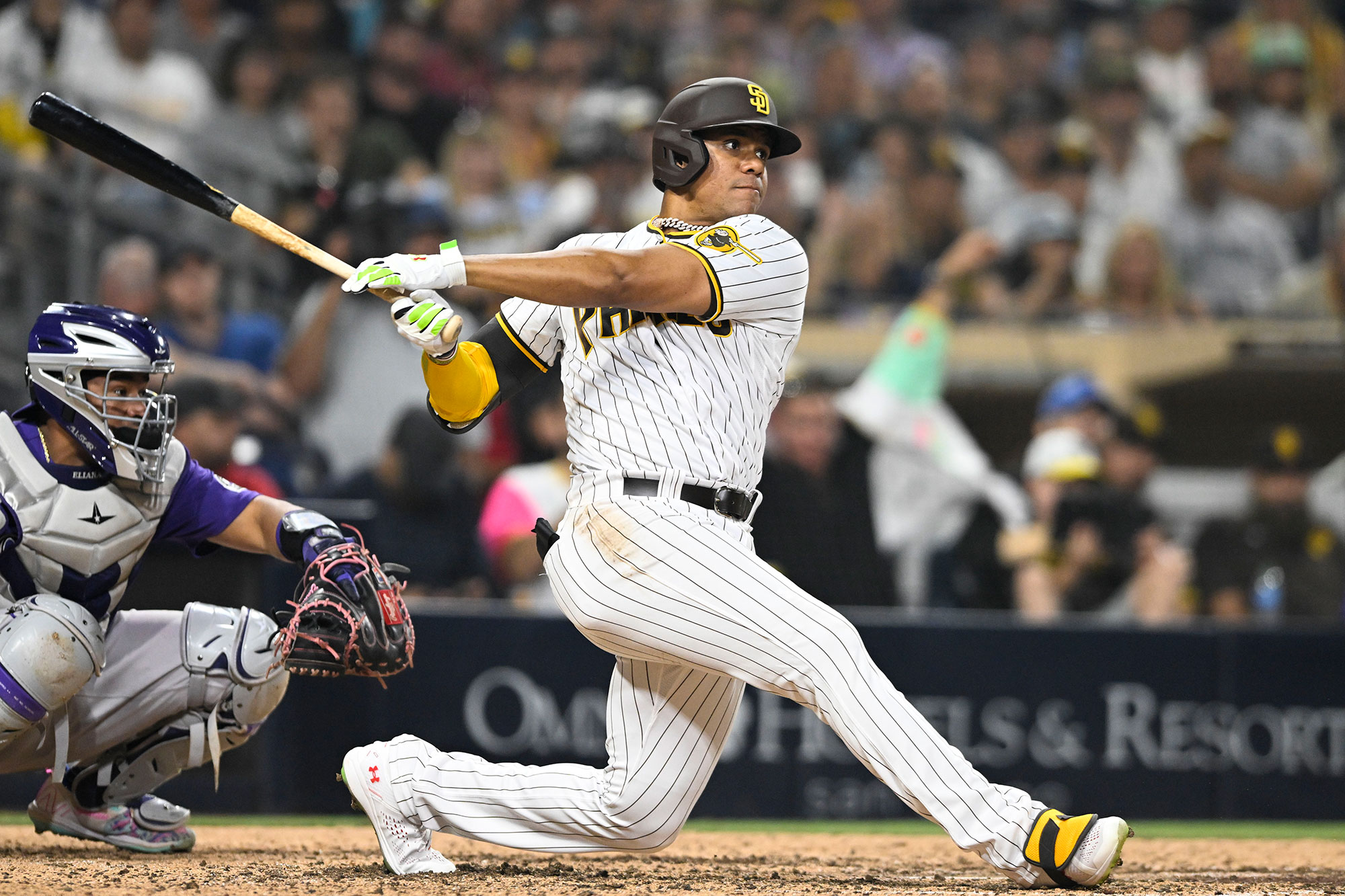
Everyone remembers where they were when the notifications started blowing up. It was late December 2023. The winter meetings had that weird, frantic energy, and then the bomb dropped: The New York Yankees acquired Juan Soto. It wasn't just a trade. It was a statement. Brian Cashman, usually the guy playing 4D chess with spreadsheets, basically pushed his entire stack of chips into the middle of the table. He knew the 2023 season—an 82-80 disaster—wasn't just a fluke. It was a warning.
People still argue about whether the Yankees "won" the trade. Honestly? It's complicated. You've got fans who see Soto’s 41 home runs in 2024 and say it was worth every penny. Then you have the skeptics who look at Michael King carving it up in San Diego and wonder if the Bronx gave up too much for a "rental."
Let’s get into the weeds of what actually happened.
The Yankees Juan Soto Trade: Breaking Down the Roster Shuffle
To get a generational talent like Soto, you don't just send over some bench bats. The Padres weren't looking for projects; they were looking for arms. The Yankees sent a literal busload of pitchers to Southern California.
The centerpiece for San Diego was Michael King. At 28, King was finally emerging as a legitimate starter, and losing him hurt the Yankees' depth more than they wanted to admit at the time. Along with King, the Yankees packed up Jhony Brito, Randy Vásquez, and their top pitching prospect, Drew Thorpe. They even tossed in veteran catcher Kyle Higashioka.
In return? The Yankees got Soto and center fielder Trent Grisham.
Basically, the Yanks traded five players for two. It was a classic "quality over quantity" play. Cashman was betting that Soto’s left-handed bat would feast on the short porch in right field. He wasn't wrong. Soto ended his 2024 campaign with a .989 OPS.
But here is what most people get wrong about the deal. It wasn't just about the hitting. It was about the culture.
For years, the Yankees had this "three true outcomes" problem. They struck out. A lot. Soto changed that. He brought a swagger that the Bronx hadn't seen in a decade. He’d do the "Soto Shuffle," stare down pitchers, and take walks that felt like doubles. He and Aaron Judge became the most feared duo in baseball.
Why the Price Tag Was So High
You might wonder why San Diego gave him up. Simple: money. The Padres were facing a massive debt service issue and needed to shed payroll. Soto was headed for a record-breaking arbitration salary—which he eventually settled with the Yankees for $31 million.
Think about that. $31 million for one year of work.
The Padres knew they couldn't afford to keep him long-term, and they didn't want to lose him for nothing but a draft pick. The Yankees took advantage of that desperation.
The Free Agency Fallout and the $765 Million Heartbreak
This is where the story gets a bit spicy. Most Yankees fans assumed that once Soto put on the pinstripes, he’d never want to take them off. The "Soto to the Mets" rumors felt like noise. Until they weren't.
In December 2024, the nightmare scenario happened for the Bronx. Juan Soto signed a 15-year, $765 million deal with the New York Mets.
It was a gut punch. The Yankees reportedly offered $760 million over 16 years. We’re talking about a difference of $5 million and one year. But the Mets’ deal was structured better—no deferred money and a $75 million signing bonus.
There was even some weird drama about a suite at Citi Field. Reports came out that Soto wanted a luxury suite for his family. Cashman famously said, "If they want suites, they buy them." Meanwhile, Steve Cohen basically said, "Here are the keys to the stadium."
It sounds petty, but in the world of superstar egos, that stuff matters. Sorta makes you wonder if the Yankees' rigid "tradition" finally backfired.
Was the Trade Still Worth It?
If you ask a Yankees fan today, they’ll probably give you a conflicted look. On one hand, Soto helped lead them to the 2024 World Series. He hit the home run that sent them there. You can’t put a price on that kind of memory.
On the other hand, the Yankees are now without Soto and without the five players they traded to get him. Michael King turned into an ace for the Padres. Drew Thorpe is a legit middle-of-the-rotation guy.
The Yankees went "all-in" and came up just short of a trophy.
Moving Forward: Life After the Soto Era
So, what do the Yankees do now? You can't just replace 40 home runs and a .420 on-base percentage.
The front office is currently looking at guys like Corbin Burnes to bolster the rotation, trying to prove that "the best defense is a great offense." They have the money they would have spent on Soto, but the market is thin.
They've also been linked to Anthony Santander and Teoscar Hernández. Good players? Sure. Juan Soto? Not even close.
If you're a fan or a collector, here is the actionable takeaway:
- Don't panic on the roster yet. The Yankees still have Judge, and they have the financial flexibility to overpay for three "B+" players to fill the "A++" hole Soto left.
- Watch the pitching market. Because they lost Michael King and Thorpe in the original trade, the Yankees' rotation is surprisingly fragile. Expect them to be aggressive on the trade market for arms this summer.
- Appreciate the 2024 season for what it was. It was a one-year mercenary mission that almost worked.
The Yankees Juan Soto trade will go down as one of the boldest moves in franchise history. It showed that the "Evil Empire" still has some life in it, even if the ending wasn't the fairytale everyone in the Bronx expected.
Keep an eye on the luxury tax threshold. If the Yankees don't spend that "Soto money" by the 2026 trade deadline, the fans are going to start getting restless again. And honestly, who could blame them?
Next steps for you: If you're following the 2026 roster reconstruction, check out the latest arbitration projections for the Yankees' remaining core to see how much "Soto savings" they actually have to play with.