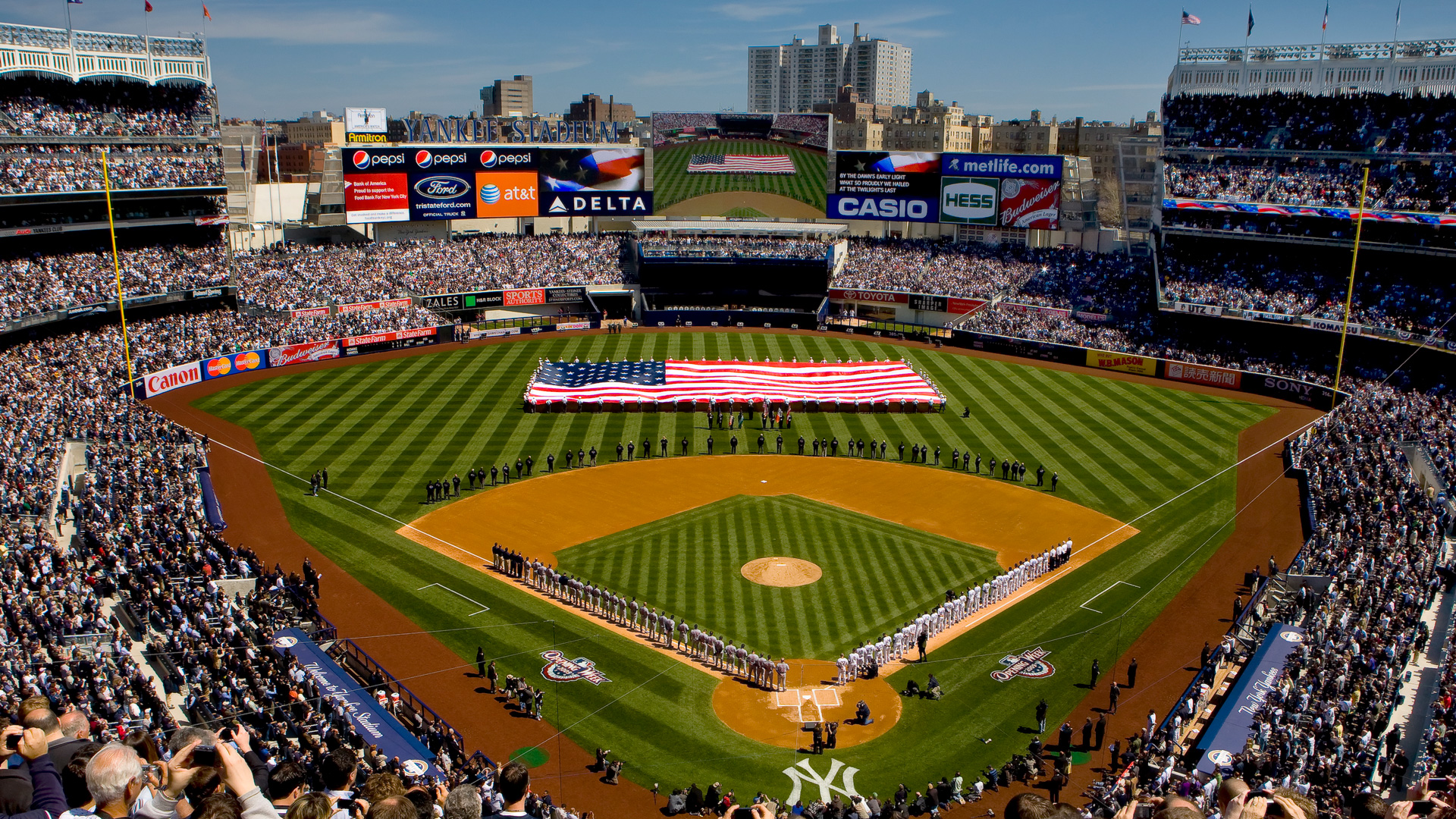
Walk into the House that Jeter Built on a humid July night against the Red Sox and it feels like the entire population of a small midwestern city is breathing down your neck. It’s loud. It’s cramped in the concourses. It’s exactly what baseball is supposed to be. But if you actually try to pin down how many people fit in Yankee Stadium, you’ll realize the answer isn't a single, static number.
It’s a moving target.
The official capacity for baseball is generally cited at 46,537. That’s the "brochure" number. But honestly, if you look at the box scores for a high-stakes postseason game, you’ll see attendance figures climbing past 49,000. How? Because "capacity" in a modern stadium is more about fire codes and ticketed seats than the actual physical space where a human body can stand.
The Official Count vs. The Real World
When the "New" Yankee Stadium opened in 2009, it actually held fewer people than the original 1923 structure. The old stadium—the one where Babe Ruth and Lou Gehrig lived—could cram in over 57,000 people by the time it was renovated in the 70s. The current version in the Bronx traded raw volume for luxury. They wanted wider seats, more legroom, and, most importantly, those massive premium suites that make the Steinbrenner family a fortune.
The 46,537 figure includes the standard grandstand seating, the bleachers (still the best place to sit, don't argue with me), and the suite levels. But that’s just the seated capacity.
Why the numbers spike
You’ve got Standing Room Only (SRO) tickets. These are the lifeblood of October baseball. Yankee Stadium has several designated areas where you can just... hang out. The Pinstripe Pub, the Mastercard Batter’s Eye Deck, and those various "social spaces" they’ve added recently mean the stadium can comfortably (or uncomfortably) hold nearly 50,000 fans when the stakes are high enough.
- Baseball games: Roughly 46,537 seated, but can push 49,000+ with SRO.
- Soccer (NYCFC): Usually capped much lower, often around 28,000 to 30,000, because they block off the upper decks to keep the atmosphere tight.
- Football (Pinstripe Bowl): Typically hovers around 50,000 because of the way the field is laid out over the diamond.
- Concerts: This is the wild card. Depending on stage placement, a Bad Bunny or Madonna concert can push the capacity toward 54,000 because the entire outfield becomes a "standing pit."
The Ghost of 1923: What We Lost in Scale
It’s weird to think that a stadium built over a century ago held more people than the billion-dollar masterpiece we have now. The original Yankee Stadium was a behemoth. In its absolute peak, before the 1970s renovation, it could reportedly hold over 80,000 people for boxing matches. Jack Dempsey vs. Georges Carpentier? Huge.
But modern fans are, well, bigger. And we want cupholders.
The 2009 redesign focused on the "fan experience." This is code for "we can charge more for a seat if there are fewer of them and they are more comfortable." If you look at the layout of the current stadium, the "Great Hall" entrance takes up a massive amount of square footage that, in the old days, would have just been more ramps and seats.
Beyond the Seats: The Social Spaces
Yankee Stadium has undergone some "stealth" capacity changes over the last five or six years. They realized that younger fans—Gen Z and Millennials—don't actually like sitting in a plastic chair for three and a half hours. They want to walk around.
In 2017, the Yankees removed about 2,000 seats to create "social gathering spaces." They added the Toyota Terrace and the Landshark Bar. This actually lowered the official seated capacity but made the stadium feel more crowded because everyone is standing in the same four bars.
Basically, the Yankees traded seats for vibes.
Comparing the Bronx to the Rest of the League
Is 46,000 a lot? In the context of MLB, it’s upper-middle class. It’s not the massive cavern that is Dodger Stadium, which still holds 56,000 people. It’s also not the intimate (or tiny, depending on your view) Progressive Field in Cleveland.
- Dodger Stadium: 56,000 (The King of Capacity)
- Oakland Coliseum: Over 56,000 (though they usually tarp off the top so it's more like 35,000)
- Yankee Stadium: ~46,500
- Fenway Park: ~37,700 (Tiny, cramped, historic)
The Yankees have found this "Goldilocks zone." It’s big enough to feel like an event, but small enough that they can keep ticket prices high due to "scarcity."
The Logistics of 50,000 People
Have you ever tried to leave the stadium after a walk-off win against the Rays? It’s a nightmare. The 4 train platform is a sea of humanity. This is why the capacity isn't just about seats; it's about egress.
New York City fire marshals are incredibly strict about how many people can be in that building. Every person entering—from the guy in the Legends Suite eating lobster to the kid in the bleachers—is counted by the turnstiles in real-time. If the Yankees go over their permitted limit, the fines are massive.
The "Paid Attendance" Lie
Here is a little secret about sports: the number they announce on the jumbotron isn't the number of people in the building. It’s the number of tickets sold.
If the Yankees sell 45,000 tickets, but a massive rainstorm keeps 10,000 people at home in Jersey, the "official" attendance is still 45,000. That’s why you might look at a TV screen, see a half-empty stadium, and hear the announcer say the park is nearly full.
What to Know Before You Go
If you’re planning to be one of the 46,537 people in the building, you need to understand the geography. The stadium is divided into four main levels: Field, Main, Terrace, and Grandstand.
The Grandstand is where you’ll find the cheapest tickets. It’s high up. You’ll feel the wind. But honestly? The sightlines are better than the 200-level "Main" seats because you have a bird's eye view of the shifts.
The Bleachers are sections 201 through 239. This is where the Bleacher Creatures live. If you sit here, expect to stand for the "Roll Call" in the first inning. Also, don't wear a Red Sox jersey here unless you have very thick skin.
Actionable Advice for Your Visit
To make the most of the stadium's capacity and layout, follow these steps:
- Check the "Real" Capacity: If you want a crowded, electric atmosphere, look for games where the "Tickets Remaining" map on the secondary market is mostly grayed out. Rivalry games (Mets, Red Sox, Blue Jays) are the only ones that truly test the stadium's 49,000+ upper limit.
- Arrive Early for Social Spaces: Since the stadium removed seats for standing areas, the best spots in the Batter’s Eye Deck fill up 45 minutes before first pitch. If you have a cheap Grandstand ticket, you can "upgrade" your experience by just standing at the railings in the 100-level social areas.
- Use the Secret Gates: Most people crowd into the Great Hall at Gate 6. It’s a bottleneck. Gate 2 and Gate 8 are usually significantly faster, even if it means walking an extra five minutes around the perimeter.
- Monitor the Secondary Market: Because the Yankees rely on corporate "season ticket" holders who don't always show up, you can often find "Legends Suite" seats for a fraction of the retail price on the morning of a weekday afternoon game. You won't change the capacity, but you'll definitely change your comfort level.
Yankee Stadium is a cathedral of baseball, but it's also a feat of modern crowd management. Whether it's 46,000 or 52,000 for a concert, the building is designed to handle the weight of New York's expectations. Just don't expect to leave the parking garage in under an hour.