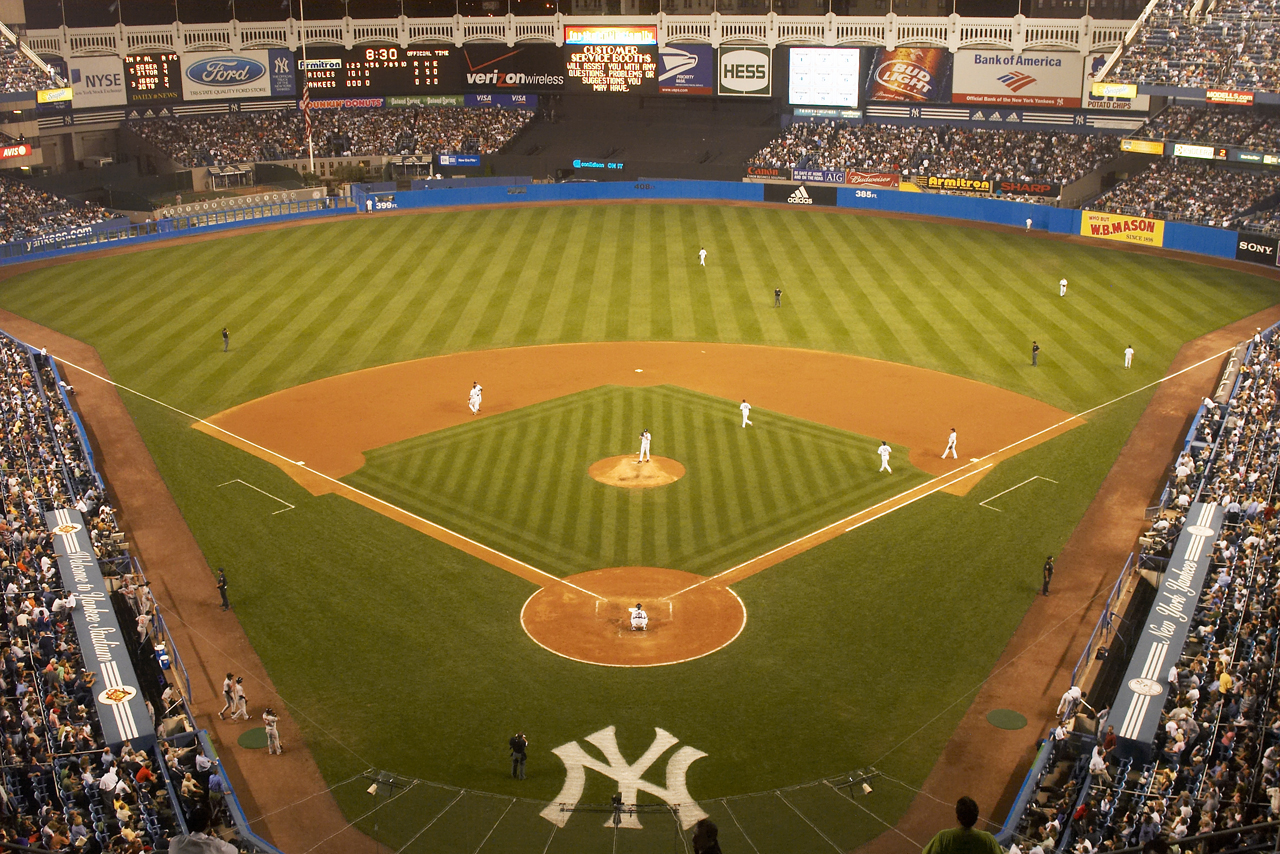
You're standing on 161st Street, the elevated 4 train is rattling overhead, and the smell of dirty water dogs is thick in the air. It’s Bronx magic. But once you pass through those high-tech security gates, the reality of the massive concrete "Cathedral" hits you. Finding your spot in the Yankee Stadium capacity seating layout isn't always as simple as looking at a row number on a digital screen. It’s huge. Honestly, it’s a bit overwhelming if you haven't been there a dozen times.
Most people just look for the cheapest seat. Big mistake. The stadium officially holds 46,537 people for baseball games, but that number is a bit of a moving target. If you include the standing-room-only (SRO) spots, the crowd can swell well past 50,000. It’s a city within a city.
The Reality of the Numbers
When the "new" stadium opened in 2009, replacing the House That Ruth Built, the capacity actually dropped. The old place could cram in nearly 57,000 fans in its final years. The current version trades raw volume for "luxury." You've got wider seats, more legroom (well, in some sections), and a staggering 68 luxury suites.
But here is the thing: not all 46,537 seats are created equal. You’ve got the Legends Suite, where people eat five-star lobster while you’re eating a bucket of fries in the 400s. Then there’s the Bleachers. Section 203 is where the "Bleacher Creatures" live. If you sit there, you better know the Roll Call. If you don't shout the players' names at the top of the first inning, you’re basically an outsider. It’s loud. It’s rowdy. It’s the soul of the stadium.
The Breakdown of the Tiers
If you’re looking at a map, it’s basically three main decks.
- The Field Level (100s). This is where the magic happens.
- The Main Level (200s). Good balance of price and view.
- The Terrace/Grandstand (300 and 400 levels). This is high up. Like, "hope you didn't forget your binoculars" high up.
Don't let the "Grandstand" name fool you. While these are the most affordable seats in the Yankee Stadium capacity seating chart, they can feel pretty steep. If you have vertigo, maybe stick to the 100s. Seriously.
Why the Seating Map is Kinda Lying to You
Have you ever bought a ticket that said "Obstructed View"? In the old stadium, that meant you were sitting behind a giant steel pole. In the new stadium, the obstructions are different. Sometimes it’s a glass partition. Sometimes it’s the way the Mohegan Sun Sports Bar hangs over the centerfield fence.
The Yankees have tried to fix this. They actually removed about 2,100 seats back in 2017 to create social spaces. They realized that younger fans don't want to be strapped into a plastic chair for four hours. They want to wander. They want to stand at a drink rail and look at their phones while a game happens in the background. This shifted the physical Yankee Stadium capacity seating count slightly, trading chairs for "standing room" zones like the Pinstripe Pass areas.
The Pinstripe Pass Factor
This is a relatively new thing. For about twenty bucks, you get into the stadium and a "free" beer. But you don't get a seat. You are part of the capacity, but you aren't in the seating chart. You’re a nomad. You hang out at the Toyota Terrace or the Mastercard Batter’s Eye Deck. It’s a great way to see the game on a budget, but your feet will hate you by the seventh inning stretch.
The Best Seats Nobody Talks About
Everyone wants to be behind the dugout. Sure, that's cool. But the pros look for seats in the 200 Level, specifically sections 211 through 217 or 223 through 227.
Why? Elevation. You are high enough to see the play develop—like seeing the shortstop shade toward second base before the pitch is even thrown—but close enough to still hear the pop of the catcher's mitt. Plus, the 200 level is covered by the overhang of the 300 level. If a sudden Bronx thunderstorm rolls in (and they always do in July), you stay bone dry while the folks in the $500 field seats are sprinting for the concourse.
Avoid the "Death Valley" Sun
If you’re going to a 1:05 PM Saturday game, the sun is your enemy. The third-base side (the "Home" side) gets the shade first. If you’re sitting in the right-field bleachers or the 100-level seats in right field, you are going to bake. I’ve seen people come out of Section 104 looking like boiled lobsters. Bring sunscreen or sit on the third-base side. Just do it.
Concerts and Other Events
The Yankee Stadium capacity seating changes completely when a stage is dropped into center field. For a massive show—think Bad Bunny or Metallica—the capacity can jump toward 50,000+ because the entire field becomes a standing-room "pit" or has temporary folding chairs.
Watching a concert here is... different. The acoustics aren't great. It was built for the crack of a bat, not the bass of a stadium tour. But the energy? Unmatched. When the lights go down and you see 50,000 phone lights glowing from the Bronx to Manhattan, it’s pretty special.
Football is another beast entirely. When NYCFC (soccer) or the Pinstripe Bowl (college football) comes to town, the field is laid out awkwardly. The sightlines for soccer are, frankly, weird. You're sitting in a baseball stadium watching a rectangular sport. Some seats that are "prime" for baseball become "terrible" for football because you’re 100 yards away from the action.
Technical Details: By the Numbers
If you’re a data nerd, here’s the rough breakdown of how the 46,537 seats are distributed. It’s not an exact science because the Yankees shift things around for suites and "standing room only" areas, but it's close:
- Field Level: Roughly 15,000 seats.
- Main Level: Around 8,000 seats.
- Suites/Club Seats: Approximately 4,500 luxury spots.
- Grandstand/Terrace: The remaining 18,000+ seats.
Most of the "missing" numbers in the official count come from the fact that the bleachers are benches, not individual chairs. They calculate capacity based on 18 inches of "butt space" per person. If the guy next to you had three buckets of chicken, that 18 inches disappears pretty fast.
Accessibility and Comfort
Modern ADA requirements mean the Yankee Stadium capacity seating includes a significant number of wheelchair-accessible spots. These are actually some of the best "underrated" views in the house. They are usually located at the back of a section, meaning no one is standing up in front of you.
The seats themselves are 19 to 24 inches wide. That’s a huge upgrade from the old stadium, where you were basically intertwined with your neighbor. The legroom in the 400 level is still tight, though. If you're over six feet tall, your knees will be touching the back of the head in front of you. It’s just the nature of the beast.
How to Maximize Your Experience
Don't just buy the first ticket you see on a resale site. Look at the "View from my seat" tools. There are plenty of real-fan photos online that show the actual perspective.
- For the budget traveler: Buy a Pinstripe Pass. Use the saved money for a $20 beer. Stand at the drink rails in center field.
- For the family: Look for the "Family Sections." They are usually in the 400 level, and they are alcohol-free. No one wants their kid hearing a drunken rant about the bullpen in the 4th inning.
- For the high roller: The Delta SKY360 Suite. You get padded seats and access to a climate-controlled lounge. It’s basically not even like being at a ballgame. It’s like being in a very fancy airport terminal that happens to have a baseball game outside.
Actionable Next Steps for Your Visit
When you're planning your trip to see the Bronx Bombers, follow these steps to ensure you actually enjoy the Yankee Stadium capacity seating you paid for:
Check the Sun Path: Use a site like SunCalc or just remember that the sun sets behind the third-base side. If it's a day game, aim for sections 223–239.
Arrive Early for Social Spaces: Since the capacity was reduced to make room for the Sunrun Kids Clubhouse and the various "Social Bars," these areas fill up fast. If you have a standing-room ticket, you want to claim your spot at a rail at least 45 minutes before first pitch.
The "Secret" Entry: Most people cram into the Great Hall at Gate 6. It’s a nightmare. Try Gate 2 or Gate 8. They are usually much faster, and they dump you out right near the elevators that take you to the upper levels.
Download the Ballpark App: The Yankees went fully paperless. Don't be the person at the gate trying to find a PDF in their email. Have the MLB Ballpark app ready, tickets loaded, and brightness turned up.
The stadium is a machine. It's designed to move 50,000 people in and out as efficiently as possible. It lacks some of the "quirky" charm of the 1923 original, but in terms of sheer scale and comfort, it’s a powerhouse. Just remember: it doesn't matter if you're in the front row or the last row of the Grandstand—when Judge hits one toward the Harlem River, the whole place shakes the same.