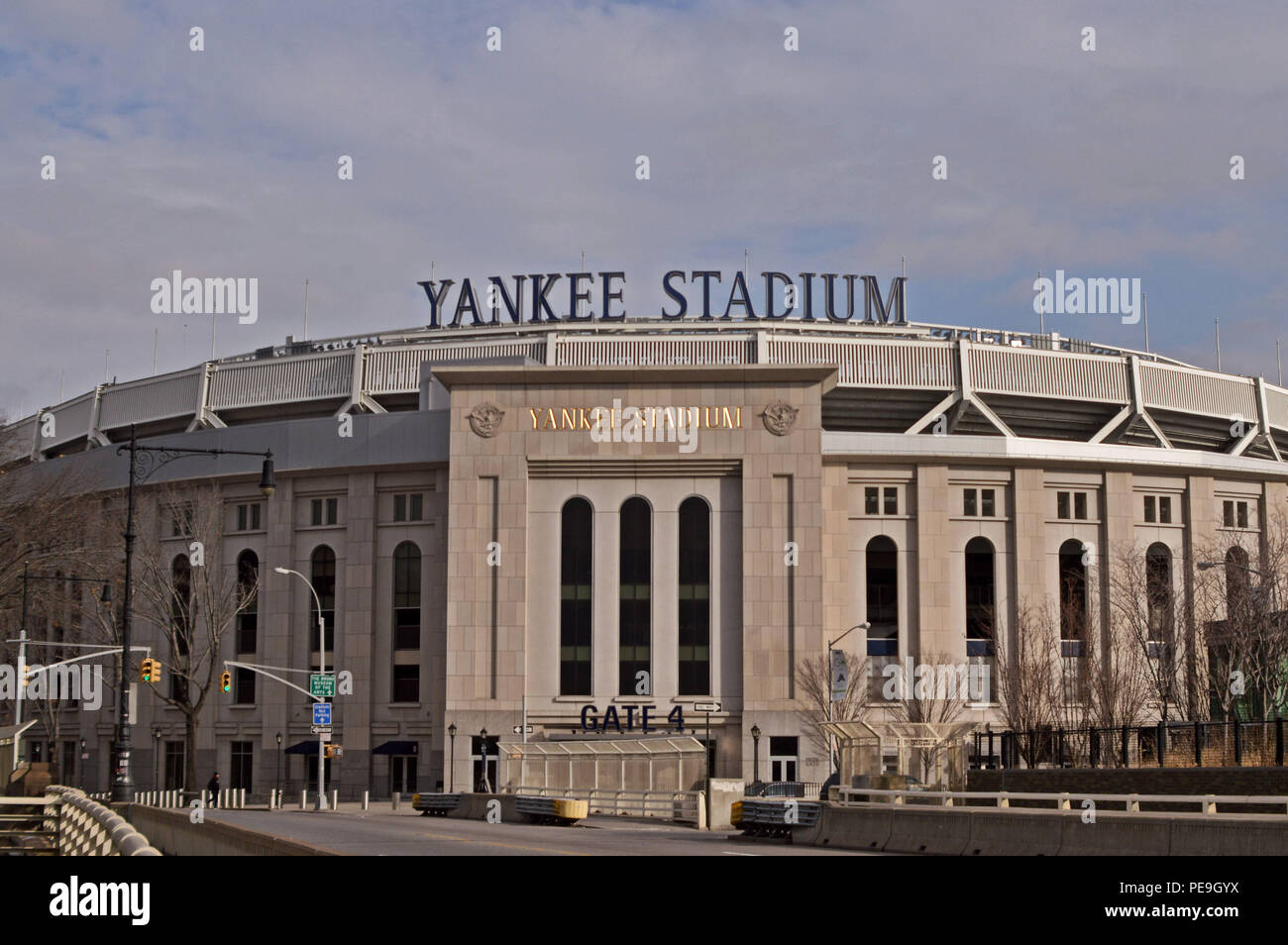
The air feels different when you step off the 4 train at 161st Street. It’s heavy. You’ve got the smell of halal carts mixing with the metallic screech of the elevated subway tracks and that weird, electric hum of anticipation that only exists in this specific corner of the world. Yankee Stadium Bronx NY isn't just a place where people play ball; it’s a massive, billion-dollar limestone cathedral that tries very hard to convince you it’s been there forever, even though the "new" stadium hasn't even hit its 20th birthday yet.
People still argue about the move. Honestly, some old-timers will never forgive the Steinbrenners for tearing down the original House That Ruth Built just to put up a version with better sushi and more legroom. But here we are. The current iteration of Yankee Stadium, which opened in 2009, is a fascinating contradiction of corporate luxury and raw, unadulterated baseball history. It cost roughly $1.5 billion. Think about that. They spent more on this building than some small countries have in their entire treasury, all to make sure the Pinstripes had a home that matched their ego.
The Architecture of Nostalgia at Yankee Stadium Bronx NY
When you walk up to the Great Hall, it’s meant to overwhelm you. It does. The seven-story walls are lined with massive banners of past greats—Mantle, DiMaggio, Gehrig—staring down at you like deities. It’s a calculated move. The architects, HOK Sport (now Populous), were basically told to copy the 1923 original but make it "better." That’s why you see the iconic copper frieze (that jagged white lattice) circling the top of the stadium. In the old park, it was actually copper that turned green over time. Here, it’s painted steel. It looks the part, but if you look closely, you can tell it’s a tribute, not the real thing.
The field dimensions are a carbon copy of the old park across the street. That short porch in right field? It’s still there. It’s still 314 feet down the line. Left-handed hitters like Anthony Rizzo look at that wall and see a gift from God. Pitchers look at it and see a nightmare. It’s one of the few places in professional sports where the geometry of the building is a literal character in the game.
But let’s talk about the "moat." This is where the stadium gets a bad rap. If you watch a game on TV, you’ll see a concrete gap between the ultra-expensive Legends Suite seats and the rest of the fans. It was a controversial design choice. It literally separates the "haves" from the "have-nots" in a way that feels very un-Bronx. In the old stadium, the fans were on top of the dugout, screaming in the players' ears. Now, there’s a buffer of wealth. It changed the acoustics. It changed the vibe. Is it still loud? Yeah. Is it "1977 World Series" loud? Probably not.
Monument Park and the Weight of 27 Rings
You can’t visit Yankee Stadium Bronx NY without doing the pilgrimage to Monument Park. It’s tucked away behind center field. If you don't get there early, you aren't getting in. They close it off 45 minutes before first pitch because, frankly, the line gets ridiculous.
It’s a graveyard of greatness. You’ve got the plaques for every retired number—and let’s be real, the Yankees are running out of numbers. Pretty soon, everyone’s going to be wearing decimals or fractions. Standing there, looking at the monument for Miller Huggins or Derek Jeter, you realize why the pressure in this building is so suffocating. Other teams celebrate a Division Series win like they won the lottery. Here? If you don’t win a ring, the season was a failure. Period. That’s the "Yankee Way," and the stadium serves as a constant, looming reminder of that standard.
Eating Your Way Through the Bronx
Forget the soggy hot dogs of the 1980s. The food situation at Yankee Stadium Bronx NY is basically a high-end food court that happens to have a baseball game in the middle of it. You’ve got Lobel’s steak sandwiches—which are legitimately worth the $20+ price tag—and the 99 Burger which is so limited they usually run out by the third inning.
But here is the pro tip: don't just eat inside. The surrounding neighborhood is the real Bronx. Go to 161st Street and grab a slice or hit up one of the bodegas. The atmosphere outside the gates is half the fun. You’ll see guys selling "Boston Sucks" shirts for ten bucks and people shouting about the lineup before they’ve even cleared security. It’s chaotic. It’s loud. It’s perfect.
The Secret Logistics Most Fans Miss
Most people just show up and hope for the best. Big mistake. The stadium is a fortress. Security is tight, and the bag policy is stricter than an airport. If you bring a backpack, you’re going to be directed to a private locker storage across the street that costs a fortune. Carry a small clear bag or nothing at all.
Also, the subway is the only way to go. Driving to Yankee Stadium Bronx NY is a special kind of masochism. The Major Deegan Expressway is a parking lot on game days, and the parking garages will charge you $40 or $50 just to sit in traffic for an hour after the final out. Take the 4, the B, or the D train. Or, if you’re coming from Westchester or Connecticut, the Metro-North "Yankees–East 153rd Street" station is a literal godsend. It drops you right at the front door.
Beyond the Pinstripes: Soccer and Pinstripe Bowls
It’s weird seeing a soccer pitch on the Yankee infield, isn't it? New York City FC (NYCFC) has called this place home for years, and while it’s not an ideal soccer layout, the atmosphere is surprisingly intense. The sightlines for soccer are... well, they're "creative." You might be staring at a corner flag from an awkward angle, but the supporters' section in the bleachers keeps the energy high. Then you have the Pinstripe Bowl in December. There is something profoundly "New York" about watching college kids from the Midwest play football in a baseball stadium while a freezing wind whips off the Harlem River.
What Most People Get Wrong About the Bleachers
The Bleacher Creatures are real. They aren't just a myth for the cameras. Section 203 is the heart of the stadium. If you sit there, you better know the Roll Call. At the top of the first inning, the fans chant every player's name until the player acknowledges them. If a player ignores the Roll Call? They’re dead to the fans. It’s a rite of passage.
People think the bleachers are dangerous or "too rough." Honestly? It’s mostly just families and die-hards now. It’s the most authentic experience you can have in the park. You get the sun in your eyes, the smell of beer, and the best heckling in professional sports. Just don't wear a Red Sox jersey. Seriously. Don't do it. You won't get hurt, but you will hear things about your grandmother that you can't unhear.
Navigating the Stadium: A Practical Checklist
If you're planning a trip to the Bronx to see the Bombers, don't just wing it. The stadium is massive and can be overwhelming if you aren't prepared.
- Download the Ballpark App. Everything is digital now. Your tickets, your maps, even some food ordering. Don't be the person fumbling at the gate with a printed email.
- Check the Gate. Most people crowd into Gate 4 or 6. If the lines are long, walk around to Gate 2 or 8. They’re often way faster.
- The Museum is a Hidden Gem. Inside the stadium, near Section 210, there’s a museum. It has a "Ball Wall" with signed baseballs from nearly every Yankee ever. It’s quiet, air-conditioned, and free.
- Hydrate Without Going Broke. You can bring in one factory-sealed plastic water bottle (1 liter or smaller). Use this rule. A bottle of water inside is like six dollars.
- The Hard Rock Cafe and NYY Steak. These are built into the stadium but have their own entrances. They stay open after the game, which is a great way to let the subway crowds thin out before you head home.
The Evolution of the Bronx Neighborhood
There was a lot of talk when the stadium was built about how it would "revitalize" the Bronx. That’s a complicated subject. While the stadium brings in millions of dollars, the immediate area still struggles with the same issues many urban centers face. However, the new Heritage Field—the park built on the site of the old stadium—is actually quite beautiful. You can still see the original footprint of the old field. Walking through there before a game is a trip. You're walking where Babe Ruth ran. You're standing where Lou Gehrig gave his "Luckiest Man" speech. It’s hallowed ground, even if it’s now a public park with kids playing Little League games.
The relationship between the team and the borough is an uneasy alliance. The Yankees are a global brand, but they are rooted in one of the poorest congressional districts in the country. That contrast is everywhere. You see it in the luxury suites overlooking the tenements. You see it in the local businesses that thrive on game days but go quiet in the winter. It's part of the grit that makes a trip to Yankee Stadium Bronx NY more than just a sports outing. It's a cultural collision.
Why It Still Matters
In an era of "cookie-cutter" stadiums and suburban ballparks surrounded by parking lots, the Bronx remains an outlier. It’s a destination. Whether the Yankees are winning 100 games or struggling through a rebuild, the building itself remains a symbol of New York’s sheer, stubborn staying power. It’s big, it’s expensive, it’s loud, and it doesn't apologize for any of it.
If you want the best experience, go for a night game in September when the pennant race is heating up. The way the stadium lights hit the grass makes it look like a stage. And in the Bronx, it really is. Every player is an actor, and every fan is a critic.
Actionable Steps for Your Visit
- Arrival Time: Aim to arrive at least 90 minutes before first pitch if you want to see Monument Park and the Museum.
- Seating Strategy: For the best value, look for seats in the 200-level "Grandstand." You get a great view of the whole field without the 100-level price tag.
- Public Transit: Take the D train if you want an express ride from Manhattan, but the 4 train gives you that iconic view of the stadium as you pull into the station.
- Gate Entry: Use Gate 2 on Jerome Avenue to avoid the massive crush of people coming off the main subway exit.
- Budgeting: Expect to spend at least $50 per person on food and drinks if you're eating inside. Plan accordingly or eat on 161st Street before you enter.