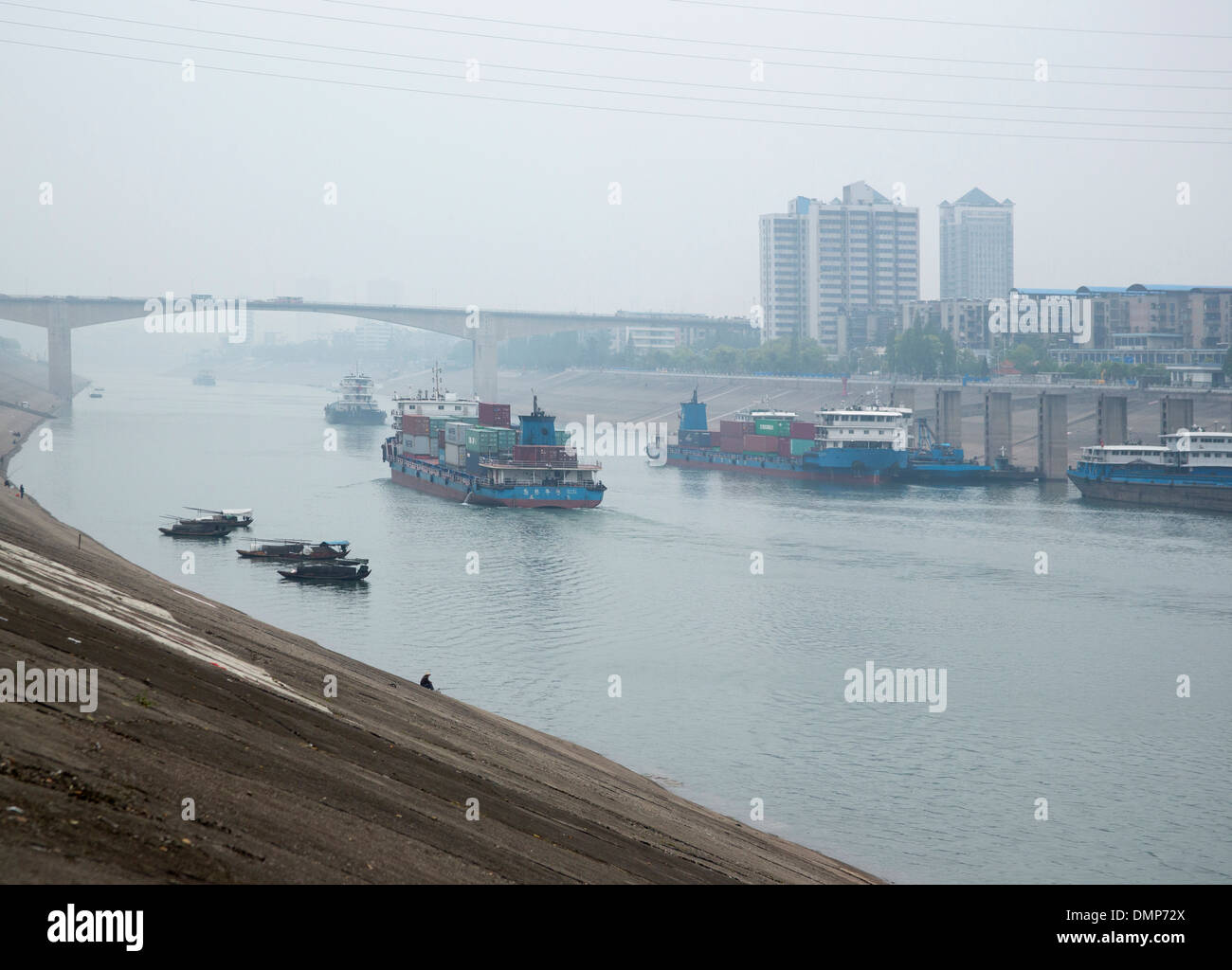
The Yangtze is massive. It’s the lifeblood of China, snaking over 6,300 kilometers from the Tibetan Plateau to the East China Sea. It’s also, quite frankly, a mess. For decades, the narrative around Yangtze River pollution was basically a side note to China's breakneck economic growth. If you wanted to build the world’s factory, you had to accept some dirty water, right? That was the old logic. But lately, things have shifted from "growth at any cost" to a panicked realization that if the river dies, the economy—and the people—go down with it.
It isn’t just about plastic bottles floating on the surface. Honestly, that’s the easy part to fix. The real nightmare is invisible. We’re talking about heavy metals, agricultural runoff, and the "cancer villages" that have cropped up along its banks.
The Grim Reality of Yangtze River Pollution Today
People often ask if the water is getting better. The short answer? Sorta. The long answer is way more complicated. In 2020, the Chinese government actually banned fishing in the main stem of the river for ten years. That’s a huge deal. It’s a desperate move to let the ecosystem breathe. But you can't just tell a river to "get well soon" when 400 million people live in its basin. That’s more than the entire population of the United States trying to share one single water source.
Think about the sheer volume of waste. Every year, billions of tons of sewage and industrial waste are dumped into the Yangtze. While the government claims that over 90% of the water in the main stream now meets "Grade III" standards (meaning it’s safe for drinking after treatment), those numbers don’t always tell the whole story. Localized hotspots near industrial hubs like Wuhan or Chongqing are a different world entirely.
Chemical Soups and Heavy Metals
If you look at the research from groups like Greenpeace or studies published in Nature Communications, the chemical profile of the Yangtze is terrifying. We’re seeing high concentrations of:
- Polychlorinated biphenyls (PCBs)
- Mercury and Cadmium from textile and electronics factories
- Microplastics—The Yangtze is actually one of the largest contributors of plastic waste to the global oceans.
The problem with heavy metals is that they don't go away. They settle in the sediment. When a big flood happens—and they happen often now due to climate change—all that poison gets stirred back up into the water column. It enters the food chain. Fish eat the sediment, people eat the fish. It’s a closed loop of toxicity.
The Three Gorges Dam: A Blessing or a Curse?
You can’t talk about Yangtze River pollution without mentioning the Three Gorges Dam. It’s the world's largest power station, and it’s a polarizing monster. On one hand, it provides massive amounts of "clean" hydroelectric power. On the other, it has fundamentally broken the river’s ability to clean itself.
Rivers are supposed to flow. Flowing water aerates itself and flushes out toxins. But the dam turned a huge chunk of the Yangtze into a giant, stagnant reservoir. Instead of washing out to sea, pollutants just sit there. They sink. They fester.
Geologists have also pointed out that the weight of the water in the reservoir is causing "induced seismicity." Basically, the water is so heavy it’s causing small earthquakes and landslides, which dump even more silt and debris into the water. It’s a mess.
Agriculture: The Silent Killer
Industrial plants get all the hate because they’re easy to spot. But the real "boss level" of pollution comes from farms. China is the world’s largest consumer of chemical fertilizers. To feed 1.4 billion people, farmers dump nitrogen and phosphorus onto their fields like there’s no tomorrow.
When it rains, that stuff washes into the Yangtze.
This leads to eutrophication. It’s a fancy word for "algae gone wild." The algae bloom, suck all the oxygen out of the water, and create "dead zones" where nothing can survive. If you’ve ever seen a lake that looks like thick green pea soup, you’ve seen eutrophication. Now imagine that happening in a river that supplies water to Shanghai. Not great.
The Extinction Crisis
We’ve already lost the Yangtze River Dolphin (the Baiji). It’s functionally extinct. It’s gone. The Chinese Paddlefish? Also declared extinct in 2022. These aren't just sad stories for naturalists; they are "canary in the coal mine" moments. When the apex predators die off, it means the entire system is collapsing. The Yangtze Finless Porpoise is currently clinging on by a thread, with fewer than 1,000 left in the wild.
Is the "Great Protection" Strategy Working?
President Xi Jinping shifted the rhetoric a few years ago, calling for a "Great Protection" of the Yangtze rather than "Great Development." This led to the 2021 Yangtze River Protection Law. It’s the first law in China specifically dedicated to a single river basin.
Here is what is actually happening on the ground:
- Chemical Plant Relocation: Thousands of factories within one kilometer of the river are being closed or moved further inland.
- The Fishing Ban: As mentioned, a 10-year moratorium to help fish stocks recover.
- Sewage Treatment: Huge investments in urban water treatment plants to stop raw sewage from hitting the stream.
Is it enough? Maybe. But there’s a massive "not in my backyard" problem. When you move a chemical plant away from the Yangtze, it often just moves to a tributary or a less-regulated province. The pollution stays in the system; it just changes its address.
Why You Should Care (Even if You Don't Live in China)
You might think, "I’m in London or New York, why does Yangtze River pollution affect me?"
Economics. The Yangtze River Economic Belt accounts for about 40% of China’s GDP. This region produces the iPhones, the car parts, and the fast fashion that the rest of the world buys. If the water crisis in the Yangtze becomes so severe that factories have to shut down—which happened during the 2022 heatwave and drought—global supply chains grind to a halt.
Then there’s the ocean. The Yangtze dumps into the East China Sea. The pollutants don't stop at the coastline. They travel. The microplastics from the Yangtze have been found in the guts of deep-sea fish thousands of miles away. We are all downstream.
What Needs to Happen Next
Fixing the Yangtze isn't just about passing laws; it's about changing how an entire civilization interacts with its environment. It requires a shift from "extract and dump" to a circular economy.
Actionable Realities for the Future:
- Tighter Tributary Control: The main stem of the Yangtze is getting cleaner, but the smaller rivers that feed into it—like the Han and the Min—are still being used as industrial sewers. Regulation needs to move upstream.
- Green Agriculture: Shifting farmers toward organic fertilizers and precision agriculture is the only way to stop the nitrogen runoff. This is incredibly hard to do with millions of small-scale farmers, but it's non-negotiable.
- Transparency: Local governments often fudge environmental data to meet quotas. True recovery requires independent monitoring and "citizen scientists" who can report pollution without fear of reprisal.
- Consumer Pressure: Global brands that source from the Yangtze basin need to be held accountable for their suppliers' water discharge. If you buy a shirt made in a factory that poisons the Yangtze, you’re part of the cycle.
The Yangtze is a resilient river. It has survived thousands of years of human civilization. But the last 50 years have pushed it to the breaking point. The current "Protection" era is the river's last real chance. If the 10-year fishing ban and the new environmental laws don't show massive results by 2030, we might be looking at a waterway that is more of a drainage ditch than a river.
To stay informed, watch the reports from the Ministry of Ecology and Environment (MEE) in China, but cross-reference them with satellite data and independent NGOs like the Institute of Public and Environmental Affairs (IPE). They provide real-time maps of air and water quality that are often much more revealing than official press releases. Support brands that adhere to the ZDHC (Zero Discharge of Hazardous Chemicals) roadmap, as many of these companies operate directly within the Yangtze's industrial zones. Monitoring the health of the Finless Porpoise population also remains the best biological indicator of whether these high-level policies are actually reaching the water.